


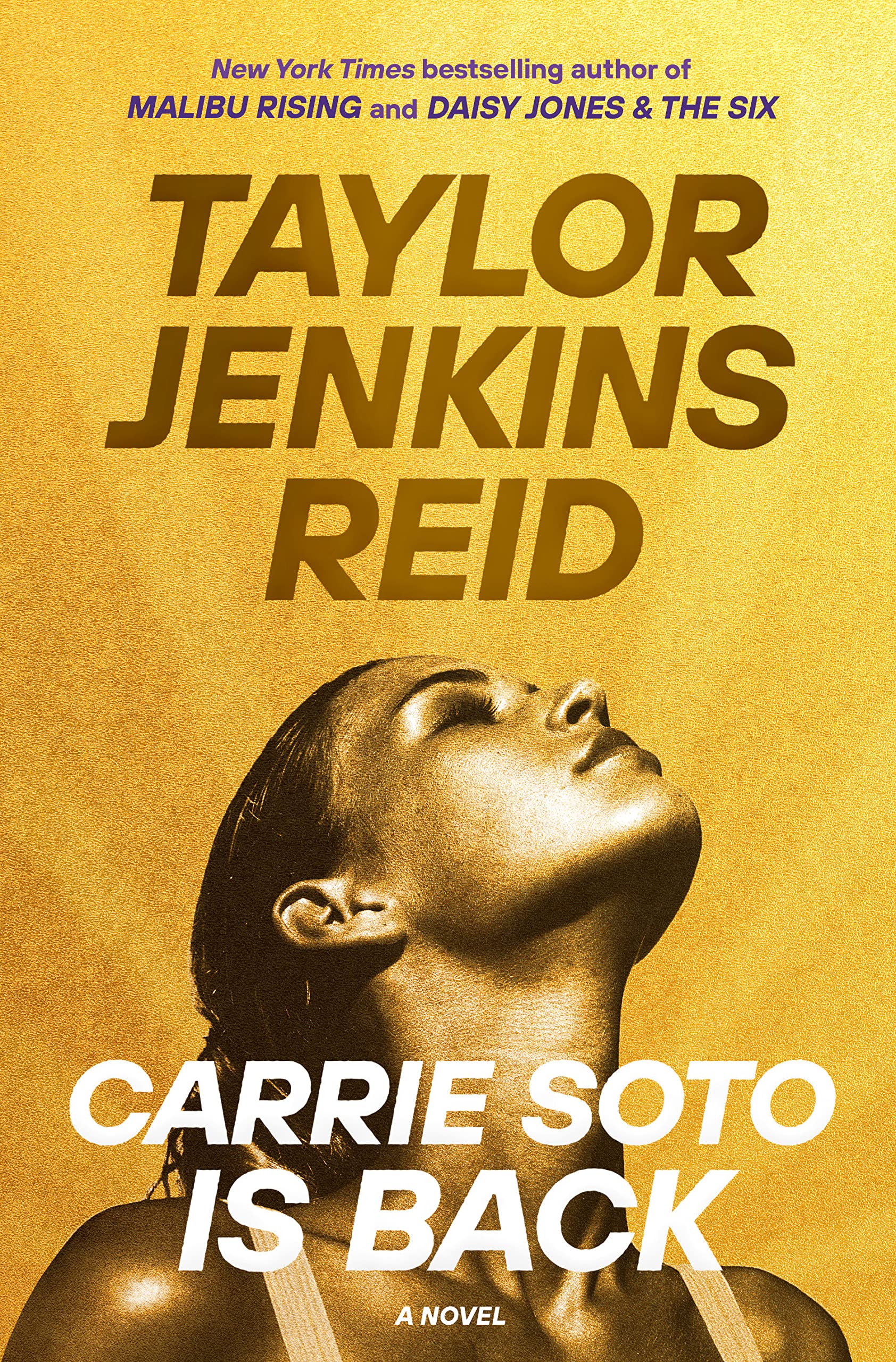
By the time Carrie retires from tennis, she is the best player the world has ever seen. She has shattered every record and claimed twenty Slam titles. And if you ask her, she is entitled to every one. She sacrificed nearly everything to become the best, with her father as her coach.
But six years after her retirement, Carrie finds herself sitting in the stands of the 1994 US Open, watching her record be taken from her by a brutal, stunning, British player named Nicki Chan.
At thirty-seven years old, Carrie makes the monumental decision to come out of retirement and be coached by her father for one last year in an attempt to reclaim her record. Even if the sports media says that they never liked the ‘Battle-Axe’ anyway. Even if her body doesn’t move as fast as it did. And even if it means swallowing her pride to train with a man she once almost opened her heart to: Bowe Huntley. Like her, he has something to prove before he gives up the game forever.
In spite of it all: Carrie Soto is back, for one epic final season. In this riveting and unforgettable novel, Taylor Jenkins Reid tells a story about the cost of greatness and a legendary athlete attempting a comeback.
I feel like I’ve read this story before but in a different format. The Midnight Library by Matt Haigh covers the growth of an Olympic swimmer with different ramifications as to what happens when the child agrees to the sport the parents impose on them and another lifeline where they decline the sport. Liane Moriarty – Apples never fall also covers a tennis family – this time set in Australia, and the effects of what happens with the children when the parents are tennis super-stars and want for their kids to become the same (with the work it entails and the disappointments)
The book of the fictional Carrie Soto could be any massive tennis star – their rise to stardom, and how hard it is to keep any friends up there with the stars. And what happens when the body starts declining after 30 years.
It’s all due to the parent’s ambition that the child loses on their childhood and is set on a path for success while sacrificing friends, weekends and being a normal child.
“Every match you play, you are one match closer to becoming the greatest tennis player the world has ever seen. You were not born that person. You were born to become that person. And that is why you must best yourself every time you get on the court. Not so that you beat the other person—”
The parent’s ambition translates into a successful, yet flawed adult child.
By the time I was twenty, I had four Slam titles. Two were at Wimbledon, one was at the US Open, and I’d beaten Stepanova in the final of the Australian Open in a nearly three-hour battle, one of the longest and most-watched matches in tennis history.
And by the time she’s thirty, she’s starting to lose a bit. Her father, who was pushing her so hard all her life, is asking her to take a step back and be happy with number 2.
“I am just saying that when you were a child, I spoke in…grandiosities. But, Carrie, there is no actual unequivocal greatest in the world. Tennis doesn’t work like that. The world doesn’t work like that.
Umm, it’s his fault she’s this way. No takey-backsies.
Carrie, your body, your skills, they always had an expiration date. And it is now. You are thirty-one. It is time
When her coach drops her, her relationship with her father is in tatters, Carrie can only lay low and re-group if she wants to win the grand prize of her childhood. She reconnects with her dad, trains again, wins the open and then in time, she becomes a coach to other children.
My God, how hard it must have been for my father to do this. To sit here, a ball of nerves, knowing that all of the control was in my hands. He could not think for me on the court, he could not hit the ball for me. He just had to have faith that I could play the way he’d taught me.
What a gift it is, to be able to guide someone to a point and then let them finish it themself. To give someone all the knowledge you have and then pray they use it right. It’s a skill I am learning, one I am determined to perfect.
This book got me bored beyond tears. Why was this book – which is so average in content and writing – win a Historical Fiction award in 2022 and was on the Amazon best books list? It’s so .. bland. There’s nothing really shocking in it, there’s no plot other than the growth to success, failure and re-growth with more of a moral story.
There’s no drama and a LOT of explanations of what tennis is, what a “love” is, what a “set” is, a “deuce”, loads of counting. Here’s an actual excerpt I skimmed over:
My body knows what to do. Now I just have to let it do it.
When I open my eyes, I see her crouched in place, waiting. My eye goes right to her feet. I’m going to piss her off. I toss the ball in the air and serve the first shot of the game so that it will bounce straight to her toes. She has to jump out of the way, and she misses it.
Ace. 15–love.
She walks back to position, shaking her head.
It’s working. This time, I wait as long as I can to serve the next one. I bounce the ball over and over, not indicating when I might finally toss it. Then I hit the exact same serve again. She gets in position better, but she still can’t return it.
30–love.
She bites her bottom lip, clenches her fist, crouches down. I wait again, hold off on serving until the last second. I serve it short, so that it bounces just over the net. She dives for it and misses. 40–love.
On the next serve, I hit the net. As I set up for the second serve, I see her visibly relax, assuming my second serve will be safer.
Instead, I angle it to the corner. She returns it, but then I hit it back down the opposite line and it goes whistling right past her.
Game is mine. Now we’re 5–4. If I break her serve on this one, I win the match.
I watch her crack her knuckles as she goes back to the baseline. Maybe up against another player she’d be less nervous. It is her serve, after all.
But I am Carrie Soto. Break points are my moment. The evidence of it is branded all over my feet.
I can tell Antonovich’s muscles are tight. She did not think she would be here—the match this close, a loss to me threatening her 1995 season.
Her first serve is fast and hot. It has more fire on it than anything she’s hit so far. Still, I take the point. Love–15.
She stomps back to the baseline. And then hits her racket against the ground before catching herself.
I smile. She’s mad. She’s so mad.
On the next serve, she footfaults. Then nets it. Love–30.
I wink at her. Her face grows tighter.
On the next one, we rally and then she lobs it too high and the ball lands behind the baseline.Match point.
I can do this. I am doing this. I just have to trust myself.
She hits a high kick serve. I get it on the rise. She returns it fast, exactly like I hoped. Here it is. I take it out of the air early and quick—a drop shot, right over the net.
It lands with such a beautiful, sweet, delicious thud.
Antonovich cannot get to it. She falls to the ground.
I leap into the air and shout. Gwen and Ali stand in their seats. The crowd roars.
I look right at the TV cameras for a brief second, knowing my father is looking right back at me.
Finally, over the loudspeaker come the words I have waited to hear.
“Carrie Soto advances to the championship final.”