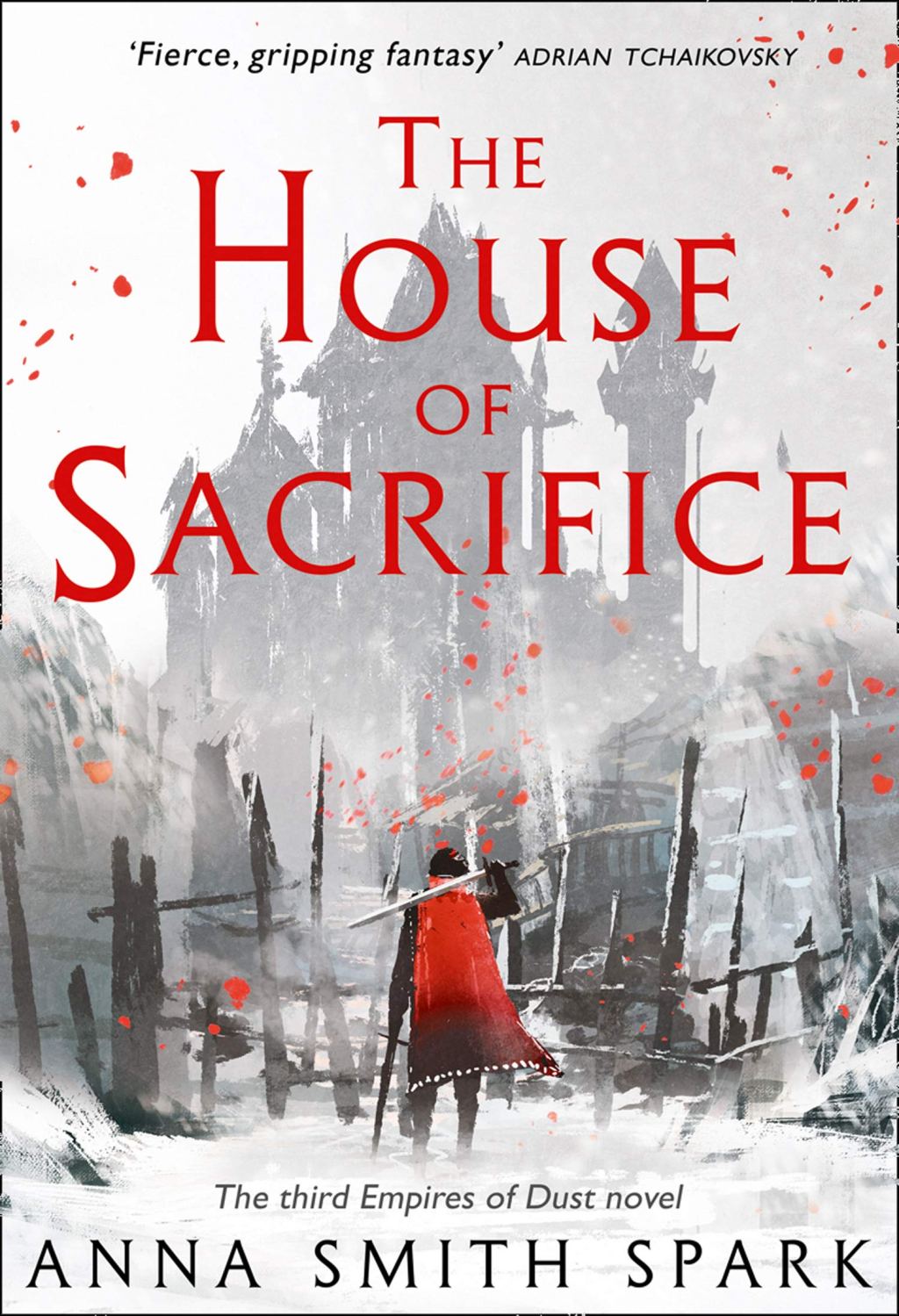
Marith Altrersyr has won. He cut a path of blood and vengeance and needless violence around the world and now he rules. It is time for Marith to put down his sword, to send home his armies, to grow a beard and become fat. It is time to look to his own house, and to produce an heir. The King of Death must now learn to live. But some things cannot be learnt. The spoils of war turn to ash in the mouths of the Amrath Army and soon they are on the move again. But Marith, lord of lies, dragon-killer, father-killer, has begun to falter and his mind decays.
But some things cannot be learnt.
The spoils of war turn to ash in the mouths of the Amrath Army and soon they are on the move again. But Marith, lord of lies, dragon-killer, father-killer, has begun to falter and his mind decays. How long can a warlord rotting from within continue to win?
As the Army marches on to Sorlost, Thalia’s thoughts turn to home and to the future: a life grows inside her and it is a precious thing – but it grows weak.
Why must the sins of the father curse the child?
A glorious, ambitious and bloodily brilliant conclusion that threads together a masterful tapestry of language and story, holding up a piercing reflection on epic fantasy – and those who love it.
I have to say I haven’t read the other two books so my views on it are a bit skewed but I did have this book from the charity pile and I decided to give it a go.
I didn’t know what a grimantasy was – a grim fantasy novel where… well, everything is dark, grim, brutal, not for children. It most definitely felt like a chore sometimes, reading through pages and pages of words.. not really saying anything or moving the story in any shape or form that made sense.
There is magic in the story. It’s never explained, and it’s hard to follow in the story when magical things happen. I don’t think the author ever had an idea of what was happening… which was disappointing. Why was Marith so powerful? What had his ancestors done? Why was his foe at the end so powerful? What happened to many of the supporting characters? I have no idea. I can normally imagine magic in books, but here, they were just words on a page.
Smith-Spark writes in massive (and I mean MASSIVE) lists. She does this often. The lists often last pages, and are often very repetitive… every battle scene sounds something like this… “Blood, fire, swords slashing, boots crushing, shields blocking, ash bitter in the mouth, flames searing the skin, men shouting, weeping, grunting…. etc” Only this goes on for pages… (actually I’m quite good at this!). It got to be a chore for me.
I’m not sure what the end message was that the author was trying to convey. An endless battle never finished? A conqueror never happy to sit on his ass on the throne?
The writing can be blunt; here’s a frequent chant:
“So here we go again, we must start getting bored with this soon, you’d have thought, it’s getting kind of hard sometimes to know where we go from here really, don’t you think? Endless repetition. Kill kill kill tediously unvaryingly unendlingly kill kill kill kill kill.”
It can also be descriptive and lyrical such as this passage that I love:
“The book’s pages were perfumed. The scent varied: a few pages might have a faint scent of lilies, sweet and sad, to match a scene of love and heartbreak; the next page might smell of pine resin, bracing, clearing, when the story turned to a hero king come to restore his people’s pride. This too was new and fashionable, a flippant new little wonderworking. The page he was reading now was a genealogy of the kings of Bakh, shocking in its lack of scandal, incest and murder, and smelled of green leaves. The most sought-after book in Sorlost was the three volume True History of the King Marith Altrersyr Amrath Returned to Us, the pages of which were said to smell alternately of blood, semen and human excrement.”
It was a miss for me, but only because I was missing context from the other two books and I found the writing to be so repetitive.