As a mother, there is nothing more time-consuming in figuring out what to name the little human that we’re raising. Names are important as explained so thoroughly in The Name of The Wind by Patrick Rothfuss. Name give meaning to things and names sometimes, just sometimes, control someone’s fate.
Cora has a choice to make and each choice will bring forth a different future, with varying amounts of trauma linked to each one.
"I had this weird thing in class,” he says. “I can’t even remember how we got to it, but we must’ve been talking about The Canterbury Tales, how the men are defined by what they do, but the only women— Well, it’s more about who they are in relation to a man. Like the Wife of Bath, or even the nun in a way.”
“Why does it matter? To Dad, I mean. The same-name thing.”
Cora wants to say it matters because sometimes big men feel small inside. Because some people—like Gordon’s father—travel through life believing themselves so far beyond improvement, they come to think their children, and their children’s children, should all be made in their name. Because sometimes their need to please previous generations is greater than their need to love future ones. To Cora, it feels like a chest-beating, tribal thing. But she doesn’t say any of this to Maia. She already picks up on enough. The morning after a disagreement, no matter how silently Cora has endured it, Maia will seek her out at the kitchen sink, wrap her narrow arms around her waist, and say, “My lovely mummy,” her cheek resting against Cora’s back. At those times, Cora feels the commiseration, the shared sadness. And once, the dampness on the fabric at the back of her dress where Maia’s face had been moments earlier.
“Tradition is just important to some people,” she says instead.
“Having your own name is too, though. Sometimes? Maybe even Dad would’ve liked having his own one.”
Cora takes a hand off the pram to wrap her arm around Maia’s shoulder. “Wise girl.”
The first name is BEAR. Strong, willful, powerful, cute. Maia names him and Maia is the happiest girl in the world. Unfortunately Cora, her mother, will take the brunt of the pain associated with disagreeing with her husband. He was ok when they dated, but once married, he’s shown her his ugly side, the one that argues with her, that pushes her face down in a bowl to eat like an animal or complains about her food or the “state” of the house when everything is spotless. His idea of a marriage is putting his partner down and his word is law.
So when Cora goes against his word and chooses a name for their son which isn’t like his and his father’s before him, he goes mental. In his frenzy to cause as much damage as possible, he also pushes a concerned neighbor through their glass sliding doors, killing him in the process and setting Cora free.
This timeline, were Cora, her daughter and her son live carefree is the best. They still have to live with a bit of stigma for being children of a murderer, but they are free to be who they want to be and grow big and strong and willful. Maia has a girlfriend and comes out as gay as soon as she can. Bear works with dirt (he’s an archaeologist) and marries his high-school sweetheart and they have a kid together. Cora never really re-marries or dates anymore as she can’t trust kindness from others after that’s what got her in with Gordon in the first place.
The second name is JULIAN. Sky father. Cora still has gotten a beating after naming him so and decides to leave Gordon. Unfortunately, it takes her a long time to file for divorce and leave and due to Gordon being an upstanding citizen – a GP in his area – she has to really fight to get custody. In the end, she stays for the kids until one evening Gordon beats her too hard and she dies. Gordon goes to jail and the kids to their nearest living relative, their grandma in Ireland. Growing up without parents has made Julian shy and Maia an introvert. They both don’t float too far away from the house. Julian takes up making jewelry with her grandma’s beau and finds solace in creating bits of art that people can enjoy. Maia is still gay but doesn’t know how to come out. She doesn’t know if she’s gay because she hates men like her father or whether she’s gay because she likes women. She finally finds a calling in homeopathy and being a sort of a therapist to people, trying to find the cause of ailments not just curing them.
Julian marries Olga, they have two daughters together, but they’re struggling artists and nearing divorce more than one time because Julian refuses to sell to England his artwork feeling that would be giving in to his father, who was English. Maia “fixes” Julian by revealing how horrid the abuse really was and what their mother had to live through – making him realize that Julian will never be like his dad. Like ever.
Funny thing is that Julian will make a ring for a guy to propose to his girlfriend who in his BEAR life was his wife.
GORDON. Like the father. Once she named him, Cora lost all maternal instinct towards him. She couldn’t bear to feed him, would let him cry hungry while she occupied herself with washing the floors. It’s only when Gordon threatened to take away both her kids and deem her unfit that she started doing the minimum required to raise him. The unfortunate aspect of this is – like father, like son. The father would praise the son whenever he told him juicy gossip about what her mother was doing at home. It’s only when the son ran out of “material” and started inventing some outrageous stuff that the father caught on.
Little Gordon wasn’t well liked at school. Kids avoided him. There was one girl that liked him and he got drunk with his father’s alcohol and tried to finger her during a kissing session. When she refused him, he spread a nasty rumor about her being easy that destroyed her reputation and she didn’t come to high school anymore after that.
Gordon ends up as a high functioning alchoolic working for the bankers in London and earning tons. He only gets fired when he stumbles drunk into work after a whole night of drinking. He moves in back with his family and slowly, his eyes open. He sees his sister never visits. His mother spends her days polishing already clean cabinets. His father complaining a perfectly fine dinner which he calls burnt mess.
Maia has gone on to become a doctor and she finds some common ground with her dad discussing consultants and cases. But she’s still in the closet and even though she’s been dating one of her coworkers for close to 7 years, she can’t bring her home to the family as everything is likely to fall apart.
It’s only when little Gordon, now 35-ish, sets up to free his mother from his father that the family is ok again. He captures with secret cameras the beatings his mother is getting, the humiliation, the daily put downs and threatens his dad with going public and ruining his image. Their parents get divorced and the kids rally around their mother and make sure she’s ok. She’s going again to ballet shows and has a small herbs garden, but her life under her husband’s foot has made her a meek woman, one that will always look over her shoulders and try to eat as little as possible in case someone complains.
Her marriage, Cora realizes, was like a magnified, more awful version of her ballet career. Hopes. Dreams. Then agony and disappointment. Sacrificing herself for an ultimately unattainable thing. She’s sixty-eight now, and although she knows the idea of being put out to pasture is a phrase others associate with obsolescence and redundancy, for her it conjures lush green fields filled with buttercups where she’s free to roam.
The abuse
“I’ve called him Bear.”
He smiles and she sees his demeanor shift, sees him shake his head, reach for a drink. She realizes he doesn’t believe her. “No,” she says, “no, it’s the truth.” And she takes out the envelope from where it’s hidden between two cookbooks. He turns then, one hand still on the water filter as he surveys the certificate. He spends longer than he needs to, staring, and her hand begins to shake as she continues to hold out the paper for him, its audible wackering filling the seconds as they tick by. He looks up and, holding her gaze, lets the jug drop, hard, so that it smashes against the kitchen tiles. She feels water soak into her socks and knows she should have thought to put on shoes.
He reaches out, grabs a clump of hair near the crown of her head and pulls it backward, his face just inches above hers. For a moment she’s confused, thinks he may be about to kiss her, but instead he hurls her head against the side of the refrigerator.
Even though she’d promised herself she wouldn’t, she cries out in shock, then quickly closes her mouth, not wanting to risk waking Bear. She must not drag his presence into Gordon’s thoughts.
“You’re my wife,” he hisses. “I asked you to do one thing for me”—her head slams against the fridge once more—“and you couldn’t do it. Just one”—thud—“damn”—thud—“thing.”
I didn’t think I could stomach all that hitting and the name calling and the minor shifts, the controlling gazes. It’s very obvious in the “GORDON” life just how bad Cora has had it. She had no phone of hers (all calls would go through Gordon who would screen them first). She had no money. Everything that her mother sent her – including her inheritance, would be diverted by Gordon to his accounts first.
How funny, she thinks, that people, businesses, still write to her, believing she’s a woman who will receive her own post, will open it, review its contents, and then act upon them.
He gained power of attorney over her when he drugged her and then declared her incompetent and in need of care. And because he was a GP, he could go on prescribing medication she didn’t really need just to keep her hazy and docile.
Cora is used to sudden explosions that come at a light being left on, or realizing too late she’s been overly friendly in the way she’s spoken to a tradesman. She lives trying not to set a match to Gordon’s anger, but still she spills petrol about her, dripping it over shoes she has forgotten to polish, sloshing it across a particular shirt not washed in time. She races from thing to thing, tending to whatever might spark, but it’s always something behind her, just out of sight that she hadn’t thought of.
That’s because abusers keep on pushing the goalposts. You can never be right or have done something to the letter. He would take a glance to mean flirtation, take a bite of food as overindulgence and critique in a loving manner that is anything but.
She has the sensation of her throat closing as she goes to swallow, and it is like drowning, and so she mimes eating, balancing tiny morsels on the fork tines, as Gordon—slowly, neatly, with his usual meticulousness—chews each mouthful, until his plate is clear, still saying nothing. The room is an overtightened violin string. It is just a question of when it will snap.
Even when Maia seeks help by alerting her grandma in Ireland that something is off, Cora still refuses to leave.
He doesn’t touch them. They have everything they could wish for. Some children are living in poverty, you know?”
Well, that’s debatable. Is a child walking on eggshells nurtured enough? A child with a straight back – always on the alert – always trying to defuse a situation before exploding – is that child ok? They are not hit but they see things.
The Identity
In all three scenarios, Bear, Julian and Gordon, they all suffer from an identity crisis. Who am I in relation to who my father is?
He worries, too, about who he’ll be if their father sought them out now. He’s shaped their lives through his absence. What if his presence changes who Bear is, his sense of himself knocked off balance as easily as a scoop of ice cream from a cone. [..] So much of who he was came from being respected, from people looking up to him. I’m not sure what he’ll be left with when he’s not a doctor. If he’s not living in some big, perfect house. It’s like everything that made him him will have been stripped away.
Who are we really with or without our parents? Their presence affects us, their absence can either heal or traumatize us. A man like Gordon can cast a big, black shadow, spanning generations, abuse can be floated from one man of the family to the first son. Teaching him that’s how it’s always been and how it will always be. Most men don’t see like Little Gordon that what his father did to his mother is not right; that you shouldn’t treat women like this.
Opening one’s eyes to abuse going on around you and doing something about it, that takes guts, and a spine. I was pleasantly surprised Little Gordon grew one in the end. It would have been nicer if he had it as a kid, but what could he do. There were camps: Maia and his mother, and then on the other side, was the father whose approval he was yearning.
All in all, a very good read. Can’t recommend it enough.
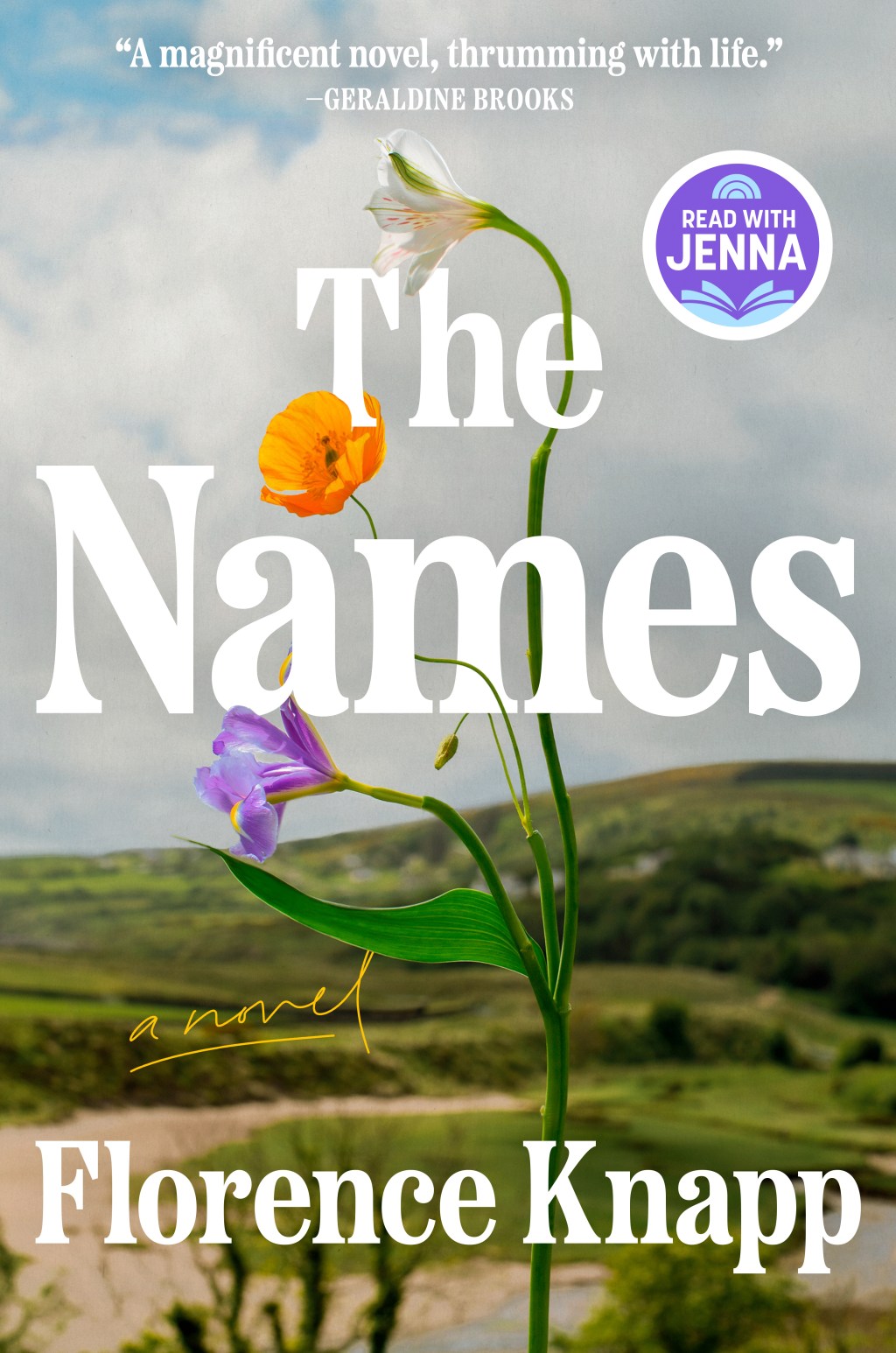
 One Book a Week (Julia Reads Books)