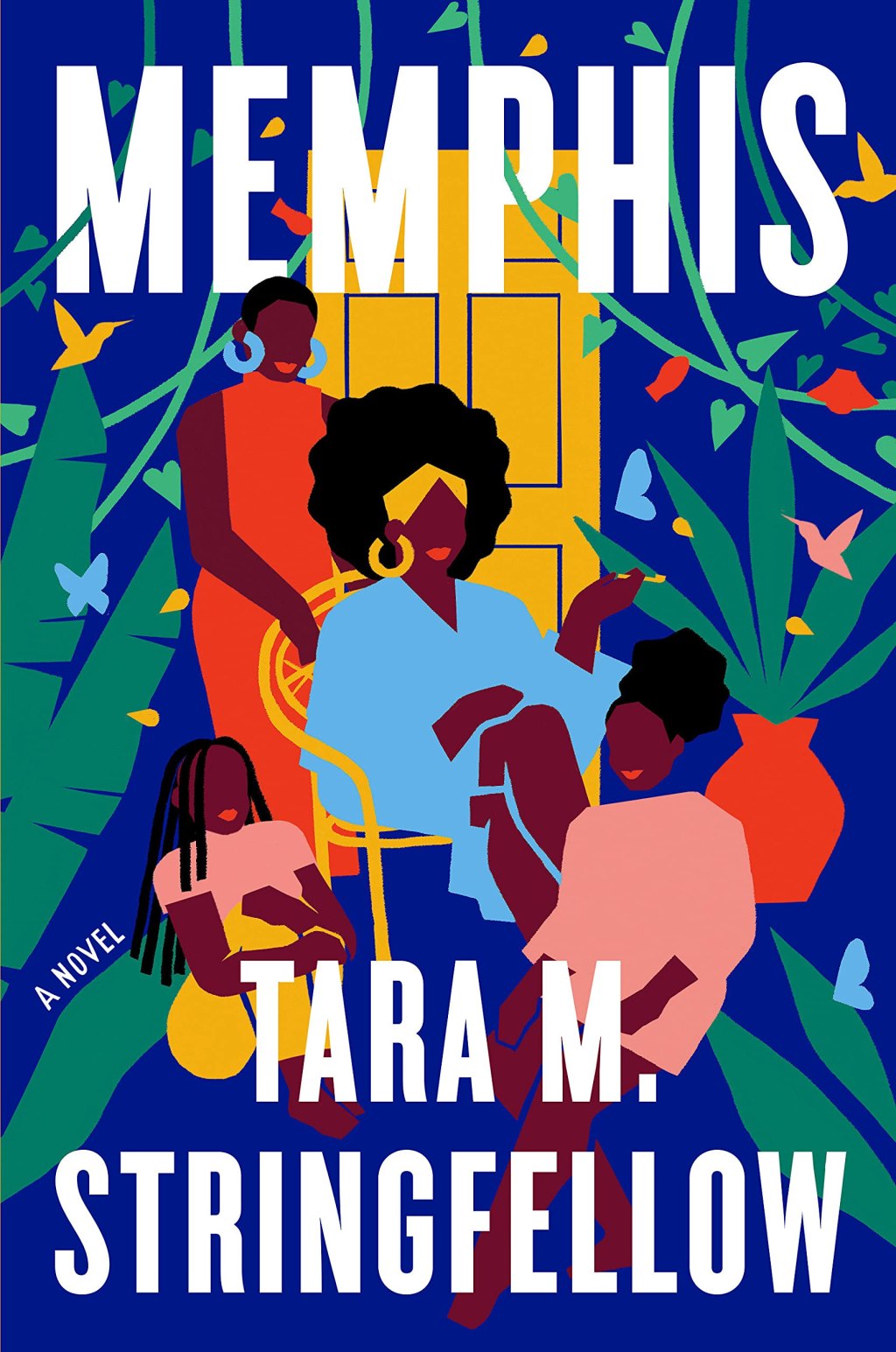
I ran across this book by mistake and decided to give it a go. I like to think of myself open-minded but I feel that I, a white woman in my 40’s, am completely the wrong audience for this book. Written by a black author for black audiences, the n-word is often used and, in my opinion, furthers certain stereotypes already present in mainstream media – the household abuse, the racial profiling, the petty fights. It tries to tell a story about sisterhood but fails. It also tries to tell a story about motherhood and fails miserably at that one too (trigger warning, sexual abuse of a minor).
I suppose it’s a story about forgiveness – but this only comes after voodoo has been cast on the perpetrator.
Summer 1995: Ten-year-old Joan, her mother, and her younger sister flee her father’s explosive temper and seek refuge at her mother’s ancestral home in Memphis. This is not the first time violence has altered the course of the family’s trajectory. Half a century earlier, Joan’s grandfather built this majestic house in the historic Black neighborhood of Douglass—only to be lynched days after becoming the first Black detective in the city. Joan tries to settle into her new life, but family secrets cast a longer shadow than any of them expected.
As she grows up, Joan finds relief in her artwork, painting portraits of the community in Memphis. One of her subjects is their enigmatic neighbor Miss Dawn, who claims to know something about curses, and whose stories about the past help Joan see how her passion, imagination, and relentless hope are, in fact, the continuation of a long matrilineal tradition. Joan begins to understand that her mother, her mother’s mother, and the mothers before them persevered, made impossible choices, and put their dreams on hold so that her life would not have to be defined by loss and anger—that the sole instrument she needs for healing is her paintbrush.
“Your man is military, then?”
“An officer and a gentleman.” She almost laughed at herself. Then almost raised her hand to her left brow, still tender, covered in cheap Maybelline foundation not her shade because no drugstore ever carried her shade.
The plot starts with an impromptu visit of Miriam and her two daughters at her sister’s house, after being beaten by her military husband, Jax. She knowingly takes her daughter who had been sexually abused back to her abuser’s house. Not even when her daughter pees herself after seeing her shitty cousin does she turn and walk away. Nope, because sisterhood is stronger than child molestation…
We get to find out how Miriam married Jax, a sexy military man, shortly after meeting him, because she was in looove. Even Jax is in awe at the amount of “Black” present in Memphis.
Jax noticed that niggas in Memphis strutted. Not that Black folk in Chicago didn’t, but Jax could only remember the fierce wind of his city, images of Black figures bundled in layers of down walking slanted against the brute force of the angry wind off Lake Michigan. Here, Memphis niggas waltzed down the street as if in tempo to the music that was as omnipresent as God. Black folk loving every second of their Blackness. At night, he would head to Beale Street with the other single officers, eyes wide with awe—all the Black streets held nothing but Black bodies. Beale was filled with Black folk drinking whiskey and laughing and loving in dark corners and singing and drawing switchblades and tuning guitars and chewing tobacco and dancing. Cotton was knee-high. Green fields were tilled in neat rows of cotton overflowing white. There were fields of the inedible fruit—the crop that had brought his ancestors and the ancestors of every other Black person he ever knew, to this country to pluck and to pick without a cent, without acknowledgment of their dignity for four hundred years. Now that he had arrived in the South, he told Miriam, he didn’t understand how anyone could ever leave it.
When I was reading this I felt like the author just likes to hammer her point across that Black people have culture. With a heavy bludgeon. No reading between the lines.
Memphis in May reminded him of Coleridge’s ode to Xanadu—stately pleasure domes were massive plantation houses with wrap-around porches on every tier, and the majesty of the Mississippi River could put to shame any sacredness of the Alph. Magnolias were white with bloom and as fragrant as honeysuckle. The air was thick with green. In the evenings, no matter the day, he could smell barbecue roasting in warm smokers, and on Fridays, the countless church fish fries permeated the moist humid air, made it crackle. There was music. There was always music in Memphis. Old gramophones and Cadillacs blaring, and oval-shaped wooden home radios were always, always on and at full blast, and he heard voices that would shame the Archangel Gabriel—Big Mama Thornton, Furry Lewis, the long, immortal wail of Howlin’ Wolf.
The fascination with Black doesn’t stop at the Memphis descriptions, it continues in the family tree:
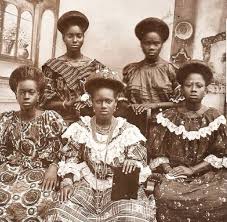
My aunt looked like the taller, more regal version of Mama. Auntie August was nearly six feet tall. I had read Anansi stories. I knew that it was the women tall as trees and fiercer than God that ancient villages often sent into battle. If Mama was Helen of Troy, August was Asafo. She seemed to go on forever, seemed to be the height of the door itself. She had hips, the kind Grecian sculptors would spend months chiseling, big and bold and wide. Her skin was noticeably darker, darker than mine even, and I felt a welt of pride. I had always coveted darker-skinned women their color. There was a mystery to their beauty that I found hypnotizing, Siren-like. They were hardly ever in Jet or Ebony or Essence, the magazines we subscribed to, unless they themselves were famous—the mom from The Fresh Prince of Bel Air, Whoopi Goldberg, Jackie Joyner, Oprah. Most of the Black women the public pronounced beautiful looked like Mama. Black Barbies. Bright. Hair wavier than curly. Petite figures. So, when my Auntie August opened that door, and I saw that her skin was so dark it reflected all the other colors surrounding it—the yellow of the morning light, the yellow of the door, the peach tan of the calico cat weaving in and out of Mya’s short legs—I knew that the aunt I could barely remember was, in and of herself, a small, delicious miracle.
This book is a good example of how certain kinds of hate and discrimination are generally considered justified and acceptable in our society; man hate, Yankee hate, white hate, and others of course, are not. But I think as long as we collectively accept some, it makes a breeding ground ripe for all the other forms we consider unacceptable to thrive too. And of course along with that is the anger and the violence which just creates more hatred.
Timelines and perspectives are all over the place and not written in a way that make sense. I was left confused about characters or things that happened. Random plot points and historical events are also sprinkled throughout the novel without much comment so don’t serve much purpose to the story.
If you want to read something worthwhile check out The Hate U Give * Angie Thomas which was a lot better in describing the life of the modern day educated Black American woman. This book is a mediocre depiction of multi-generational drama and abuse and poor decision making.