    Till finally you hear how words are coming to an end. With every inane word a little nearer to the last. And how the fable too. The fable of one with you in the dark. The fable of one fabling of one with you in the dark. And how better in the end labour lost and silence. And you as you always were.
    Alone.
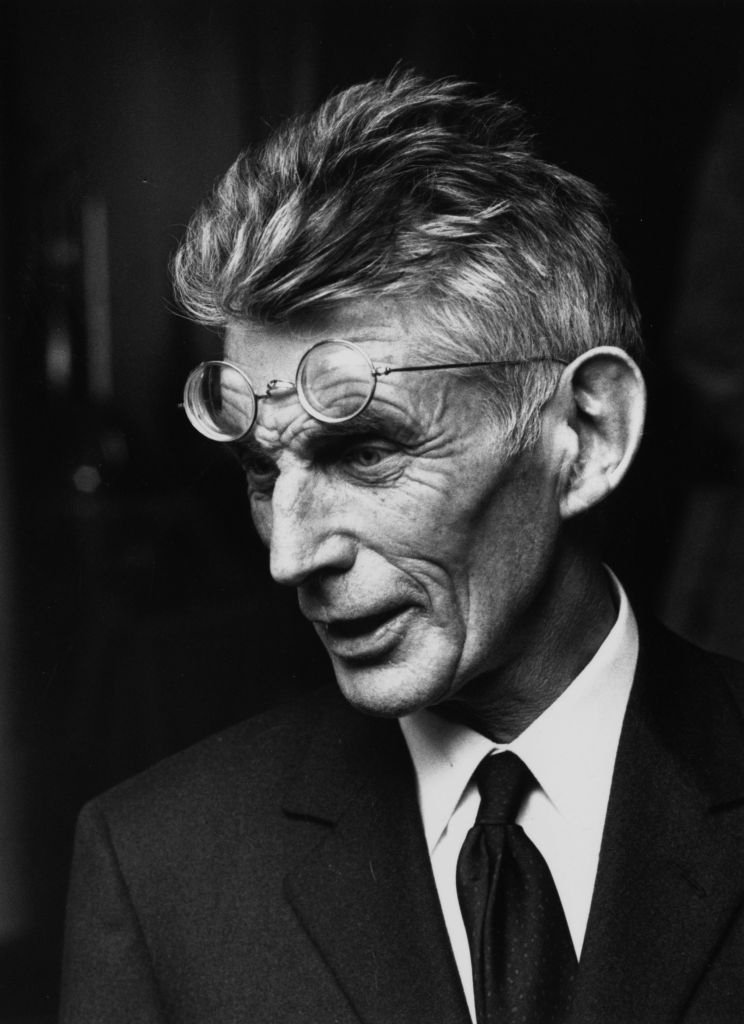
That passage marks the end of Company, a short work that stands as an almost perfect memorial to his peculiar and passionate weighing of words. Indeed, its beginning might well be an emblem for Beckett’s works entire, for it sums up the legacy of his literary labor, which had begun in absorption in Joyce and Proust and wrung itself out into pregnant quiet: “A voice comes to one in the dark. Imagine.”
His verbal genius, his unparalleled invocation of the destiny of language, even as he shuttled back and forth between English and French, restored to diction an almost sacramental gravity. In Company especially, he’s like a composer who has scraped from his scores all orchestration, all melody, indeed, almost every instrument. He pares his music back to plainchant, a voice in the dark that might find some resonance in what we think and say, and, ultimately, feel: “A voice comes to one in the dark. Imagine.

