
What a thrill ride this book has been. I really couldn’t put it down and having been glued to it for the last 48hs I really want to know: was this based on a real person? There’s iCarly mentioned, House too. There’s stardom, there’s directors name, there’s #MeToo happenings and I really, really want to know.
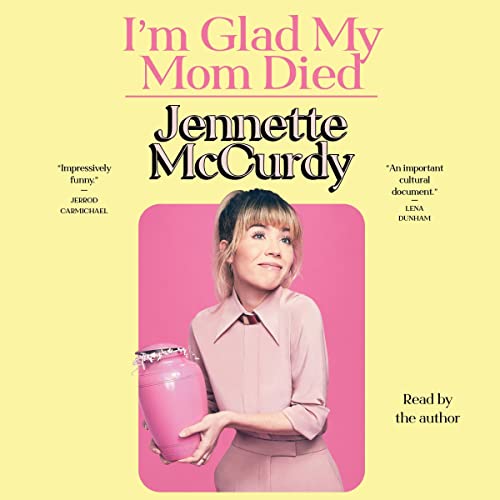
Jennette McCurdy was six years old when she had her first acting audition. Her mother’s dream was for her only daughter to become a star, and Jennette would do anything to make her mother happy. So she went along with what Mom called “calorie restriction,” eating little and weighing herself five times a day. She endured extensive at-home makeovers while Mom chided, “Your eyelashes are invisible, okay? You think Dakota Fanning doesn’t tint hers?” She was even showered by Mom until age sixteen, and was forced to share her diaries, email, and her entire income. In I’m Glad My Mom Died, Jennette recounts all this in unflinching detail—just as she chronicles what happens when the dream finally comes true. Cast in a new Nickelodeon series called iCarly, she is thrust into fame. (Source https://www.thetownhall.org/event/jennette-mccurdy-im-glad-my-mom-died)
What is my identity, even? What the fuck is that? How would I know? I’ve pretended to be other people my whole life, my whole childhood and adolescence and young adulthood. The years that you’re supposed to spend finding yourself, I was spending pretending to be other people. The years that you’re supposed to spend building character, I was spending building characters.
Holly hell, it’s real.
Well, I have never heard of Jeannete McCurdy, but I must say my heart goes out to her and her ordeal. I have read biographies of other child actors like Jodie Foster, Drew Barrimore, Judy Garland and so many other people who have grown up in the public eye. The Mickey Mouse Club was famous for launching new music stars. So was Nickelodeon for new actors. Selena Gomez, Ariana Grande, Zack Effron, they all started small. And who can forget that really, really cute video of Ryan Gosling?
The Story
McCurdy splits her memoir into two sections—“before” and “after” her mother’s death. The “before” section takes readers through her formative years as a young background actress, her rise to fame with Nickelodeon and the results of an unwanted stardom in her early twenties. The “after” section tackles the following spiral as McCurdy falls deeper into disillusionment and her eating disorders. Her road to recovery is a long one, spanning 304 pages and almost thirty years of her life.
The before years are filled with a tremendous love for her mother. And that love allowed her mother to control her until she was nearing adulthood. A young girl is writing on how she sees life, and how she sees her mother and the very much unnatural childhood she was subjected to in order for her mother to accomplish her own dream.
But I know better than to tell Mom that I got my character inspiration from her erratic and violent behavior. That would only invoke more erratic and violent behavior. I want her calm. I want her steady. I want her happy.
From how she got her first gig and how she got even more – by being able to do something that most children on set struggle to do: cry on cue.
I’m typing up my own résumé. This makes me feel proud. Capable. Competent. How many other eleven-year-olds are typing up their own résumés? I feel ahead.
However, those three words Mom just suggested I make bold cause me a deep pang of dread in my gut. I look at the words for a long beat.
Those three words get top billing in the Special Skills portion of my résumé. They come before pogo sticking, hula hooping, jump roping (including double Dutch), piano, dance (jazz, tap, lyrical, hip-hop), flexibility, and twelfth-grade reading ability—all special skills that Mom thinks will either give me a leg up for having, or that will lead me to miss an opportunity for not having, like the time I missed out on a Chef Boyardee commercial by not being able to pogo stick. Mom immediately bought a pogo stick from Pic ‘N’ Save and had me practice an hour a day for two weeks until I could get to one thousand jumps without falling off the pogo stick. Yes, I’m really good at pogo sticking.
But none of those special skills are as important as this three-word one. The one that Mom designated top billing to, the one that she wanted in bold…Crying on cue.
Crying on cue is the skill you want in child acting.
But there’s only so much that can make you sad – people dying, dogs dying, etc – Family guy had an excellent episode about this with Meg’s tears and the cookie making business. At one point you become immune to grief.
Back to her mother – the center of this little girl’s universe – is not quite an adult.
There’s a childishness to this expression of hers, like she’s a kid pretending to be an adult.
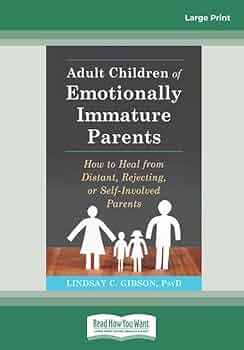
I actually recommend further reading on this – “Adult children of emotionally immature parents”.
She thumbs the cover page, but not with the pride I have when I thumb it. Her thumbing has a sadness to it.
“What?” I ask.
“It’s just…” Mom looks down and smiles wistfully. This is one of her most rehearsed-looking expressions to me. I’ve never once seen her do this expression and felt like it was really coming from her in that moment. It always feels forced.
“It’s just what?” I ask.
“It’s just… I hope you don’t like writing more than you like acting. You’re so good at acting. So, so good at it.”
Suddenly I’m embarrassed I gave Mom my screenplay. I’m ashamed. How could I be so stupid? She would never support this.
“Of course I don’t like writing more than acting. I could never.”
My heart was continuously breaking for this little child. So desperate for affection. She even copies her favourite colours
I can’t let Mom know I’m into purple, since Mom prefers pink. She would be heartbroken if I suddenly announce that I’ve switched my favorite color to one that isn’t also hers. It is an honor that Mom cares about me so much that something like me having my own favorite color would devastate her. True love.
I think the central theme of the first part of the book was her mother’s inability to let her own child grow and mature. She even helps her develop anorexia so that her boobs won’t grow and her features won’t develop. Way to stunt a child.
If I start to grow up, Mom won’t love me as much. She often weeps and holds me really tight and says she just wants me to stay small and young. It breaks my heart when she does this. I wish I could stop time. I wish I could stay a child. I feel guilty that I can’t.
The problems start appearing when she has her first taste of freedom:
I’m realizing for the first time how exhausting it is to constantly curate my natural tendencies, responses, thoughts, and actions into whatever version Mom would like most. Without her around, I don’t have to. I miss her deeply, and my heart aches over what she’s going through, and I certainly feel a lot of guilt about the ease I feel these days, but that ease is undeniable. Without her monitoring and weighing in on my every move, my life feels much easier.
And then the mother gets Cancer again and over the years she uses the sympathy she garners as a bludgeon, she requests to be more involved in Jeanette’s life, get more say in what she does, because now she’s dying and she really wants her to honour her wishes. She even makes her sing over and over again her funeral song. She’s not even dead yet.
And Jeanette tries to balance her hormones, her first kiss, her first drunken binge, the alchool consumption, the love making with an older man, the secrecy of her growing up in spite of her mom
And then she dies.
And trigger warning for whoever has struggled with eating disorders, this book really goes down in the slumps with it. Anorexia, Bulimia, Binge Eating, Calorie restrictions, counting, purging.
Sure, Mom died, but at least I’m not eating. At least I feel thin and valuable and good about my body, my smallness. I look like a kid again. I’m determined to keep this up. I’m honoring Mom.
My entire life’s purpose, keeping Mom alive and happy, was for nothing. All those years I spent focusing on her, all the time I spent orienting my every thought and action toward what I thought would please her most, were pointless. Because now she’s gone.
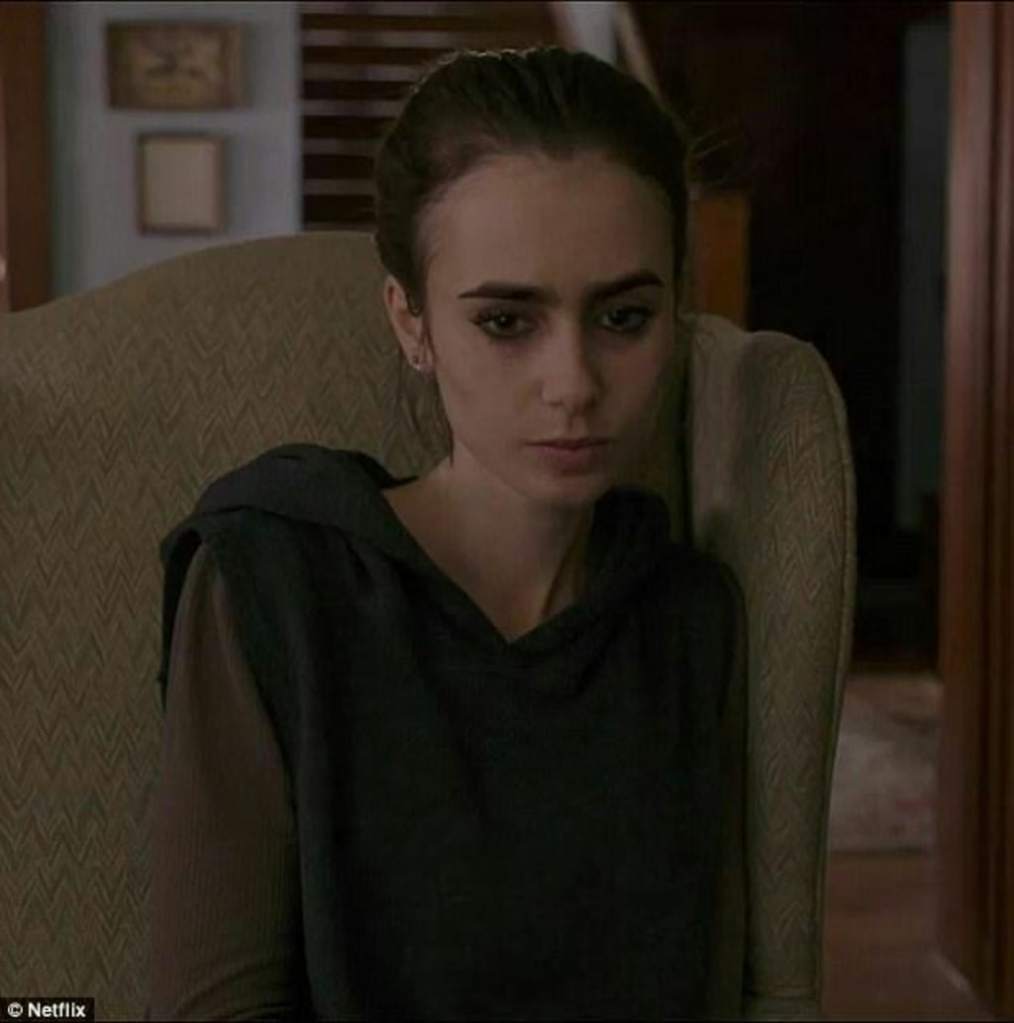
Anorexia is regal, in control, all-powerful. Bulimia is out of control, chaotic, pathetic. Poor man’s anorexia. I have friends with anorexia, and I can tell they pity me. I know they know because anyone with an eating disorder can tell when anyone else has an eating disorder. It’s like a secret code you can’t help but pick up on.
I’m hopeless. And I can’t help but carry that hopelessness with me. I walk slowly, my shoulders hunched. My eyelids are in a perpetual droop. I can’t recall the last time I smiled unless it was for a scene.
My scale has defined me for so long. The number it shows tells me whether I’m succeeding or failing, whether I’m trying hard enough or not, whether I’m good or bad. I know it’s unhealthy for anything to have that much authority over my self-worth, but no matter how hard I’ve tried to fight it, I have always felt reduced to the number on the scale—maybe because, in a way, it’s easier. Defining yourself is hard. Complicated. Messy.
I totally recommend this book but avoid it if you ever had an overbearing child parent or struggled with self-image.
 One Book a Week (Julia Reads Books)