I liked it! Finally! After a series of a few unfortunate books, I managed to find one I really liked. Not as much as Our Missing Hearts, Celeste Ng which also features the deportation camps set up for the Japanese during the second world war, but still up there.
The story is wild, full of fantastical demons, real-life evil humans, and a metaphor for the crazy things that people in power do to others in lesser positions.
The fervor—that’s what she had begun to think of the disease as—had for its symptom the most powerful of contagious elements: fear. It seemed to spread from host to host faster than a spider could and caused violence and cruelty far deadlier than any weapon.
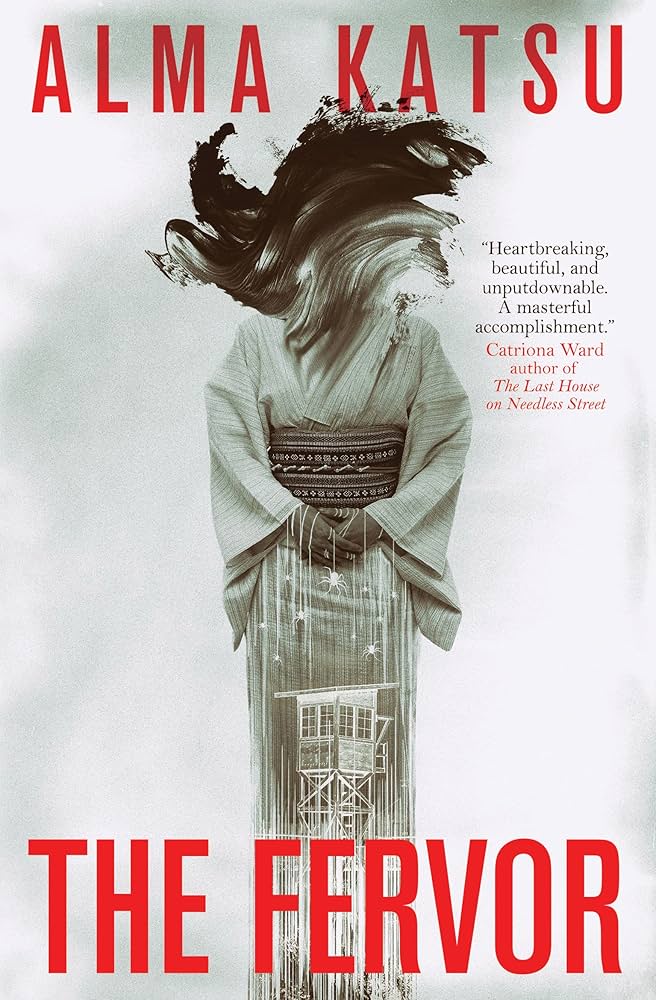
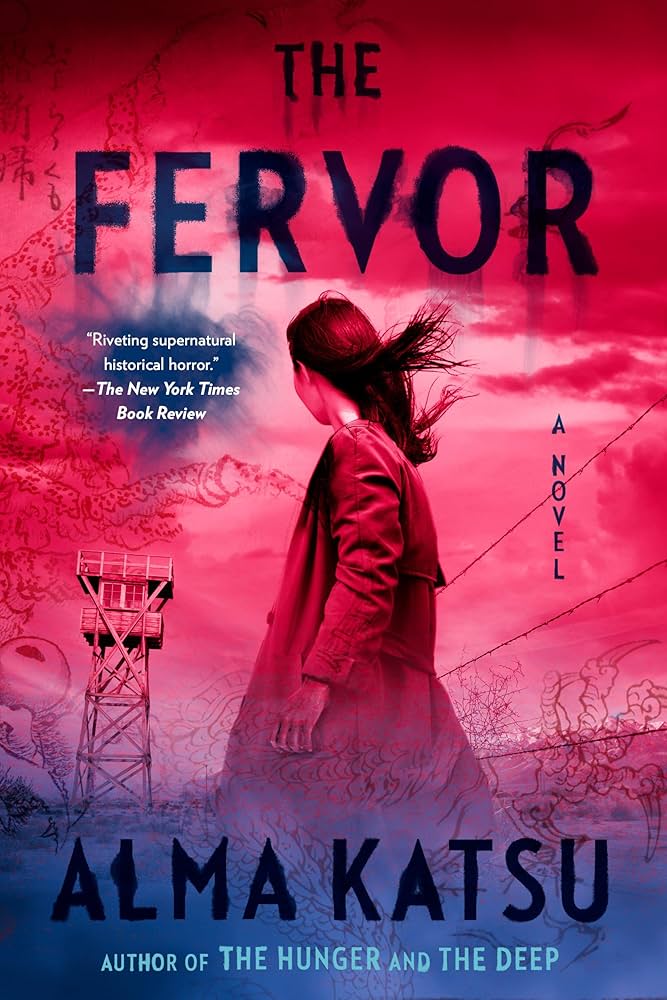
In a remote corner of Idaho, Meiko Briggs and her daughter, Aiko, are desperate to return home. Following Meiko’s husband’s enlistment as an air force pilot in the Pacific months prior, Meiko and Aiko were taken from their home in Seattle and sent to one of the internment camps in the Midwest. It didn’t matter that Aiko was American-born: They were Japanese, and therefore considered a threat by the American government.
America was not Nazi Germany. Rounding up citizens in camps in order to kill them: it was impossible. It went against everything America stood for—everything Americans said they stood for
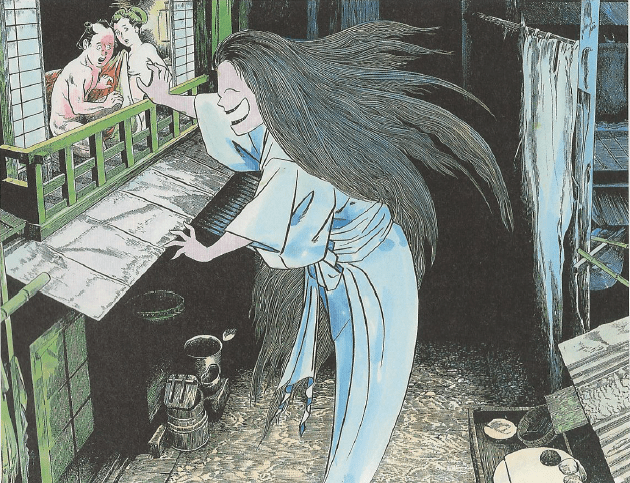
Mother and daughter attempt to hold on to elements of their old life in the camp when a mysterious disease begins to spread among those interned. What starts as a minor cold quickly becomes spontaneous fits of violence and aggression, even death. And when a disconcerting team of doctors arrive, nearly more threatening than the illness itself, Meiko and her daughter team up with a newspaper reporter and widowed missionary to investigate, and it becomes clear to them that something more sinister is afoot: a demon from the stories of Meiko’s childhood, hell-bent on infiltrating their already strange world.
These spiders . . . were they magical, creatures sent by Japanese gods to avenge their country?
We follow the story lines of Mother, daughter, reporter and a pastor called Archie, whose (pregnant) wife dies after one of the balloons explodes. Turns out Archie and Ellen knew Meiko and her daughter and were still responsible for their being taken away.
Archie thought of the editorials in the newspapers and radio programs reminding everyone to be on the lookout for suspicious behavior. Warning everyone that their neighbors could be spies. Suspect anyone who admired Japanese culture. Look for telltale signs: chinoiserie displayed in their homes, books about samurai, bonsai plants on the windowsill. Did they like Chinese dumplings and egg foo young?
There was a time—Archie burned with shame to remember—when this could’ve been said about him. When he lived in Seattle and was going to seminary. There were a lot of Japanese there. You’d have to be living under a rock not to know some. His best friend, Jamie Briggs, had even fallen in love with a Japanese woman.
He pictured them together, Jamie and Meiko, with their daughter, Aiko. This was not a pleasant memory, and he shut it down quickly. He refused to think about it.
I think what I liked most about the book is the unclear line between “is it the disease or is it racism and xenophobia?”. To be honest, I think it goes both ways. The Japanese are extremely proud of their heritage and nationalistic to a fault (can be seen today if travelling to work in Japan). But the Americanized Japanese tried their best to merge and be one with the adopting nation.
My father always thought it wrong that Japan did not open up more to the West. Japan can be arrogant; we are raised to believe our country is the greatest in the world and that we Japanese are somehow better than everyone else. I think it is one of the things that Americans hate most about Japan, is it not?” She said the last part with an ironic smile. “We are raised to believe the emperor is a god who always knows what is best. We are raised to follow orders. To submit, even when we have misgivings. Even when we know that no mortal man can be a god and should not be treated like one.
The Author’s disclaimer:
Unlike my previous two books, which adhered to historical timelines, The Fervor deviates from actual events, and I want to be clear about this. This book was written to hold the mirror of history up to the reality of today, to show that the self-deception we were guilty of in the past is back with a sickening vengeance. The timeline in The Fervor, particularly the balloon events, does not reflect the sequence in which they actually happened, and while there are a few characters based on real people—Archie and Elsie Mitchell, the children who died on Gearhart Mountain, and a few others—the characters in the book are not meant to be representative of these people. The Fervor is a work of fiction, meant to tell a specific cautionary tale, and I’ve massaged the historical events and characters in order to tell that tale.
 One Book a Week (Julia Reads Books)