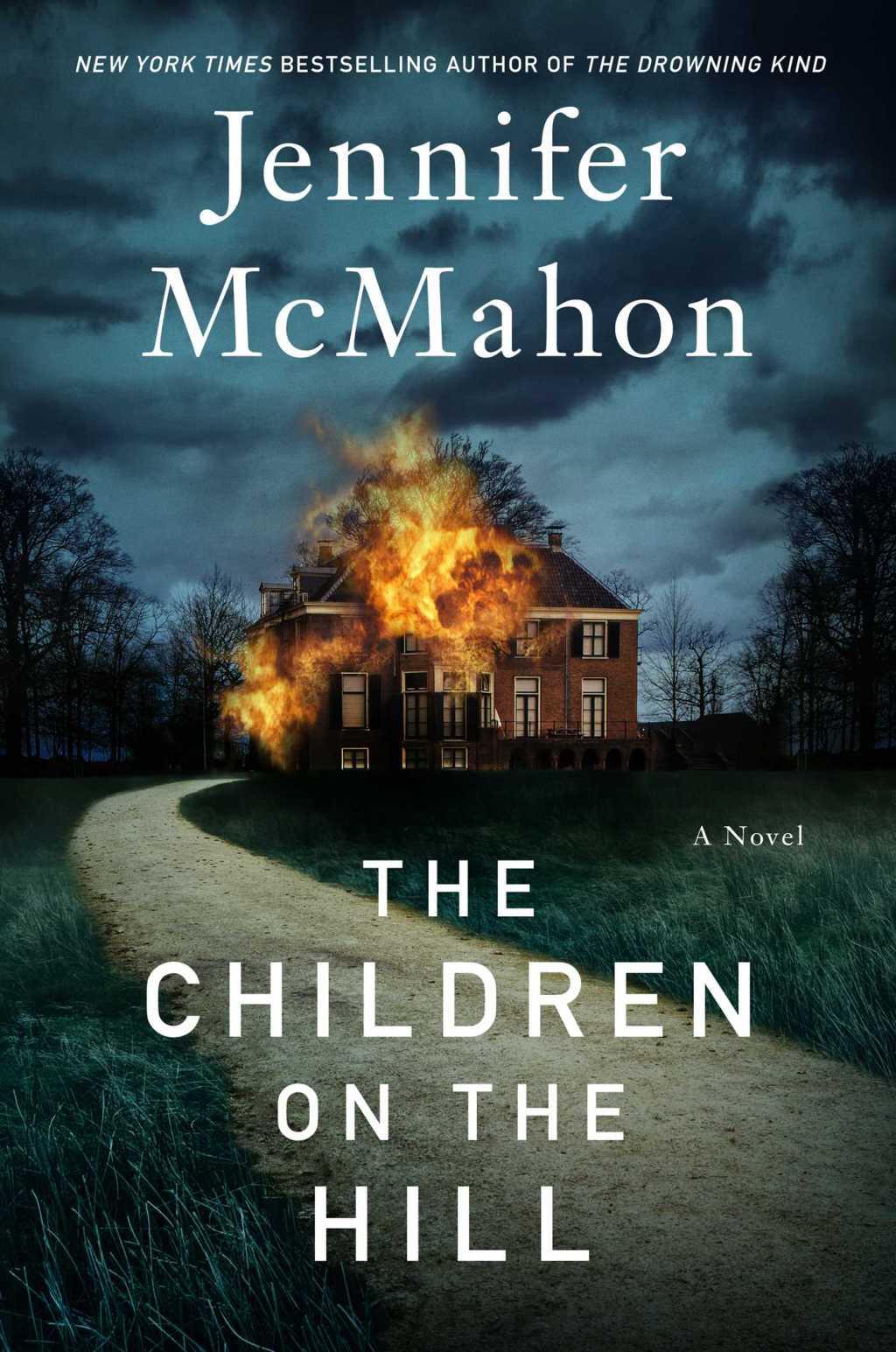
A genre-defying new novel, inspired by Mary Shelley’s masterpiece Frankenstein, which brilliantly explores the eerie mysteries of childhood and the evils perpetrated by the monsters among us.
1978: at her renowned treatment center in picturesque Vermont, the brilliant psychiatrist, Dr. Helen Hildreth, is acclaimed for her compassionate work with the mentally ill. But when she’s home with her cherished grandchildren, Vi and Eric, she’s just Gran—teaching them how to take care of their pets, preparing them home-cooked meals, providing them with care and attention and love.
Then one day Gran brings home a child to stay with the family. Iris—silent, hollow-eyed, skittish, and feral—does not behave like a normal girl.
Still, Violet is thrilled to have a new playmate. She and Eric invite Iris to join their Monster Club, where they catalogue all kinds of monsters and dream up ways to defeat them. Before long, Iris begins to come out of her shell. She and Vi and Eric do everything together: ride their bicycles, go to the drive-in, meet at their clubhouse in secret to hunt monsters. Because, as Vi explains, monsters are everywhere.
2019: Lizzy Shelley, the host of the popular podcast Monsters Among Us, is traveling to Vermont, where a young girl has been abducted, and a monster sighting has the town in an uproar. She’s determined to hunt it down, because Lizzy knows better than anyone that monsters are real—and one of them is her very own sister.
The Children on the Hill takes us on a breathless journey to face the primal fears that lurk within us all.
“The Children on the Hill” follows popular “monster hunter” Lizzy Shelley in 2019. Lizzy we find out quickly has a somewhat murky past. She goes across America lecturing and even filming where people have claimed local monsters are behind missing girls and other incidents. Lizzy though has her eyes on a particular monster that seems to be behind the disappearances of girls throughout the past 20 plus years. Lizzy has an idea she knows who is behind it.
We mainly have two timelines: one in the present and one in the 70s. In the first half of the book, the 70s timeline was intriguing and the present was slow. In the second half, it was flipped. It kept the pacing off-balanced.
In order to keep the timelines aligned for reveals, dull filler had to be added. So themes and mantras were pounded into the reader’s brain repeatedly. It became tiresome after a while.
Also, there’s an odd hormonal teenager story in there where Vi and Izzy kiss.
She felt herself pulled forward, her breath on Iris’s cheek, her lips moving to find Iris’s lips. Their mouths pressed hard against each other, teeth banging together. Vi had never kissed anyone, other than Gran on the cheek at night. And she knew it was wrong—girls weren’t supposed to kiss girls, not like this, not like men and women did in movies—but it felt as if everything inside her was pulling her to Iris, and she couldn’t stop it if she tried. She kissed Iris desperately, hungrily, as if her kiss alone could save Iris, could pull her back, take away all that had happened; as if her kiss could banish the monsters.
Iris pushed Vi away, her eyes huge with fear.
Vi staggered backward, started to speak: “I—”
She was breathless, heart hammering, unsure just what she was going to say, what words were going to come tumbling out like a random roll of the dice:
I’m sorry.
I love you.
Let’s forget this ever happened.
What I liked about the novel was the creepy atmosphere but it got more and more overshadowed by how predictable the plot was, and I found myself getting annoyed by how obvious the big mysteries were.
I guessed at least 2 of them before even getting 2/3 into the book, and I don’t consider myself to be Sherlock Holmes. The hints were clumsy and rather than foreshadowing, they telegraphed the twists clear as day.
A big chunk of the plot was also completely unbelievable – it simply made no sense for a certain character to do what they did, and it was glaring how obvious it was that their actions were only happening for plot purposes. Also, if I never read the word ‘monster’ ever again, it will be too early – my Kindle tells me that in this 352 pages book ‘monster’ appears 345 times.
Dearest Iris,
Do you remember when we thought you were the monster?
You, my secret sister.
My truest love.
My twin.
I used to picture us that way sometimes. Not just sisters, but twins, curled around each other in the darkness of the womb, then later, in the darkness of my room. Entangled, both of us unsure whose limbs were whose.
Shadow sisters.
Doppelgängers.
I loved you so much I thought my heart might explode.
Do you remember when I gave you lessons in being human?
Walk upright. Brush your hair. Wear your clothes right side out. This is how we tie our shoes. This is how we smile and say please and thank you.
As if I were an expert.
Learn to blend in, I told you.
I can help you.
 One Book a Week (Julia Reads Books)