Another book from my mother’s bookcase. She really loved the Russian authors and had quite a collection. The introduction places this book as prosaic poetry and it was quite a chunky read. I went in completely blind and while I loved the first quarter of the book, from there till the end, the tone shifts from what was an idylic description of the Russian peasants to a manifesto on intellectuals, the importance of books and Russian honour.
If he kept his book limited to describing the life in the countryside, it would have been beautiful. Like this… meh. Propaganda.
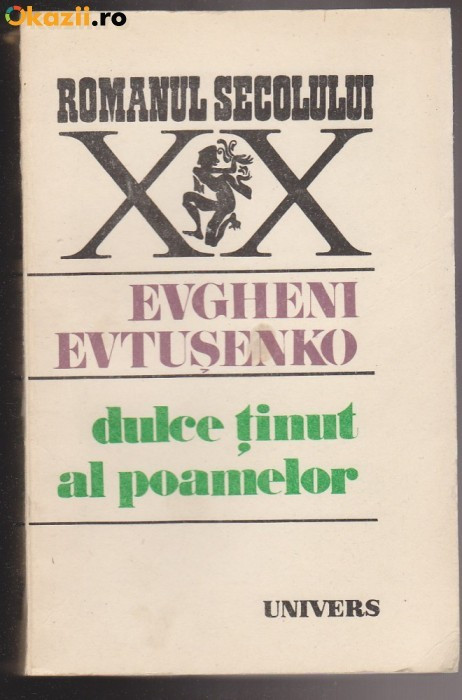
The book
Approaching 400 pages, the book follows a team of Moscow scientists, headed by the brilliant Victor Kolomeitsev, who explore the primitive Siberian “taiga,” a land of pristine beauty, in search of a precious metal – tinstone.
The prose is very flowy and flowery in parts and at least in the first quarter, takes time to show the beautiful land, the maidens who gather the hay, the lives of the apple seller, a dad and his old maid daughter who gets seduced by a Moskovite and falls pregnant and the life of a painter who went to war.
The second part of the book is an entire discourse guised as a dialogue about the belief in God, sin, intellectuals in the Red revolution, arguing that the sweat of the peasants in their lord’s fields is the reason why the lord’s offspring was educated with French and other Western values and why things have changed for the better for the Russian people.
Statistics are thrown about how many are illiterate. About the importance of having good teachers in school, to make you love the matter and not despise wisdom. I HATED IT with a passion. Leningrad life, proletariat, people smoking in cafes and pessimistically looking at the future together.

The reasons why the Soviet authorities expelled so many intellectuals were connected with the state educational outlook. In 1921, the Bolsheviks curbed universities’ autonomy, understanding the importance of education for the creation of a new, socialist society and wanting to tighten control over educational centers. In general, the new regime paid a lot of attention to education, actively fighting illiteracy and expending higher education. The university reform, however, caused discontent that triggered the wave of so-called “professors’ strikes.”
However, there were also other considerations involved. Many intellectuals were religious thinkers and as such had no place in socialist Russia, according to its leaders. This becomes obvious if one takes a look at Lenin’s article from March, 1922 that paved the way for the Philosophy Steamer’s action. It’s called “On the Significance of Militant Materialism.”
In his article Lenin connects religion and modern philosophical non-Marxist trends with the class position of the bourgeoisie, the sworn enemy of the new Russian proletarian state. For Lenin, religious thinkers and supporters of modern philosophical approaches were “ideological slaves of the bourgeoisie” who one way or another aspired to the restoration of an old, capitalist system in Russia. Many believed the bourgeoisie manipulated the masses using reactionary, mainly religious ideas – so the Soviets were compelled to deal with those responsible for such ideology.
About the author
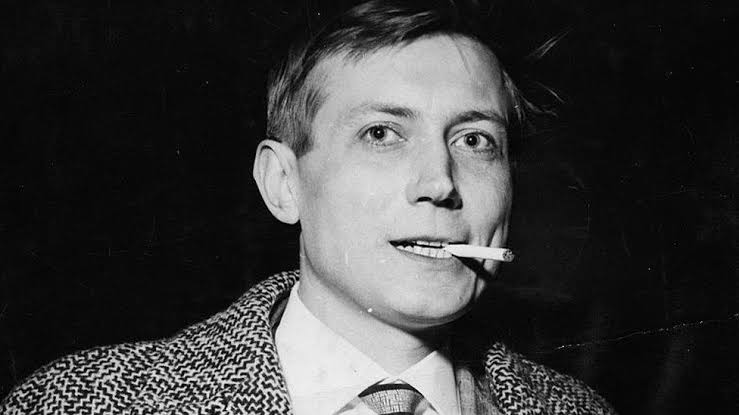
Yevgeny Yevtushenko (born July 18, 1933, Zima, Irkutsk oblast, Russia, U.S.S.R.—died April 1, 2017, Tulsa, Oklahoma, U.S.) was a poet and spokesman for the younger post-Stalin generation of Russian poets. His internationally publicized demands for greater artistic freedom and for a literature based on aesthetic rather than political standards signaled an easing of Soviet control over artists in the late 1950s and ’60s.
A fourth-generation descendant of Ukrainians exiled to Siberia, Yevtushenko grew up in Moscow and the small town on the Trans-Siberian Railway line that is the setting of his first important narrative poem, Stantsiya Zima (1956; Zima Junction). He was invited to study at the Gorky Institute of World Literature in Moscow, and he gained popularity and official recognition after Joseph Stalin’s death in 1953. Yevtushenko’s gifts as an orator and publicist, his magnetic personality, and his fearless fight for a return to artistic honesty soon made him a leader of Soviet youth. He revived the brash, slangy, unpoetic language of the early Revolutionary poets Vladimir Mayakovsky and Sergey Yesenin and reintroduced such traditions as love lyrics and personal lyrics, which had been discouraged under Stalinism. His poem Baby Yar (1961), mourning the Nazi massacre of an estimated 34,000 Ukrainian Jews, was an attack on lingering Soviet anti-Semitism.
Yevtushenko’s travels and poetry readings in the United States and Europe established cultural links with the West, but he fell into disfavour at home when he published his Precocious Autobiography in Paris in 1963. He was recalled and his privileges were withdrawn, but he was restored to favour when he published his most ambitious cycle of poems, Bratsk Station (1966; originally published in Russian), in which he contrasts the symbol of a Siberian power plant bringing light to Russia with the symbol of Siberia as a prison throughout Russian history.
Yevtushenko’s play Under the Skin of the Statue of Liberty, which was composed of selections from his earlier poems about the United States, was produced in Moscow in 1972. His first novel, published in Russian in 1982, was translated and published in English as Wild Berries in 1984; that same year, a novella, Ardabiola, appeared in English translation. In 1978 he embarked on an acting career, and in 1981 a book of his photographs, Invisible Threads, was published. He published more poetry in The Collected Poems, 1952–1990 (1991), The Best of the Best: The Evening Rainbow (1999; also published as Evening Rainbow), and Walk on the Ledge: A New Book of Poetry in English and Russian (2005). His autobiographical novel Don’t Die Before Your Death (1994; also published as Don’t Die Before You’re Dead) treats the attempted coup against Mikhail Gorbachev in Soviet Russia in 1991.
 One Book a Week (Julia Reads Books)