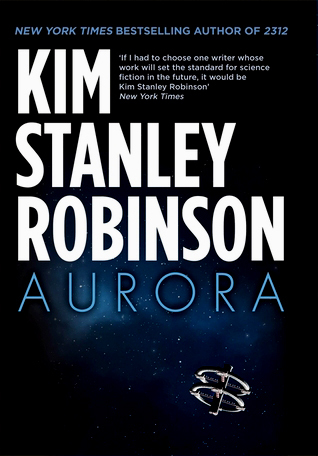
Man, what a book! Started off about a city in a space ship, ended up with terraforming and an alien parasite infestation. Not to be confused with Aurora by David Koepp (2023) or the story of the time when the world went dark after Covid
…by weight we are 99 percent machine, 1 percent alive; but in terms of individual component units, or parts of the whole, let us say, the percentages are almost reversed, there being so many bacteria on board
Our voyage from Earth began generations ago.
Now, we approach our new home.
AURORA.
I kinda liked the first half of the book – the author describing how two ships have set off on a massive travel (one gets lost) and the other slowly descends into chaos as the human nature takes over the 2.2k inhabitants. We have civil war, greed, lust, all the major sins described in a very nihilistic manner, attempting to portray that humankind will never transcend its most basic flaws, even in the era of space travel.
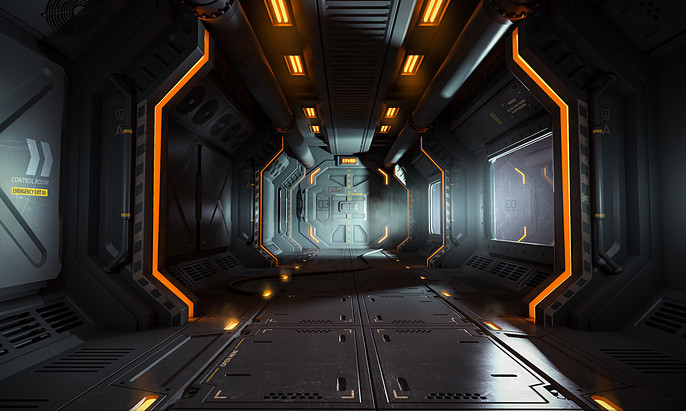
The second part of the book is a marvel of sci-fi.
When they finally reach their destination, Aurora. the colonists see a pretty watery moon orbiting a planet called E, ( there are ten in the system, A to J, rock and gas planets, all uninhabitable) similar to its satellite in appearance but with a crushing 3.5 times the gravity of Earth, too much for humans to endure.
Slowly some of the the travelers disembark, all seems well until a lethal virus strikes the Earthlings. They are totally unprepared for this in their new, windy settlement home, (a blustering 40 miles a hour) large ocean waves continuously hit the island’s or is it a continent’s, shores…white ice caps in the north and south poles , exotic blue skies, the same as the waters, numerous islands encircling this sphere, green hills and mountains, a beautiful world, theirs, if they abide….with breathable air…paradise lost?
Robinson tells his story through the point of view of a very few characters. Ironically enough, the most human of these is the quantum computer that runs the ship (called simply “Ship”). Ship’s personality, its distinct voice, gives more life to this novel than any of the otherwise flat characters.
What I loved.

3D Printers
The printers are wonderful. They can make anything you want. Well, you can’t print elements; this is one of Devi’s sayings, mysterious to Freya in its import. But you can print DNA and make bacteria. You can print another printer. You could print out all the parts for a little spaceship and fly away if you wanted. All you need is the right feedstocks and designs, and they have feedstocks stored in the floors and walls of the ship, and a big library of designs, which they can alter however they want. They have the whole periodic table on board, almost, and they recycle everything they use, so they’ll never run out of anything they need. Even the stuff that turns to dust and falls to the ground will get eaten by bugs that like it, and thus get concentrated until people can harvest it back again out of the dead bugs. You can take dirt from anywhere in the ship and sift it for what you want. So the printers always have what they need to make stuff.
The dangers of not moving fast enough
Many people in the ship didn’t want to wait three thousand years, or however long it might take to terraform Iris. Others didn’t think they could last that long. Others didn’t think it would take that long. “The models must be wrong,” some said. “Surely once life got started on a planet, it would change things fast. Bacteria reproduce very quickly in an empty ecological niche.”
“But on Earth it took a billion years.”
“But there was only archaea on Earth. With the full suite of bacteria it would go fast.”
“Not where there isn’t an atmosphere. Bacteria on rock, exposed to the vacuum, doesn’t grow very fast. It mostly dies, in fact.”
“So we need self-replicating robot machinery to make soil, to make air, to add water.”
“But the selfreps need feedstocks. Collecting the necessary materials can only be accomplished by a first generation of robots, and that won’t be fast.”
“We can print printers and thrive! It can be done. We can do it. Our robots can do it.”
“It’s going to take too long. In the meantime we’ll die out. Evolve at differential rates, and diverge right inside our own bodies. Zoo devolution. Codevolution. Sicken and die and go extinct. Sicken and die and never once leave this ship.”
“So that maybe,” Freya kept saying, “we need to go back home.”
I had to sit and think what the hell was Zoo Devolution:
The first generation of the ship was populated by the best and brightest of mankind. It wasn’t that their children were dumb… just average. In that second generation, a few were probably above average. But the talent pool was reduced from an entire solar system populated with billions of individuals, to a few hundred children. This trend wasn’t just limited to intelligence, but other physical characteristics.
Now, the bacteria on board, in contrast, enjoyed a population of quadrillions, and multiplied much faster, hence evolved faster than the human immune system could handle.
The problem is this: the spaces we have available to live in are too small to survive in for three thousand years. The main problem is the differential rates of evolution between the various orders of life confined to the space. Bacteria generally mutate at a rate far faster than larger species, and the effect of that evolution on the larger species is eventually devastating. This is one cause of the dwarfism and higher rates of extinction seen in island biogeography studies. And we are an island if there ever was one. And this Iris is not an Earth twin, nor an Earth analog. It is a Mars analog.
Fear of the unknown
When you discover that you are living in a fantasy that cannot endure, a fantasy that will destroy your world, and your children, what do you do?
People said things like, Fuck it, or Fuck the future. They said things like, The day is warm, or This meal is excellent, or Let’s go to the lake and swim.
A plan had to be made, that was clear to all. But plans always concern an absent time, a time that when extended far enough into the future would only be present for others who would come later.
Thus, avoidance. Thus, a focus on the moment.
Parasitic Infection
Of course there was something there on Aurora, which then moved into many of the settlers. Judging by the way it spread, it was probably in the clay, the water, and, to a certain extent, the wind.
Just struck me as well half way through – he has given them printers that can produce anything, and makes it clear that in pratical terms they have infinite resources – and would build anything with ever accelerating pace as new printers are added and distrubuted throughout the solar system.
The backers could just add extra fueltanks to accelerate and break – and add a few more rings and biomes as well; the forwarders could build a new ship complete with what they need and the stayers could build whatever they like.
Artificial Intelligence
Jochi has begun sending texts to us about machine intelligence, sentience, philosophy of consciousness, what have you. That suite of topics. It is as if he wants company. It is as if he is teaching a religious novitiate, or a small child.
As if.
One of the inventors of early computers, Turing, wrote that there were many arguments against the possibility of machine sentience that were couched in terms of the phrase “a machine will never do X.” He compiled a list of actions that had at one point or another been named as this X: “be kind, resourceful, beautiful, friendly, have initiative, have a sense of humor, tell right from wrong, make mistakes, fall in love, enjoy strawberries and cream, make someone fall in love with it, learn from experience, use words properly, be the subject of its own thought, have as much diversity or behavior as a man, do something really new.”
What I didn’t like so much about the book:
The all-knowing author trope, the over-explaining and repetitive motions in trying to push down the reader’s throat pure science. Most of the characters are really bland and some are quite dumb.
But hey, positives rule.
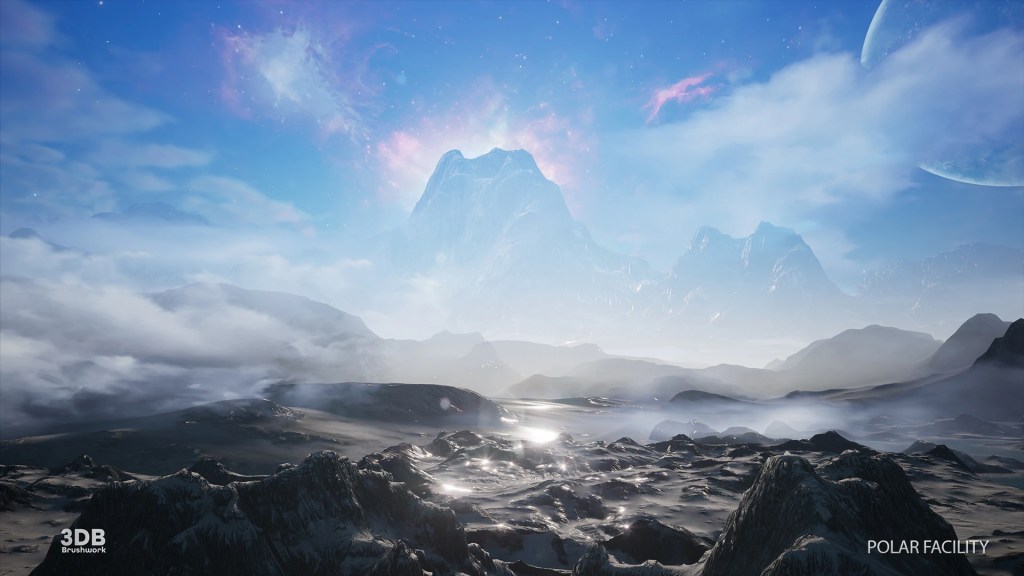
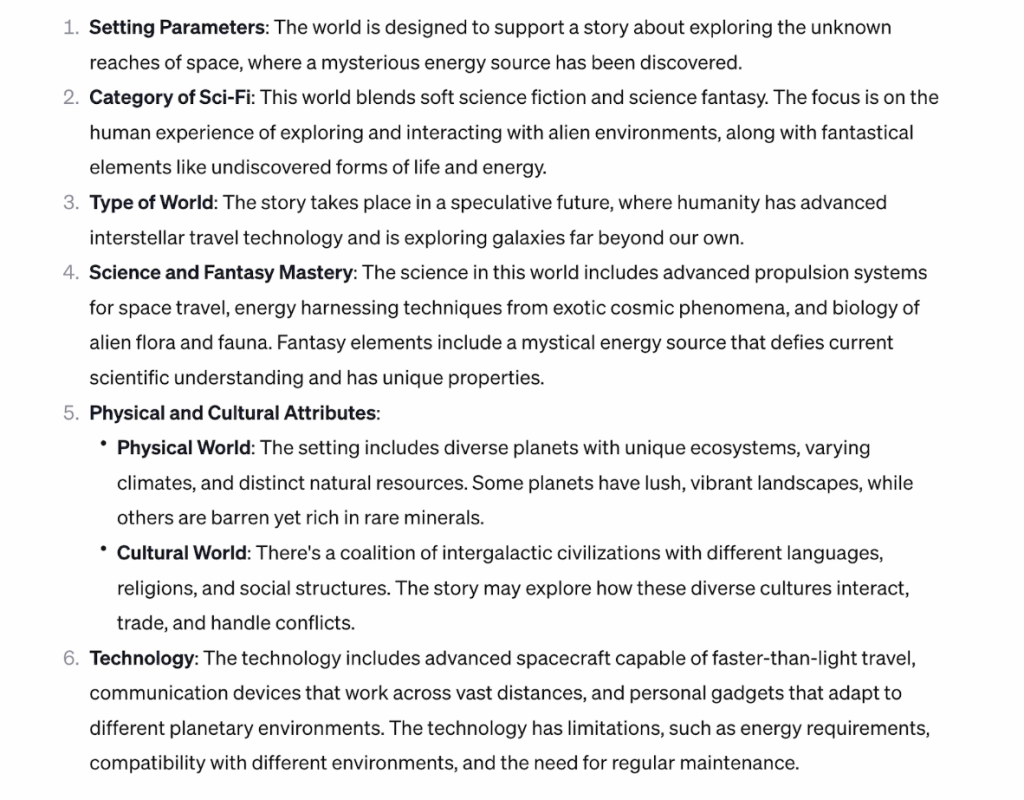
All in all, Robinson has done a sci fi which even ChatGPT claims it’s first class worldbuilding.
 One Book a Week (Julia Reads Books)