This must probably be one of the most boring books I’ve set my hands on. Yawn fest. It reads like a writer’s retreat write-prompt compilation which goes nowhere and it’s supposed to be a reflection of the soul through self-meditation and instead sounds more like a diary.
We both approached writing much the same way we approached going to the gym in those days: with the belief that regular attendance was more than half the battle. Lucy knew that she could write a novel if she just kept showing up and getting in a few pages a day. She told herself that Scotland could be the ultimate writer’s colony, with financial support and limitless free time. On one side of her was an enormous well of depression waiting to be given over to, the voice in her head that said she was unloved and therefore unlovable, and on the other side was a daily page minimum and the copy of War and Peace she was reading, the belief that work would be her salvation and that the life of the mind would set her free.
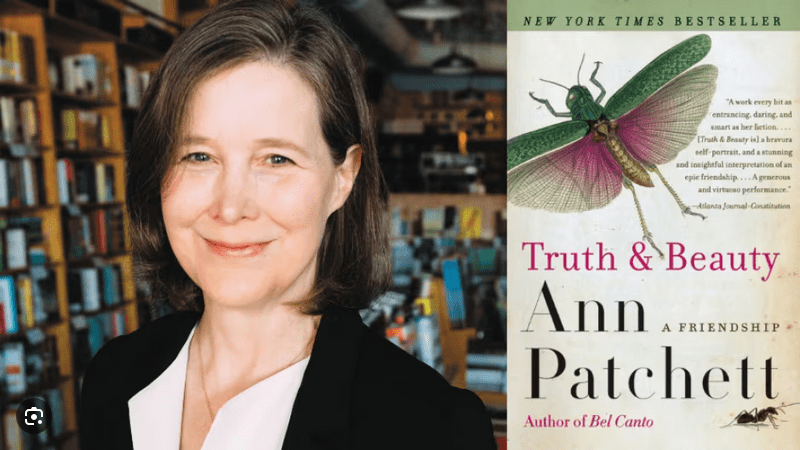
Blurb:
When Ann Patchett and Lucy Grealy met in college they began a friendship that would define their lives. Lucy Grealy lost part of her jaw to childhood cancer, and a large part of her life to chemotherapy and endless reconstructive surgeries. Stoic but vulnerable, damaged by bullying but fascinated by fame, Lucy had an incandescent personality that illuminated those around her.
In this tender, brutal book, Ann Patchett describes Lucy’s life and her own platonic love for her. Truth & Beauty is the story of the part of their lives that they shared – the camaraderie and comedy, the tribulations and tragedy of true friendship. A portrait of unwavering commitment through success, failure, despair and drugs, this is what it means to be part of two lives that are intertwined.
Lucy and I, it has already been established, differed in matters of housekeeping and we entered the whole thing with a stand of no judgment, no blame. I wanted to clean out her closet; she wanted me to clean out her closet. Neither of us pretended it was otherwise.
There was a vast collection of unwashed thrift-store dresses with tiny waists and sweetheart necklines, checks and plaids and sentimental flowers, but every one had a stain or a tear or a hanging hem, and while I could sew, I couldn’t imagine bringing anything up to the standards of television. Lucy rarely wore the dresses anyway. She bought them for the sheer pleasure she took in knowing that no one else could fit into them. Lucy looked good in jeans, but jeans would not save the day

Yeah, totally not my style. Why would the author include so many useless descriptions? Why this odd attachment to Lucy? Lucy is totally self-centered and a walking mess and the author barely disguises her resentment under admiration notes. When she does talk badly about Lucy, she hides it as someone else’s notes. Not her. Someone else said that!
“Many of us are dissatisfied when we look in the mirror,” Terry Gross’s introduction of Lucy began, “but that’s different from the extreme anguish Lucy Grealy experienced when she saw her reflection. By most standards her face was ugly, even repulsive.”
And she seems to be no true friend, detailing everything about this Lucy chick. The unflattering, the nasty.
Sometimes when Lucy called she couldn’t stop crying. Other times she called to tell me how she had cried for an entire day. “I thought I knew what it was to be depressed,” she said. “But I never had any idea before this.”
I always thought of how she cried in Iowa, how she would curl up in a ball on the sofa and weep and sob for hours at a time. I didn’t think she had just discovered depression.
And she talks about her medical ordeals and always emphasises how she’s been holding Lucy’s head when throwing up.
Throwing up had been a major ordeal during this surgery because she had had operations on both her stomach and her jaw. I had to sit behind her in the bed and hold her up while she vomited, my legs on either side of her hips like we were doing drills in Lamaze class. Most of the time she threw up a bright green water that looked and smelled alarmingly like Scope, some remnant of eleven hours of anesthesia.
If friends are like this, I want none.

In the dark bar, which might have been Cafe Drummond in Aberdeen, she is on my lap and I am tearing up tiny bites of croissants filled with almond paste and feeding them to her, when I suddenly remember something. “Oh my God, Lucy, I’m writing a book about you being dead.” I feel embarrassed somehow, as if this proves I had lost faith in her ability to still be alive. “I’m so sorry. I’ll throw it away.”
Lucy shakes her head. I could feel her in my arms, just the weight of her bones, the brush of her head against my cheek. “Go ahead and write it,” she says. “I’ll probably die. Even if I don’t die now, I’ll die sooner or later, right?”
I bet my ass she didn’t say that.

 One Book a Week (Julia Reads Books)