I’d expect the latent effects of system collapse to ripple throughout the country—and the world, except for perhaps a belt around the equator—for up to thirty days afterwards. Eventually everything’s going down. Almost complete destruction of communications and other critical infrastructure.”
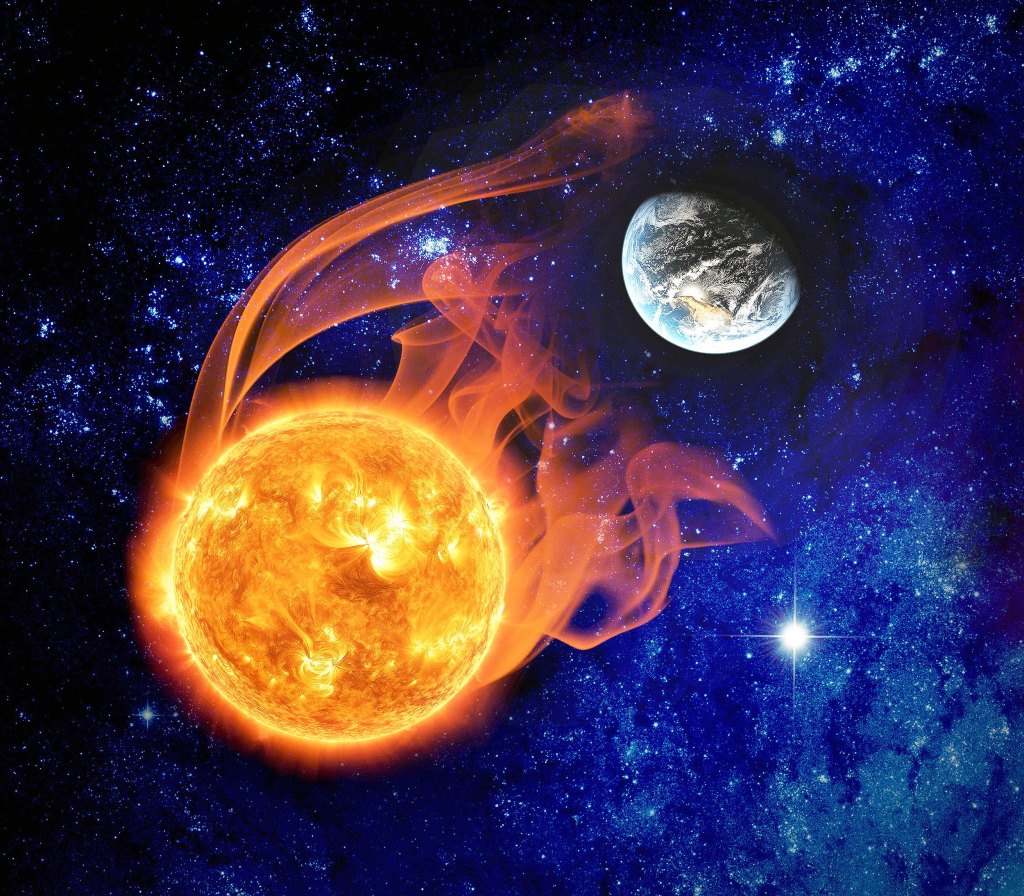
Imagine if one of the solar flares hit earth. I’ve read books about a potential society sundown like this – for example: After: The Shock, A post-apocalyptic thriller by Scott Nicholson.
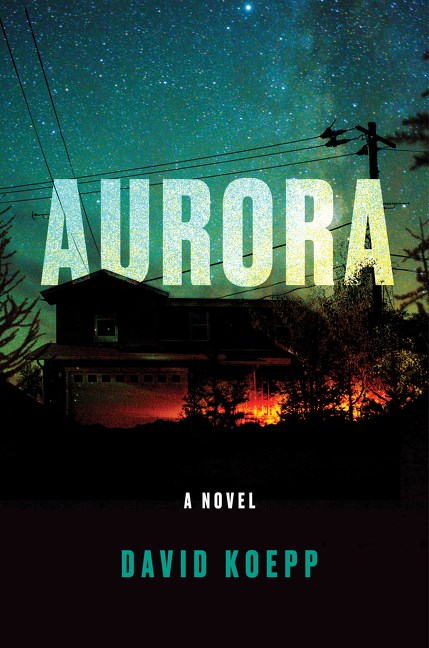
This was a different take on this, solely seen from the eyes of 4 characters, who become three by the end of the book. (no spoilers)
“There is no such thing. Just because something hasn’t happened before doesn’t mean it never will. Your thinking is stuck; it’s called initial occurrence syndrome.
So let’s see who the characters are:
- Thom – a billionaire tech magnate who is as insufferable as a world-class know-it all. He likes to prep and think of all of the possible outcomes and in the process become a control freak
- Aubrey – his younger sister. Her and Thom share an old secret which is revealed mid-book – which Thom feels the need to overcompensate with Aubrey for. He sends her money (truckloads), wires stuff in her bank account, buys security systems and is overly invested in what she does, but somehow ends up taking a bit of her voice away.
- Randy – Aubrey’s ex husband. He’s a meth head and a gambling addict and a drunk. Aubrey did well to get rid of him when things started getting violent, but he’s back for more.
- Brady – a very decent man, working in a high-paced environment as a right-hand for Thom. He goes on a journey across America to deliver some cash to Aubrey at her brother’s insistence. He reminded me a bit of the guy from Swan Song by Robert R. McCammon (1987)
- Norman – a scientist who happens to live on the same street as Aubrey – gets a single chapter to his name as he gets called when one of his former students identifies the solar explosion that’s going to turn the world dark

I think Norman is the only normal guy of the bunch and most likeable character. And Brady too. Unfortunately they don’t get a lot of plot time, just as relief from the other drama going on.
As Stephen King mentioned in “The Stand”, what’s going to kill people in case of large-scale societal collapse isn’t the environment, it’s other people. Some will die from preventable diseases, some will kill themselves, but others will die of extreme violence.
Thom, the know-it-all, mentions this briefly in a call to Aubrey:
“You will be without power for an extended period of time. Months. In the short term, you will run out of battery for your phone, which wouldn’t work anyway, because cell towers will go down.
Longer term, the supply chain of food will strain and break, the water will stop flowing from your tap, and your neighborhood will descend into lawlessness. I don’t have to ask if you ever bought a generator, because I’m sure I’m correct in guessing you did not. I doubt that you actually filled the freezer in the basement, you have no weapons of any kind because you are
philosophically opposed, and you are living within one hour of the third-densest urban population in the country, all of which will soon be starving, panicked, and on the run. You will be living WROL: without rule of law. I know you don’t like reality, Aubrey, but there it is. “
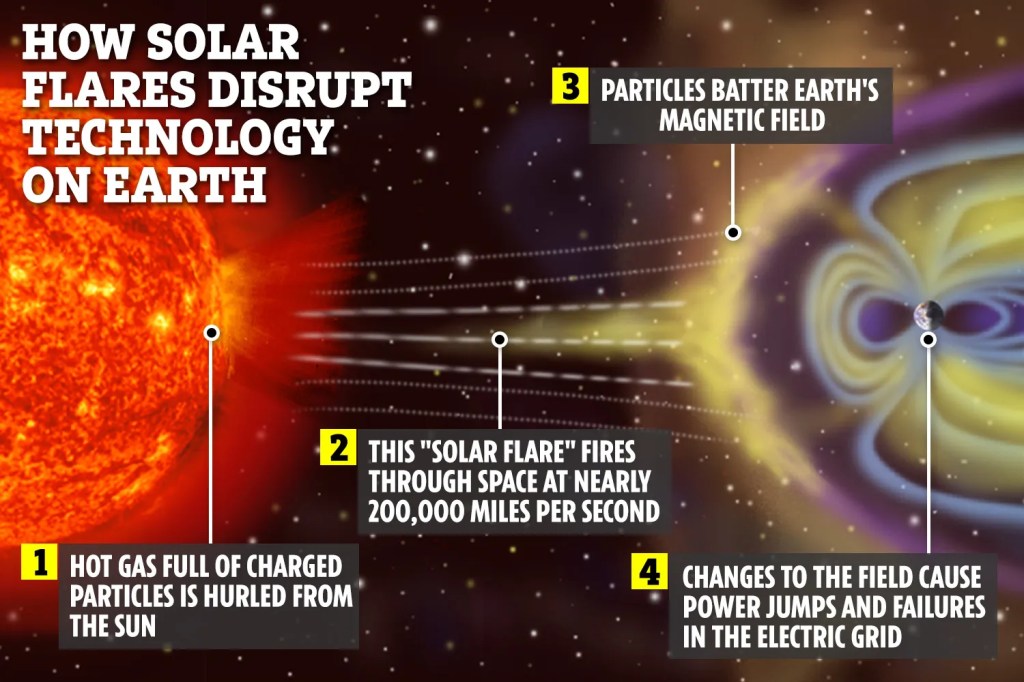
When the actual flare hits the Earth, the Magnetic cover that we posess helps a bit. And the waves disperse when they reach the Equator, meaning some of the poorest nations in the world now have a fighting chance and ways to survive and give aid to the black-ed out countries.
Ten thousand billion metric tons of charged electronic particles surged into the earth’s magnetic field like a Mongol horde and cascaded toward the polar regions. Once there, they ricocheted back and forth between the polar mirror points, creating a current flow of unprecedented ferocity that roared above the earth at an altitude of 100,000 meters. Once inside our atmosphere, the resulting voltage potential on the surface of the earth shot off the charts, and the overpowering pulse of direct current invaded power lines through their ground connections.
The aurorae were spread in great, soft arcs across the sky, with patches that had billowing surfaces like clouds.
I think the Northen Hemisphere saw something like this recently over the UK in June 2024.
Thom, the annoying know-it-all, is safely tucked away in the desert in a reconditioned missle silo which now acts like a bunker for the super rich. He’s there with his pilot, chef(s), pilates instructor, a military group of his and even a private psychologist. But people are unpredictable. His wife fancies the pilot. The pilot brings his neighbour and his daughter posing as his family. The chefs run away. The dentist abscondes in the night. The military personnel quit after they clear (some of) his millions.
Like the Chandler wobble—the unpredictable, irregular rotation of the earth due to its nonspherical nature—the imbalance Thom had detected in his meticulously planned disaster community was difficult to observe and maddening to anticipate
And Thom is pissed off that his sister is still refusing his help so he sends through his best hand with an insane amount of cash to help her out. That cash is possibly the biggest mistake he could have done, as it’s spotted by the ex husband when he mooches around the entry trying to wedge his way in and get some more money from his ex.
What I forgot to mention was that the ex left behind besides some shitty memories, also his son. So Aubrey has a teenage step-son to look after during the blackout and he brings his girlfriend along.
Drugs and gambling, Rusty’s twin vices, worked in destructive harmony. Either one taken on its own was pricey enough, but putting the two of them together—the clouded judgment of a habitual drug user and the irrational optimism of a compulsive gambler—was like holding a thumb over the end of a money hose.
Rusty needed cash. More than that, his life depended on getting it.
There are some good things that come with the blackout. No electricity means no devices and no internet. People return to farming their front yards and making home bread and cakes (if they have eggs and flour). Goats are promoted to eco cleaners as they eat everything.
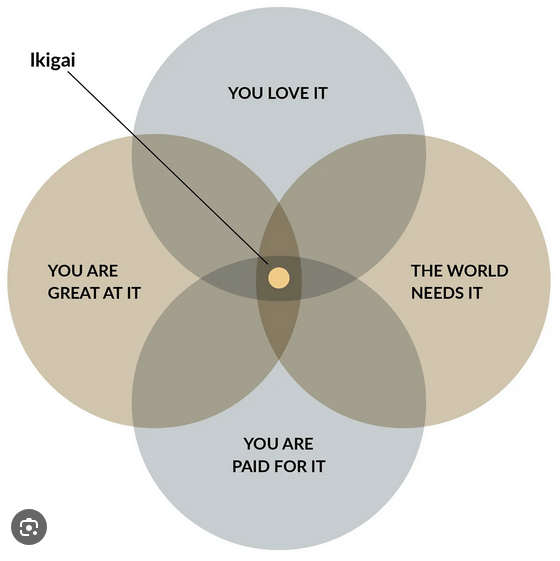
They return to Ikigai
Ikigai or 生き甲斐 is a Japanese philosophical term that breaks into “iki” meaning “alive” and “gai” meaning “worth”. These phrases together refer to what gives your life value, meaning, or purpose. The concept of ikigai has evolved from traditional Japanese medicine’s essential health and wellness concepts.
‘There but for the grace of God go I,’ and then I turned around and suffered every single one of those same unimaginable losses myself. And somehow never saw it coming. I have seen the hopes of whole generations crash against reality and collapse, I have watched the horrors of the last century—and really, historically speaking, you could pick a better century out of a hat—and through all of it I’ve noticed one thing. Life is worth living only when it has meaning. That is our biggest task and our greatest challenge.”
“What kind of meaning?”
“Viktor Frankl says there are only three that matter. To do work that matters to you, to care for others, and to rise to the challenge of difficult times. Work, love, courage. That’s it. Any other human pursuit is horseshit.”
Well that was well said. Thank you Norman. Aubrey is also relishing her new found freedom. A small community, working together to grow veg, sharing and being kind to one another, her step-son becoming a well-rounded interesting man, taking care of his girlfriend and learning to cook.
You can’t find happiness; happiness finds you. We are completely passive in the act of our own contentment because it isn’t an act. It’s a result. For the first time in years, she was living an uncomplicated life, and happiness had resulted.
All in all, I’ve loved the book. It’s well written and does captivate. I didn’t like some of the characters but they do grow as the novel moves along and they have a small redemption arc. But I don’t think that’s the point of the novel.
I think the novel is best expressed by Aubrey’s thoughts when the whole mess started.
What was suddenly clear to Aubrey was that she’d learned exactly nothing from COVID. Well, that wasn’t entirely true. She had learned once again that wildly unexpected events do happen in life and that they can last way longer than you’d ever imagine, with much more far-reaching consequences. Therefore, it’s only basic common sense to stock up on supplies and hope the dreadful day never comes.
Amen.
 One Book a Week (Julia Reads Books)