Aren’t all the best novels borne from some madness, which is borne from truth?
Let me start off by saying I condemn plagiarism. In the same breadth I’ll admit I’ve copied and altered Wikipedia articles for my school work, I’ve copied chatGPT responses in documentation and I’ve also “lightly” modified quotes from other people that mirrored very well what I was feeling at one point. Did I attribute the work to the rightful wiki owners? Of course not.
So I know first hand why people “steal”. It makes your life easier. It brings bones and you can add the meat on top. It gets you out of your creative funk.
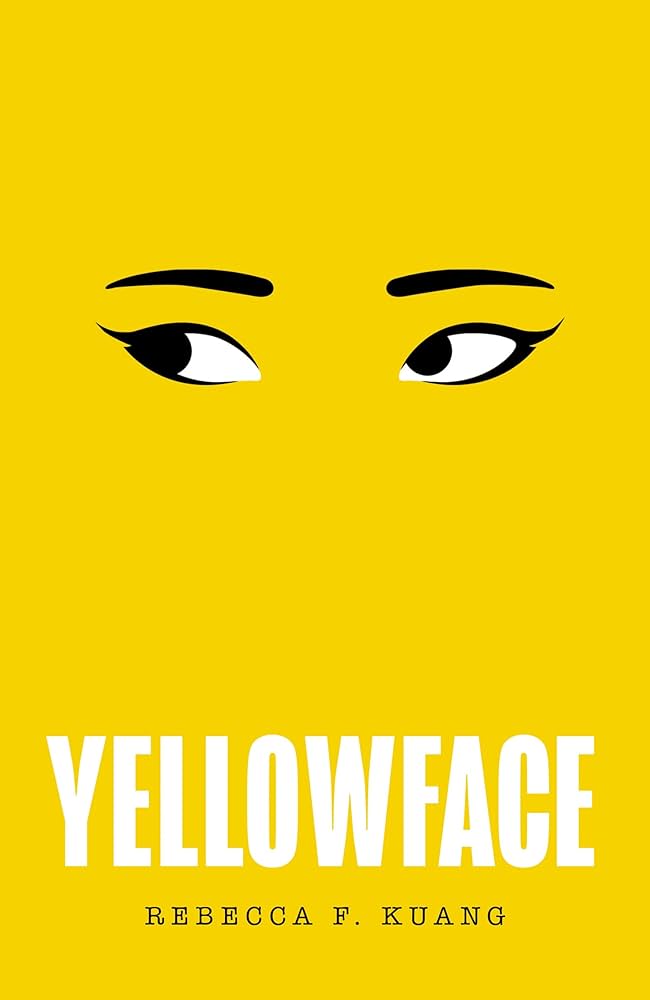
So when I saw the story within “Yellowface”, I didn’t know whether I’d be on the side of the victim or on the side of the evil-work-stealing friend. But what if the victim dies? What if no-one knows about the work they did? Perfect crime or not?
When failed writer June Hayward witnesses her rival Athena Liu die in a freak accident, she sees her opportunity… and takes it.
So what if it means stealing Athena’s final manuscript?
So what if it means ‘borrowing’ her identity?
And so what if the first lie is only the beginning…
Finally, June has the fame she always deserved. But someone is about to expose her…
What happens next is entirely everyone else’s fault.
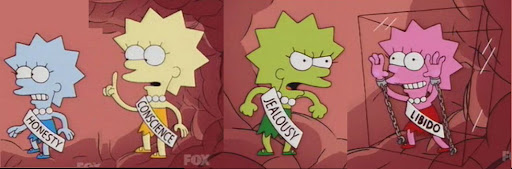
People always describe jealousy as this sharp, green, venomous thing. Unfounded, vinegary, mean-spirited. But I’ve found that jealousy, to writers, feels more like fear. Jealousy is the spike in my heart rate when I glimpse news of Athena’s success on Twitter—another book contract, awards nominations, special editions, foreign rights deals. Jealousy is constantly comparing myself to her and coming up short; is panicking that I’m not writing well enough or fast enough, that I am not, and never will be, enough. Jealousy means that even just learning that Athena’s signing a six-figure option deal with Netflix means that I’ll be derailed for days, unable to focus on my own work, mired by shame and self-disgust every time I see one of her books in a bookstore display.
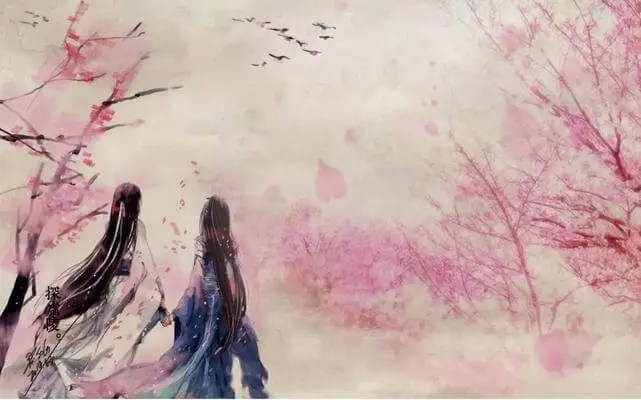
June Song (not a Chinese name btw) is born out of the marketing department of a publishing house, happy to have their hands on the next big cultural phenomenon that is going to line their pockets. A bit of controversy, a bit of debate, a white author writing about an Asian tidbit of history. A book riddled with political sub-plots in a world that is ruled by very un-timid SJW.
I know you won’t believe me, but there was never a moment when I thought to myself, I’m going to take this and make it mine. It’s not like I sat down and hatched up some evil plan to profit off my dead friend’s work. No, seriously—it felt natural, like this was my calling, like it was divinely ordained. Once I got started, it felt like it was the most obvious thing in the world that I should complete, then polish Athena’s story
June is invoking divine right to justify herself, and it’s not the only thing. Her friend just died and she can’t shed a tear for her. But she can make her friend’s legacy come to life, not as a ghost writer filling in the gaps in the story, but as a new author, “inspired” by her friend.
No one knows Athena wrote the first draft, do they? Does the way that it’s credited matter as much as the fact that, without me, the book might never see the light of day?
I can’t let Athena’s greatest work go to print in its shoddy, first-draft state. I can’t. What kind of friend would I be?
I wonder whether this book would have had a different ending if Athena had a digital copy of her work. If she shared snippets of it with other people. If she had her own editor in the loop. If June hadn’t gotten the single physical copy of her war novel.
This whole project is beautiful, in a way. A never-before-seen kind of literary collaboration.
And so what if it was stolen? So what if I lifted it wholesale?
The “so what?” discourse is like a petulant teenager arguing about having been caught.
I never lied. That’s important. I never pretended to be Chinese, or made up life experiences that I didn’t have. It’s not fraud, what we’re doing. We’re just suggesting the right credentials, so that readers take me and my story seriously, so that nobody refuses to pick up my work because of some outdated preconceptions about who can write what. And if anyone makes assumptions, or connects the dots the wrong way, doesn’t that say far more about them than me?
“I never lied” – yes she did. About everything. The source of the work, the original idea, the setting. Yes, she edited it, yes she added bits and did her own research post-fact but she failed to invent it (as she failed to invent the second story without help and as she failed to come up with a single original good idea after her novels were outed as filler copies of Athena’s work). June is simply not creative enough. She’s good as a ghost writer – and that’s what she was doing before Athena passed.
Much like the creepy goth chick in “Death of a Bookseller by Alice Slater“, she simply takes what someone else with tons of creativity has written and then plagiarizes the content until it’s unrecongizable.
But now, I see, author efforts have nothing to do with a book’s success. Bestsellers are chosen. Nothing you do matters. You just get to enjoy the perks along the way.
This might be true. It’s a dog eat dog out there. There are thousands and thousands of aspiring writers and more are joining the ranks from the literary schools each year. Each workshop produces at least one published writer.
What this book does well is talk about the publishing industry and how fickle it is. How hard it is to get a book deal. Or how easy once you’re a hot topic. How hard marginalized or ethnic authors have it. It focuses mostly on writers of Chinese / Asian birth. Athena was not Chinese. She was buried in a Korean Church. American-Asian bloggers were obsessed with her. She couldn’t care lss and saw it as a chore.
Another online firebrand, a guy named Xiao Chen, puts out a Substack essay arguing that The Last Front should never have been published. I’m actually quite familiar with Xiao Chen’s brand—Athena had complained about him viciously and often. Xiao Chen had gone viral the previous year for a piece in Vox titled “Enough with Diaspora Fiction,” which argued essentially that no one in the current wave of Chinese American novelists was producing anything of value, because none of them had lived through things like the Tiananmen Square massacre or the Cultural Revolution, and that spoiled Bay Area kids who couldn’t even speak Mandarin and who thought that Asian identification boiled down to being annoyingly obsessed with bubble tea and BTS were diluting the radical force of the diaspora canon. I’ve seen him getting in vicious spats with other writers on Twitter.
I bask in imagining my critics’ crestfallen faces as they realize that simply being Asian doesn’t make them historical experts, that consanguinity doesn’t translate into unique epistemological insight, that their exclusive cultural snobbishness and authenticity testing are only a form of gatekeeping, and that when it all comes down to it, they haven’t a fucking clue what they’re talking about.
I don’t think anyone has a clue what they’re talking about. Not even teachers.
I think the way we learn about history in classrooms is so antiseptic. It makes those struggles feel so far away, like they could never happen to us, like we would never make the same decisions that the people in those textbooks did. I want to bring those bloody histories to the fore. I want to make the reader confront how close to the present those histories still are.
That’s probably one of the few redeeming qualities what June has. She sees the value of a good teaching prose.
Writing is the closest thing we have to real magic. Writing is creating something out of nothing, is opening doors to other lands. Writing gives you power to shape your own world when the real one hurts too much. To stop writing would kill me. […] I want to move people’s hearts. I want my books in stores all over the world.
As expected, we’re presented with the rise and fall of June. From the first launch, to book tours, to tweets and post and GoodReads reviews which she devours, to baseless alegations about her life.
They don’t know me. They can’t know me; they’ve never met me. They’ve taken bits of information about me strewn across the internet and pieced them together into an image that fits their imagined villain but has no bearing on reality.
It’s what every famous person gets while in the public eye.
But your time in the spotlight never lasts. I’ve seen people who were massive bestsellers not even six years ago, sitting alone and forlorn at neglected signing tables while lines stretched around the corner for their younger, hotter peers. It’s hard to reach such a pinnacle of literary prominence that you remain a household name for years, decades past your latest release. Only a handful of Nobel Prize winners can get away with that.
Even the fall is great. There’s a glee in the public eye as their favourite person, untouchable, falls. Trips. Gets put a peg down. Athena “haunts” June from Instagram posts, badly photoshopped. Instead of taking advice that was well meant, she goes and does research on how to appease a ghost.
What more can we want as writers than such immortality? Don’t ghosts just want to be remembered?
All in all the book was fantastic. A good critique of the writing process, the jealousy that comes with it when other people do it “better”, “quicker” and have more success. But at the end of the day, the success is empty, the friends are fake, there’s a loneliness at the top and a lot of messiness at the bottom. I think the character of June would have done better to leave the manuscript behind and possibly offer as a tribute to finish off her best friend’s work in return for a mention in the credits. It was crude, unfinished but it was Athena’s work nonetheless. June would have been on the inner cover as a contribution writer and maybe she would have received praise and accolades either way.
Ethics is missing when people are desperate.
 One Book a Week (Julia Reads Books)