I ran across this book in the best seller section at our local WH Smith and I thought it’d be an amazing summer read, considering the writer and the blurb line. What I did not expect was a story about a revolution, a dystopian society so similar but yet different from the world of Margaret Atwood’s Testament and Handmaid’s Tale.
Today’s English assignment: In a paragraph, explain what PACT stands for and why it is crucial for our national security. Provide three specific examples. […] Suppose the GDP of China is $15 trillion and it increases 6% per year. If America’s GDP is $24 trillion but it increases at only 2% per year, how many years before China’s GDP is more than America’s? It’s easier, where there are numbers. Where he can be sure of right and wrong.
Welcome to a time where citizen have given away their private civil liberties in exchange for so-called peace. Where PACT has been voted with a majority to appease the fears of the masses of an known force that was (alledgedly) destroying the US economy: China.
Where people would speak in shushed voices about a resistance, where the loud voices would be silenced not by only a visit from the PACT people, but by having their children taken away by the state, never to be seen again.
What makes this book striking, is that children of a specific ethnic origin were targetted. Asian children. As they look like the enemy. Why couldn’t they be the enemy?
Bird (his mother’s nickname) is a bi-racial child, largely passing as white. His mother disappeared one evening never to be seen again. It’s been three years. He’s living with his dad, going to school, doing reports and maths and trying to make sense of the world around him. Through Bird, we see what the world has become.
Bird calculates. If a Korean car costs $15,000 but lasts only 3 years, while an American car costs $20,000 but lasts 10 years, how much money would be saved over 50 years by purchasing only American cars? If a virus spreads exponentially through a population of 10 million, and doubles its rate of growth every day
What I liked about the book was the pace. Fast enough that things were happening, slow enough that you can take in the view. I liked the woman Margaret married, the dad he became, how protective he was of his son, his charge.
Disrupt.
You know where it comes from? his father says. Dis– means apart. Like disturb, distend, dismember.
His father’s oldest habit: taking words apart like old clocks to show the gears still ticking inside. He is trying to calm Bird, as if telling a bedtime story. To distract him, maybe even to distract himself.
Plus rupt: to break. As in erupt, to break out; interrupt, to break between; abrupt, broken from.
So disruption, he says, really means breaking apart. Smashing to pieces.
And through Bird’s eyes we see society ruled by one rule: The state sees everything and the state can do what they want.
Did you know, their teacher explained the year before, that paper books are out of date the instant they’re printed?
Not only that, books were heavily edited, books were burned, history was erased and rewritten to suit the political agenda. It was like Orwell’s 1984. Or if you’ve seen the 2000 movie Equilibrium. The teachers as well as the parents have rallied against the printed word.
We don’t want them exposed to bad ideas—ideas that might hurt them, or encourage them to do bad things. To themselves, or to their families, or to our country. So we remove those books and block sites that might be harmful.
I wonder when that ever happened before and how good was it for the general population?

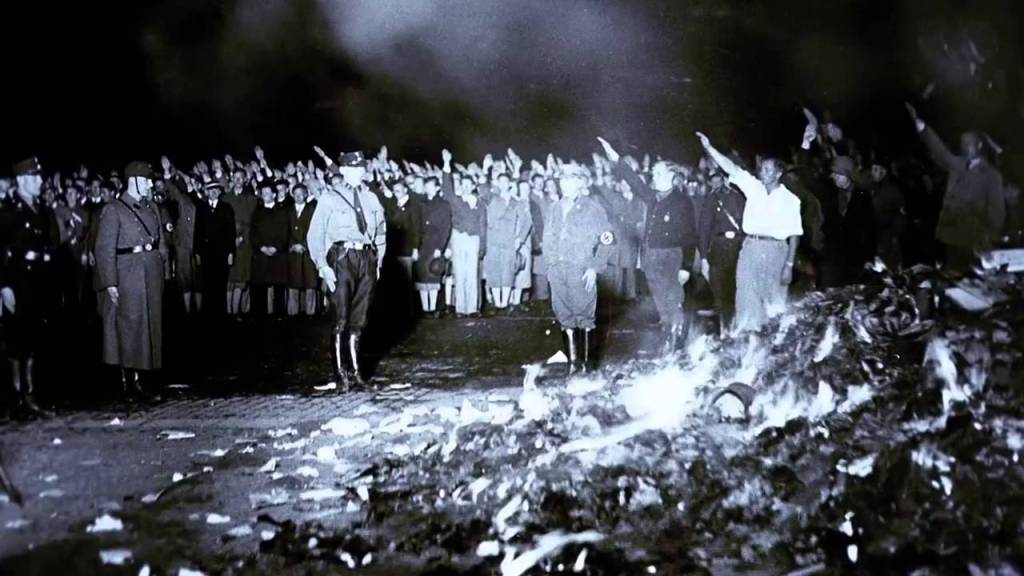
When Bird goes to the library in search of his mother’s poem books in an attempt to know her better, he finds that her books, now quoted as part of the silent revolution, have been banned. The librarian, who knows Bird and knows his mother, attempts to help him. To teach him the important of the written word.
How can you know, she says, if no one teaches you, and no one ever talks about it, and all the books about it are gone?
We slowly learn about his mother and how she came to be a revolutionary figure-head, even without her wanting it. How she grew up in an American society post-war, when all what her parents wanted was that she fit in.
Her parents’ aspirations carried them across the sea, so for her, an aspirational name: Margaret. A prime minister, a princess, a saint. A name with a pedigree as long as time, a solid trunk growing from rugged roots: in French, la marguerite, the daisy; in Latin, margarita, the pearl. Both of her parents were good Catholics, back in Kowloon, educated by priests and nuns, brought up on Communion wafers and confession and daily Mass. Saint Margaret, defeater of dragons, often depicted half in, half out of a dragon’s mouth.
When Bird is finally re-united with his mother, finding her like Hansel and Gretel following breadcrumbs through the forest, he hears the entire story. How the world collapsed. It didn’t happen overnight and through the hardships and the recession, Margaret found a job as a delivery driver and after meeting her future husband, she began writing poems.
In the quiet of Ethan’s apartment, poems came to her like timid animals emerging after a storm.
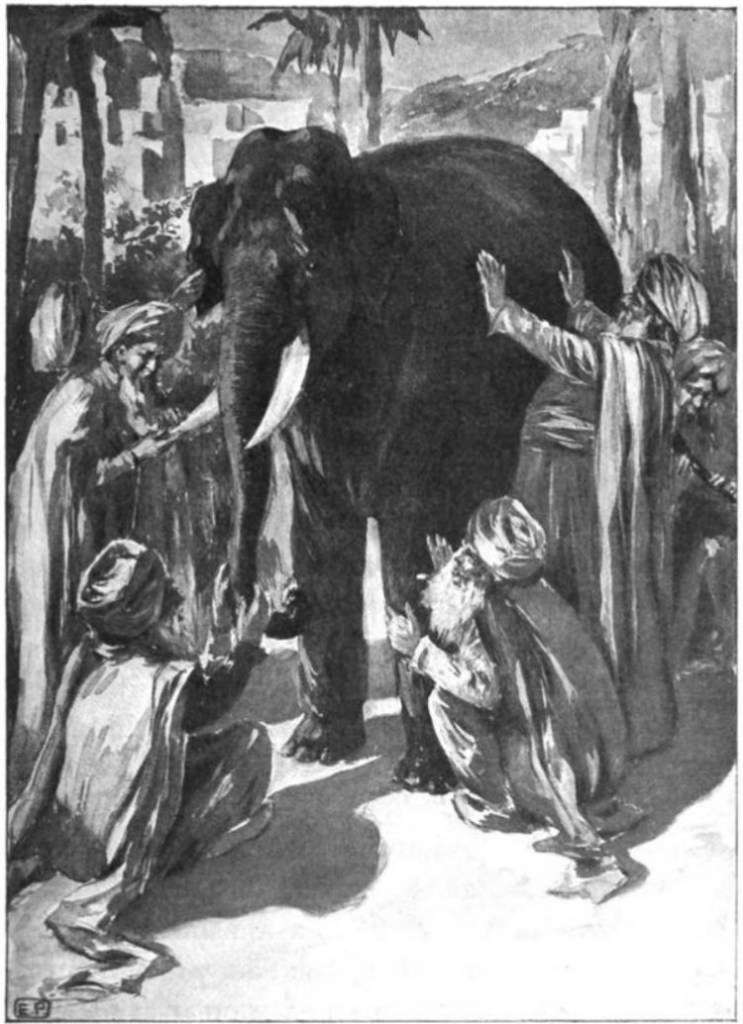
He can’t imagine it. She can see it on his face: the puzzled look of someone trying to feel what they’ve never felt. To see what they’ve never seen. Her father had told her a parable once, blind men trying to describe an elephant, able to grasp it only in parts—a wall, a snake, a fan, a spear. A cautionary tale: how futile to believe you could ever share your experience with another. Details pour out of her now like sharp grains of sand, but it’s still just a nightmare someone else had. Nothing can make him understand it but living through it, and she would give her life to make sure that never happens.
But how did it end, Bird asks, and she thinks: yes. So much more to tell.
After we catch up with Margaret’s past, we hear about her present – guilty of the revolution, the passive response to the state’s intervention in people’s lives, she began journaling the stories of left-behind childless parents. Grabbing information about their kids that might help them get re-united in the future. Sad stories, happy stories, little unique tidbits that if the other person heard it, they’d say – hey! That’s me.
She plants thousands of little speakers throughout the city and starts reading these stories in hope people hear it and understand what’s been going on right in front of their eyes.
She speaks so much until her voice breaks, until each speaker is destroyed, until she’s found and arrested.
But her story telling had the effect that she hoped. People who listened, really listened and understood. And a revolution began inside the core.
She does not know if it will make any difference. She does not know if anyone is listening. She is here, locked in her cabinet, drawing cat after cat, slipping them through the cracks. Unsure if they will sink even one claw into the beast outside.
But still: she turns another page and goes on.
At this point I was crying like a baby in the dark of the room. This book does pack a gut punch so beware!
The ending is bittersweet. Birdie never sees his mom again. Some people are never re-united. But the seed of hope and change has been planted.
The book is beautifully written, thoughtful and deals with so many issues one can only begin to hope it will be shortlisted to the Booker prize. Take this next example:
The rain hisses as it falls, like a thousand tiny snakes, and where it hits, the ground writhes. It needles the dirt, punching holes that widen to craters that fill and swell into ponds. It ricochets off the gravel driveway and off the steps, jumping ankle high. Off Sadie, who still sits, faithful, stubborn, eyes fixed on the path to the road, until she is soaked to the skin and finally comes inside.
I mean, I wish I had this talent but at the same time I’m happy I had the opportunity to see something so beautiful.

 One Book a Week (Julia Reads Books)