‘My dear man,’ I said, keeping my voice steady. ‘I have witnessed fear in ways that you could not possibly imagine. In your wildest dreams, in the most vivid fantasies of the cinematic entertainments that you throw together, you could not even come close to understanding the traumas that I have seen. Do I have any idea what fear is? I’m sorry to say that I have more idea than most ever will.’
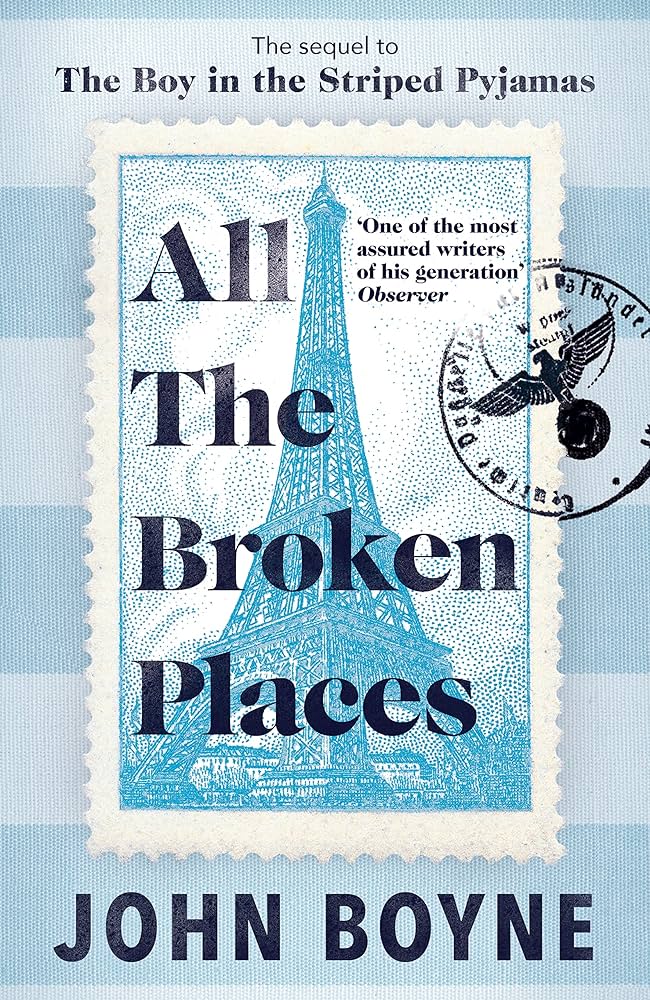
Holy hell, this book was a ride and a half. I didn’t know it was the sequel to The boy in the striped pyjamas and I’m planning on reading that one next. The book follows the life of an octagenarian (126 she tells the local boy) as she navigates her present life issues in modern day Britain, living in a terraced housing in a posh estate and her life as a young girl who just fled Nazi Germany and with her mother tries to navigate who she is and what she has witnessed. The twist? She is German not Jewish, and not only that, she is the daughter of a big camp leader from Poland.
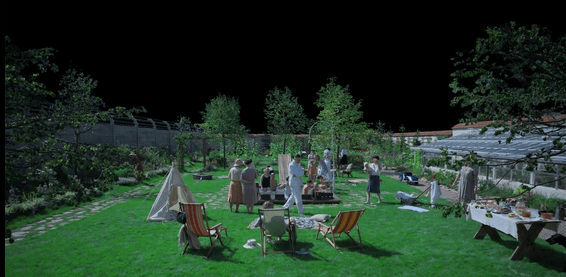
For those who haven’t watched Zone of Interest, I thoroughly recommend it. It’s a movie about a German family who lives next door to a concentration camp (Auschwitz) https://www.imdb.com/title/tt7160372/?ref_=tt_urv
Book Synopsis
Gretel Fernsby is a quiet woman leading a quiet life. She doesn’t talk about her escape from Germany seventy years ago or the dark post-war years in France with her mother. Most of all, she doesn’t talk about her father, the commandant of one of the most notorious Nazi concentration camps.
But when a young family moves into the apartment below her, Gretel can’t help but befriend their little boy, Henry, though his presence brings back painful memories. One night, she witnesses a violent argument between his parents, which threatens to disturb her hard-won peace.
For the second time in her life, Gretel is given the chance to save a young boy. To do so would allay her guilt, grief and remorse, but it will also force her to reveal her true identity.
Will she make a different choice this time, whatever the cost to herself?
I must say I LOVED this book. It’s so refreshing to see a different take, a question of whether Gretel (such a German name by the way!) is really feeling guilt after what happened in Germany, whether her claims of being just a child excuse her from being a participant in what is the darkest chapter in German history or whether she could have done the one thing she is asking of her father’s former liutenent when she meets him in Australia of all places : to surrender and let the law give out what punishment is needed.
‘I live every day with what my father did,’ I told him.
‘Ah, you’re still protesting your innocence? You saw the trains arrive. You watched as the people disembarked. There were only so many huts and yet we continued to fill them, even though you never saw anyone leave through the front gates. And you’re telling me – me, of all people – that you never questioned any of this? The smell of the burning bodies; you weren’t aware of it? The days when the ashes would fall on our heads like black snow; you were inside on those days, were you, playing with your dolls?’
I felt the tears come to my eyes now.
‘I didn’t know,’ I insisted.
‘You can lie to me, if you wish, but to lie to yourself? I know why you’re here. You’re here to transfer all the guilt in your soul on to me. But you can’t do that, Gretel, because I refuse to accept it. I have my own guilt to contend with.’
‘If I can do something good,’ I insisted. ‘If I can just make up for—’
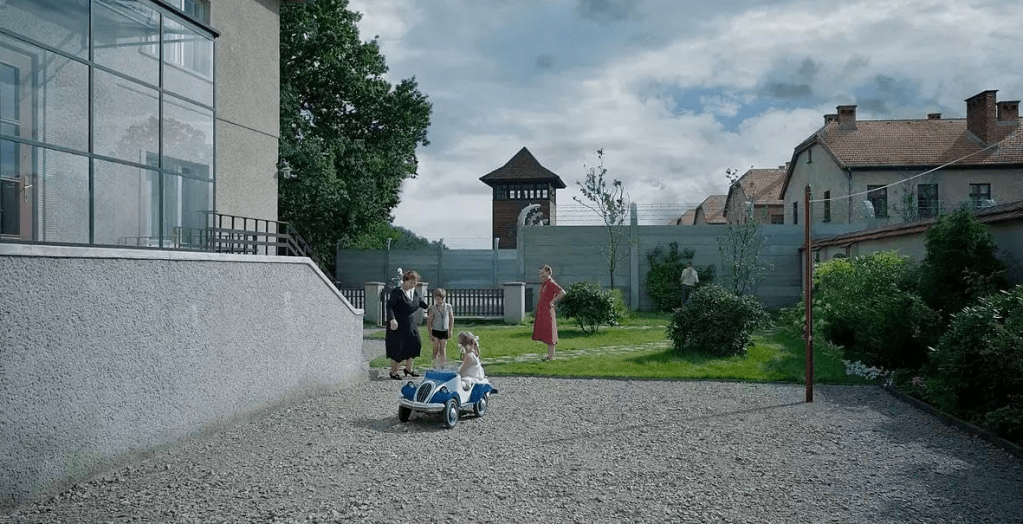
And she can’t even claim to never have seen the inside of the camp. She was there with her father in one of the days and she could look around all she wanted. She even goes in one of the “warehouses”.
I glanced around and, as my eyes adjusted to the dark, I realized that this was where the uniforms were kept. Not the uniforms of the soldiers, but those of the inmates. Blue and white, grey and white. Shoes. Yellow stars. Pink triangles. Why, I wondered, was everyone forced to dress the same? Where were the clothes they had arrived in?
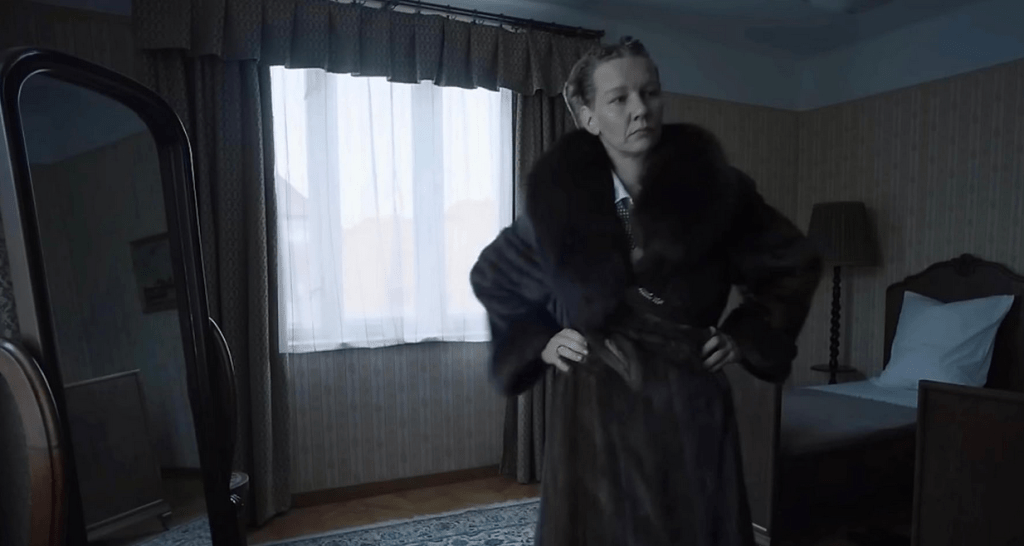
Let’s just say, I know she was naive, but she definitely could tell that her family was well off. They had maids, one of whom she was especially fond of, Maria, but when she left the family, she left spitting and cursing.
Gretel and her mother flee to France but their attempt at speaking French with a heavily accented (German) voice, soon puts a target on their backs and they get gathered by a mob of very angry people who shave their heads and throw them out of the village in a humiliating display. I was more appalled at her mother, that after all that went on, still had hopes of finding a rich man to take care of them and buy them nice clothes. I think both Gretel and her mother missed the life they had, regardless of the suffering that happened so close to them and they were both “guilty” of lack of empathy, if not just lack of awareness.
‘Be amusing and conversational, but do not dominate. Laugh at his jokes and compliment him on his skill with the pole. Ask no personal questions but be open if he asks some of you
They are not the only ones. The liutenant kept Hitler’s spectacles.
‘And you’ve kept them all these years? Why?’
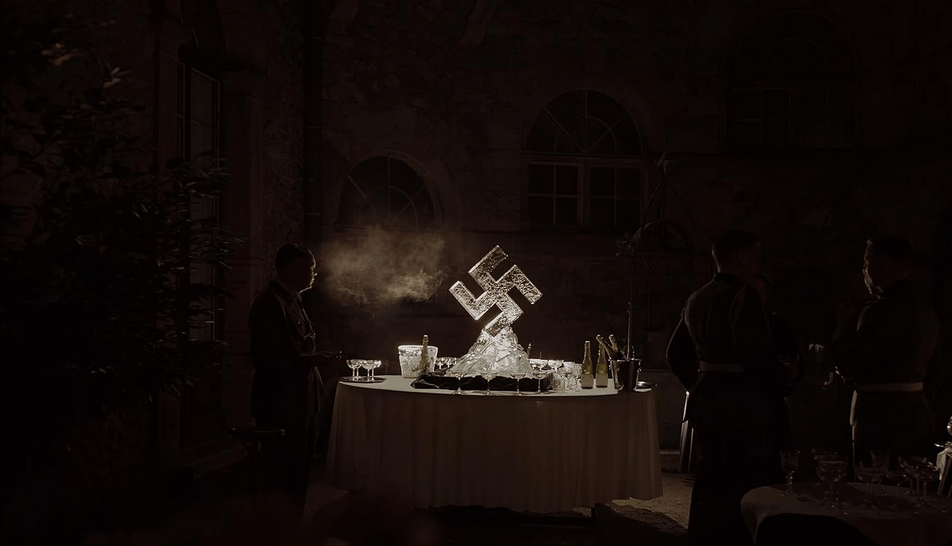
He shrugged. ‘A memento, perhaps?’ he suggested. ‘Something to remind me that I did not dream it all. That it was real and that, once in my life, I was a part of something very beautiful.
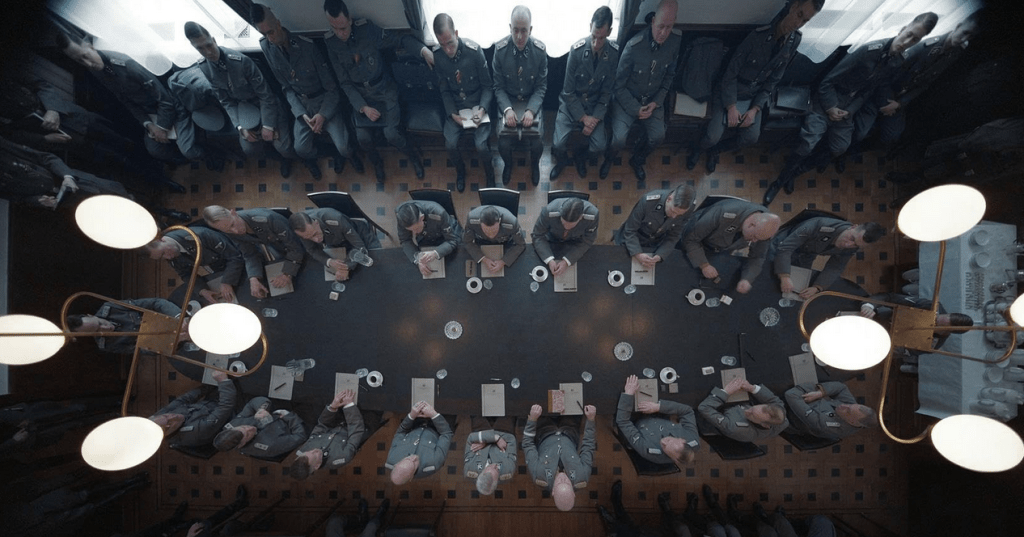
‘Tell me you don’t miss him,’ he said in a low voice, leaning forward. ‘Tell me you don’t wish he’d seen it all through and that we’d achieved victory. Imagine the world we’d be living in now. How different everything would be. I wanted it so badly. For the Reich to last a thousand years, just like he promised. Be honest with yourself, Gretel. You wanted that too, didn’t you?’
Of course she did, deep in her heart. She had been excited to have met the Fuhrer once. Now all she feels is guilt because she didn’t know and didn’t act. She can’t even say she or her family were Conscientious objectors to the war.
‘Why do you struggle to call things what they are? All this obfuscation. We had Jews. We had gas chambers. We had crematoria. We had killing. ’
And talking about killing, maliciously or not, Gretel killed her own brother. She won’t say his name throughout the book but she does have a picture of him in a box she hasn’t opened for the last 60 years or so. She convinced him to go to the camp next door through the hole in the fence he’d found and change clothes with an inmate. He never returned home.
And then Gretel in London – her life post war, her unplanned pregnancy with a Jewish dude called David, his reaction on finding the truth about her and her subsequent abandonment of her new daughter in hopes her adoptive parents could take care of her better than she did.
She ended up getting married with a historian and had another child, a boy, who is now visiting her only due to obligation and to enquire when she will sell the apartment she lives in. He knows its worth and hopes to maybe squeeze his inheritance earlier than normal.
I loved the other characters in the London stage – the domestic abuse wife, the terrified child, the dementia-riddened neighbour, the grandchildren and new daughter-in-law. They were all rounded people and not two-dimmensional portrayals of people.
The ending came as a shock as Gretel does do something to alleviate the guilt she was carrying all her life, but I’m in two minds about her actions. On one hand, she saved a little boy’s life and his mother’s, On another, she reacted to it only because it also threatened the life she had built with a reveal of the secret she carried.
Would she have done the same thing she did if her secret wasn’t to be revealed? Probably not, so it wasn’t an entirely altruistic gesture.
At the end of the day, she is old. She only takes an action when her life is “finished” – and she won’t live too long with the consequences.
All the Broken Places is a compelling, compulsive page turner. The chapters are short and punchy. The story telling is sublime.
 One Book a Week (Julia Reads Books)