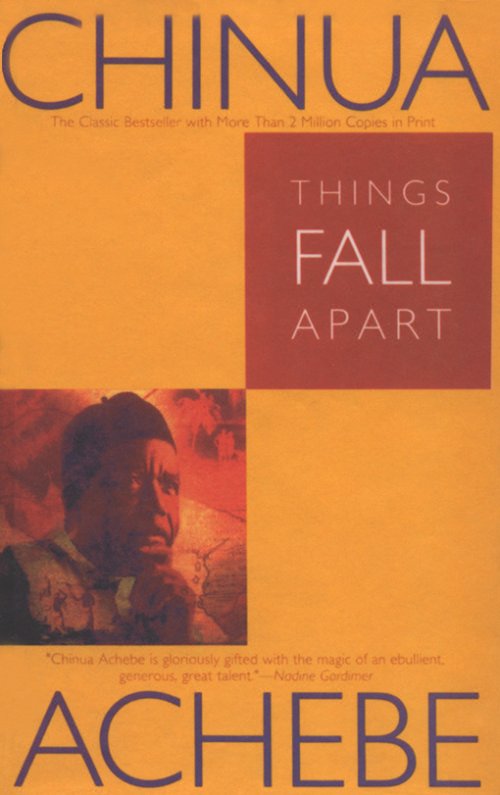
Things Fall Apart by Chinua Achebe centres on the great warrior and champion wrestler Okonkwo as he deals with the challenges resulting from disagreements in his clan, the arrival of white missionaries in his village and the mounting tension between tradition and modernity. The engaging narrative provides a compelling, immersive portrait of Igbo life in Achebe’s native Nigeria and a thoughtful exploration of the impact of colonialism and of themes such as masculinity, honour, pride and disobedience. Chinua Achebe was a Nigerian writer who sought to use his novels, short stories, essays and poetry to examine the struggles facing his country and expand popular conceptions of Africa and its people. He is widely considered to be the founding father of modern African literature.

Okonkwo is one of the most intriguing characters in African fiction. He epitomizes so much I dislike; he’s abusive, misogynist, has very little patience or tolerance for the weak, and is perhaps he’s even over-ambitious. Despite all his faults, it’s impossible not to pity him a little because, after all, the life he knows, the life of his ancestors, is being taken from him quite cruelly by the British settlers.
What I found difficult to come to terms with, as an African Christian myself, is the horrific way Christianity was introduced to the African continent. However, despite the lack of respect the colonialists showed to the people, it’s hard to deny that there were some aspects of African tradition that were outdated and people had the option of leaving such tradition behind, especially if it was harmful. For example, in this book the outcasts and the parents of twin babies (who had to kill their babies to prevent evil from entering the village) obviously found it easier to abandon tradition.
A major part of the short novel can be read as a collection of African customs, traditions and stories. Most of the time there was no clear plot and I was fine with it. The dramatic events, the clash between the two cultures take place almost at the end but that aspect does not diminish the power of the book.
“The white man is very clever. He came quietly and peaceably with his religion. We were amused at his foolishness and allowed him to stay. Now he has won our brothers, and our clan can no longer act like one. He has put a knife on the things that held us together and we have fallen apart.”
 One Book a Week (Julia Reads Books)