I am recalling now that last summer before I was sent away. It was 1979, and the sun was everywhere. Tripoli lay brilliant and still beneath it. Every person, animal and ant went in desperate search for shade, those occasional grey patches of mercy carved into the white of everything. But true mercy only arrived at night, a breeze chilled by the vacant desert, moistened by the humming sea, a reluctant guest silently passing through the empty streets, vague about how far it was allowed to roam in this realm of the absolute star. And it was rising now, this star, as faithful as ever, chasing away the blessed breeze. It was almost morning.
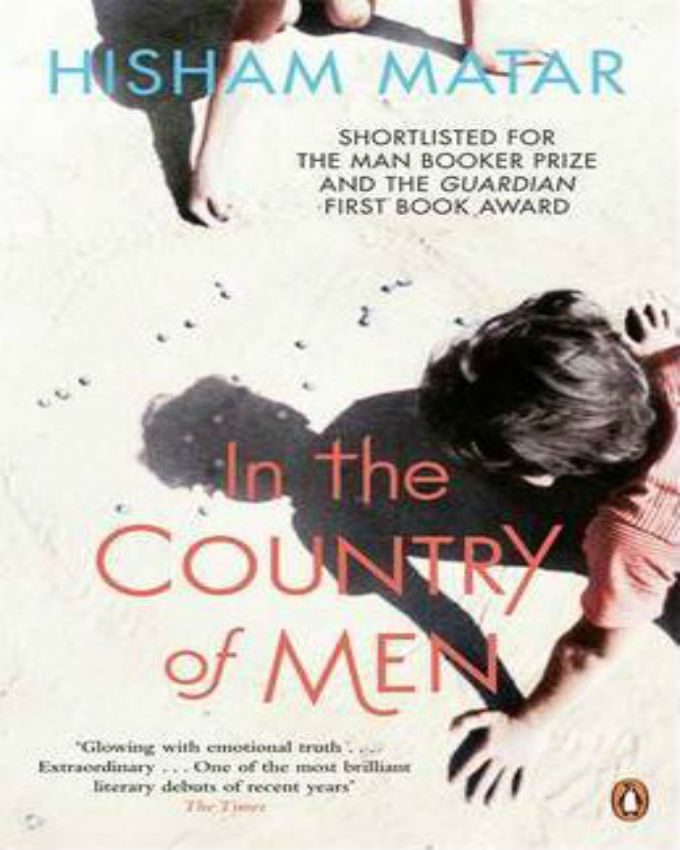
In the Country of Men is the debut novel of writer Hisham Matar, nominated for the 2006 Man Booker Prize and the Guardian First Book Award.
Plot summary
The book follows the plight of Suleiman, a nine-year-old boy living in Tripoli in Libya, stuck between a father whose clandestine anti-Qaddafi activities bring about searches, stalkings, and telephone eavesdroppings by Qaddafi’s state police, and a vulnerable young mother who resorts to alcohol to bury her anxiety and anger.
I wanted to run to her, to hold her hand, latch on to her dress as she shopped and dealt with the world, a world full of men and the greed of men.
The only people he has to turn to are his neighbor Kareem, and his father’s best friend Moosa. The book describes Libya under Qaddafi’s terror regime, and narration of ordinary people’s lives as they try to survive the political oppression.
Suleiman grows up partially wealthy because his father, Faraj, is involved in the exotic trade business. Since Faraj’s job involves traveling overseas for long periods, Suleiman’s childhood has primarily reared by his mother, Najwa. As a youth, Najwa was oppressed by her family, and she desired her independence through education instead of forcefully getting marriage. She made a plan to swallow multiple birth control pills to deter a future husband. However, she miraculously still got pregnant with Suleiman and was nonetheless forced to abandon her dream of education and raise Suleiman. She disparages the stories of One Thousand and One Nights, claiming that Scheherazade still had to ask permission from Shahryar. Her cynical view of the world instills a sense of confusion and a weary eye toward authority.
‘To live,’ she repeated. ‘And not because she had as much right to live as he, but because if he were to kill her his sons would live “motherless”.’ Mama coveredher mouth with the back of her hand and giggled like a child. “Release me,” your Scheherazade begged, “release me from the doom of death as a dole to these infants. You will find nobody among all the women in your realm to raise them as they should be raised.” Stupid harlot. My guess: five, maybe ten years at the most before she got the sword. As soon as the “one sucking” became the “one walking”, and her muscles, Scheherazade’s fine, supple muscles . . .’ Mama said, frowning in disgust.
I felt for the girl she once was, forced into marriage only because her brother, the traitor as she calls him, saw her holding hands at a cafe with members of the opposite sex. She was married at 14 to Faraj, who was at that point 7 years older than her. She tells her son the stories of her previous life before marriage (in a weirdly incestuous emotional dump. I mean no mother should discuss such matters with her children).
It was a dreary room. It had nothing in it but a huge bed with a square, ironed white handkerchief on one pillow. I had no idea what the handkerchief was for.’I walked up and down that room in my wedding dress wondering what kind of a face my executioner had. Because that’s how I saw it: they passed the judgement and he, the stranger armed with the marriage contract signed by my father, was going to carry out the punishment. When he touches me, which I was sure he was going to do, there will be no point in screaming; I was his right, his wife under God. I was only fourteen but I knew what a man had to do to his wife. Cousin Khadija, a chatterbox who had fallen as silent as a wall after her wedding night, had later, when she and I were alone, told me how her husband had lost patience with her and with his fingers punctured her veil and bled her. It was the duty of every man to prove his wife a virgin.’I didn’t know what Mama meant, but feared that when the time comes I might not have what it takes to ‘puncture’ a woman.
Ustath Rashid, a university professor, moves next door to Suleiman’s family and they become friends. Rashid and his son, Kareem, take Suleiman on a trip to Lepits Magna to engage with the history of Libya. Two days after the trip, Ustath Rashid is kidnapped by members of Qaddafi’s Revolutionary Committee. Suleiman watches Kareem stand perplexed, suddenly rumored to be a “traitor”. A week later, Suleiman sees his father being followed by his office clerk, Nasser, at the Martyr’s Square and suspects him of being involved in something other than exotic trade. His suspicions prove true as the Revolutionary Committee comes to his home and interrogates the family. Najwa and Moosa, Faraj’s best friend and the son of a wealthy lawyer from Egypt, hang a picture of Qaddafi in their living room. They burn all of Faraj’s books and letters. Suleiman is saddened and angered by watching his father’s work being destroyed, and he keeps a book titled Democracy Now, a gift from Ustath Rashid.
Within the political, social, and familial confusion, Suleiman is forced to define his independence and grows up awkwardly. He fights with Kareem as they play a game of “Your Land, My Land” because he called his father a traitor, he envies Adnan because he felt diabetes gives a person independence, and after offering the village beggar Bahloul food, he gets into a fight with him.
We drift through allegiances, those we are born into and those we are claimed by, always estranging ourselves
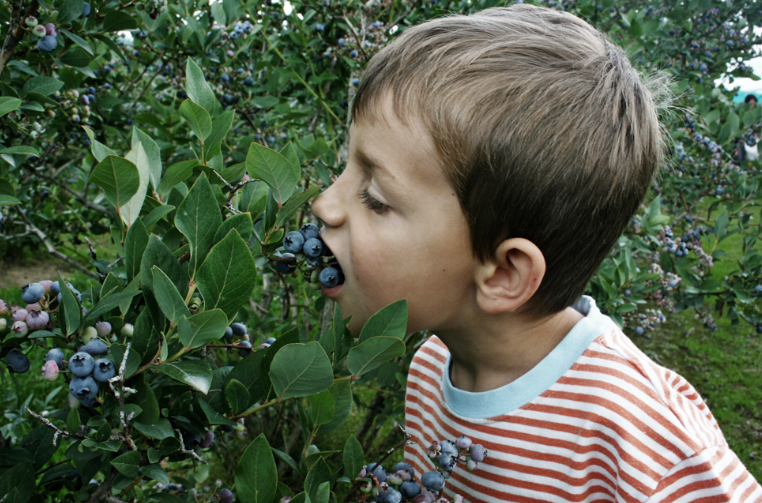
But still, he has fond childhood memories, like him eating berries while climbing on the ladder to reach the top.
Each berry was like a crown of tiny purple balls. They reminded me of the grapes carved into the arches of Lepcis. I decided that mulberries were the best fruit Godhad created and I began to imagine young lively angels conspiring to plant a crop in the earth’s soil after they heard that Adam, peace and blessings be upon him, and Eve, peace and blessings be upon her, were being sent down here to earth as punishment. God knew of course, He’s the Allknowing, but He liked the idea and so let the angels carry out their plan. I plucked one off and it almost melted in my fingers. I threw it in my mouth and it dissolved, its small balls exploding like fireworks. I ate another and another.
His mother’s psychology deteriorates throughout the confusion and becomes more reliant on consuming alcohol, but after she reveals to Suleiman a history of familial abuse, he imagines his mother happy and realizes that the ability to imagine her happiness means happiness is still attainable.
‘You are my prince. One day you’llbe a man and take me away on your white horse.’ She kissed me, walked to the edge of the roof to look out on to the sea. The sun was dying, pouring itself into the water. I stood beside her, leaning against her leg. When I looked up her eyes were fixed and squinting at the light. ‘The sea has changed again,’ she said. ‘Every day the sea changes.’ Then she was silent. From within my core, a place mysterious until that moment, I felt I was melting, that I, too, like the sun emptying itself into the sea, was pouring myself into her.
The book is so much about family and growing up as it is about trying to survive in what are very challenging times. People are cheering on TV as traitors against the great revolution are hanged (Ustath is one of them) and even his own father gets arrested. The child, Suleiman, is dumb, like all kids. He wants to bring proof to the secret police of people who his father have been talking to, but all he can muster is first names, and people the police already knew about. He even saves one of the books from his mother’s burning spree called “Democracy Now” and in the end, it’s this book that leads to the demise of his father.
How much of him is there in me? Can you become a man without becoming your father?
After some pleading to the higher placed neighbours for her husband’s life, Faraj returns to the family home, badly beaten, and barely recognisable. Suleiman can recognise his voice but not his looks. Interestingly enough, the mother’s relationship with her husband flourishes, no longer their lovemaking (as observed by the young boy) seem like an attack. It’s more like a mingling of bodies. He is oddly obsessed with his mother, in a weird Oedipian drama. Even when he meets new women, or girls, he’s keen on still keeping his attachment to her pure.
I had often dreamed of this, but up until this point the girl in my dreams had only been the girl Mama once was, before what happened happened, before she was forced into marrying the man who was to become my father. It was an infinite longing, hideous and unbidden, beyond reason or fulfilment, like a sick dog gnawing at its own limbs. But this was sweet.
Suleiman is eventually forced to leave Tripoli and travel to Cairo. He objected to the decision but was nonetheless sent. After fifteen years in Cairo, Suleiman grows to be a pharmacist, believing that he did so because of his mother’s addiction to her medications. After his father’s passing, Najwa decides to travel to Cairo to see his son. Once they reunite, she adores them as if they were never separated, and he realizes that despite all the political confusion and madness, they were still able to live.
What I liked about the book
It’s oddly poetic. Thin veils of cloud drifted in and were brushed orange and crimson by the setting sun taking its last deep breath before sinking into the sea. The sea and the sky are always mentioned in golden tones, shining always over the earth below, melting the Polish tyres that his father and Moosa imported, giving him a heat stroke, or gently “melting” into the sea. The heat is another actor in the play, forcing people into their homes at noon, shutting down everything. Suleiman’s mother takes to afternoon naps; he, himself, goes out to explore the world that is now silent.
The death of Ustah Rashid is also impactful. ‘If you look closely you can see the shadow of death in the picture. They are unique in that each and every one of them is void of desire. The morbidity of the situation sits with Suleiman for days, finding a way to bond with others by talking about the death he witnessed. He keeps asking Moosa if he saw that the man pee’d himself as he was hanged, or how he vomited. All disgusting little details that his young eyes have captured and found instead of sad, fascinating and talk-worthy.
The mother is also an odd character. ‘Grief loves the hollow; all it wants is to hear its own echo,’ She has suffered greatly when her family married her off without ceremony, but it’s in her luck that her husband was a good man. I felt for her how she was raised, beaten by her own father with glee in his eyes and at the same time, I didn’t like her as an adult, using her own son as an emotional dumping ground. Yes, she told him stories, but in all of these stories, she was a victim in need of a strong man to protect her and save her. There was never a fun story, a heroic ending, a moralising tale that wouldn’t make her son fantasise about marrying his own mother at 14. A realy good article to read about Enmeshment: https://www.bethanywebster.com/blog/mothers-pain/
I liked the tales of life under Quaddafi. Nationalism is as thin as a thread, perhaps that’s why many feel it must be anxiously guarded. How he took people’s savings away, how he established the revolution and squashed anyone saying anything about it. The secret police. The strong patriarchal society where spying was encouraged and rewarded. So much like life under Ceausescu in The Socialist Republic of Romania.
What I didn’t like?
Suleiman, the kid. We all know kids can be little shits. Especially ones without a father figure and an alcoholic mother. What really cemented my poor opinion of him was how he treated his best friend, how he randomly threw a stone at a haemophiliac kid so that the ambulance had to be called because he wouldn’t stop bleeding, and how he treated the beggar when he was drowning in the water.
He kicked and slapped the water until he managed to grab hold of one of the pier’s legs. I extended my hand but he spat at it, looking around as if expecting someone else to save him. But there was no one, no one but me. Without deciding to I found myself pushing him down with my foot. His knotted hair felt coarse and soggy. He tried to defend himself by grabbing my ankle. In trying to release my ankle I kicked him in the face. Blood gushed out of his nose into the water. Salty sea water is good for a wound, I knew this well. He began to scream that horse-like scream of his, louder than ever now. I pushed him down again to silence him. Suddenly, without warning, his resistance sank away. I pulled my leg out of the water. After a silence that seemed to last for ever, Bahloul sprang up again, coughing and vomiting, dirtying the clear water. He took hold of the pier’s column again. He looked at me with a mixture of fear and outrage.
Abhorrent behaviour, especially for a nine year-old. And he never expressed any regret for any of this.
 One Book a Week (Julia Reads Books)