If you were to ask me what did I just read? I would tell you it’s like Succession – it’s about money and inheritance and the terrible things people do to each other so that they are richer.
How much money was enough? It was a question he found profoundly puzzling, since the money he already had gave him so little satisfaction.
Who is playing the game?
We have Henry Dunbar, the once all-powerful head of a global corporation, who mistakenly handed over care of the family firm to his two eldest daughters, Abby and Megan. The two daughters then work together to eliminate their father completely from the board and rule as they see fit, much like in a Shakespearian tragedy.
Now imprisoned in a care home in the Lake District with only a demented alcoholic comedian as company, Dunbar starts planning his escape. As he flees into the hills, his family is hot on his heels. But who will find him first, his beloved youngest daughter, Florence who is from his second wife, or the tigresses Abby and sociopath Megan, so keen to divest him of his estate?
Edward St Aubyn is renowned for his masterwork, the five Melrose novels, which dissect with savage and beautiful precision the agonies of family life.
What I liked about the book was the insight of the old man as he’s experiencing bliss and gratitude for the first time.
He had always been lost in action, driven by what he had taken to be the self-evident truth that there could be nothing more meaningful than accumulating power and money. It was late to be beginning an introspective journey, but he knew he had no choice. The last few weeks had not just been about madness; they had taken him away from the world of facts and statistics and laws into a world of metaphors and insights and obscure connections. He was not flying out of a war zone he need never return to; he was still in a maze that he couldn’t get out of except by going through its center. Nevertheless, he felt he was near its center and that he might be able to find his way out, given time.
He understands his lost daughter Florence, who always loved him even as he dis-inherited her and cut her off from the estate. Only after he’s found love and put the woes of the corporate world aside, does Henry Dunbar also experience grief.
Florence had been poisoned with Abrin, a toxin for which there was no antidote, combined in this case with other poisons to make her death more certain and more painful. Her system was being purged and her blood changed, which would give her a little more time, but her body was already caught up in an irreversible process of collapse.
The book is lovely – the bad girls are truely bad like Cinderella’s sisters.
These Dunbar girls were arrogant, imperious, and tough, but toughness was not strength, imperiousness was not authority, and their arrogance was an unearned pride born of an unearned income.
The old man is in a haze that can only spell Dementia or heavily sedated. I had to laugh at the start of the book when, at the Swiss Sanitorium, he couldn’t say who he was exactly other than a chairman, and neither could his friends.
“Who shall I pretend to be?” asked Peter.
“Just be yourself, for heaven’s sake.”
“Oh, I haven’t got that one down yet, Henry. Give me someone easier to impersonate.”
Henry Dunbar was lost – or maybe just his mind was slipping. the feeling that there was nothing solid at all, that the ground he stood on was no more than a half-finished jigsaw puzzle, which was about to be pulled apart by a cruel and impatient child and that, worst of all, he was the child—there was no one else to blame for the treachery of everything; the horror, in the end, the horror was the way his mind worked.
What was going on? How could he forget himself like that? His sense of self was so fragile and contingent; it might dissolve like a watercolor in the rain.
Why go on? Why drag his suffering body into the next valley? Why endure the anguish of being alive? Because endurance was what he did, thought Dunbar. He hauled himself up and straightened his body one more time and brought both his fists against his chest, inviting that child-devouring sky-god to do his worst, to rain down information from his satellites, to stream his audiovisual hell of white noise and burning bodies straight into Dunbar’s fragile brain, to try to split its hemispheres, if he could, to try to strangle him with a word-noose, if he dared.
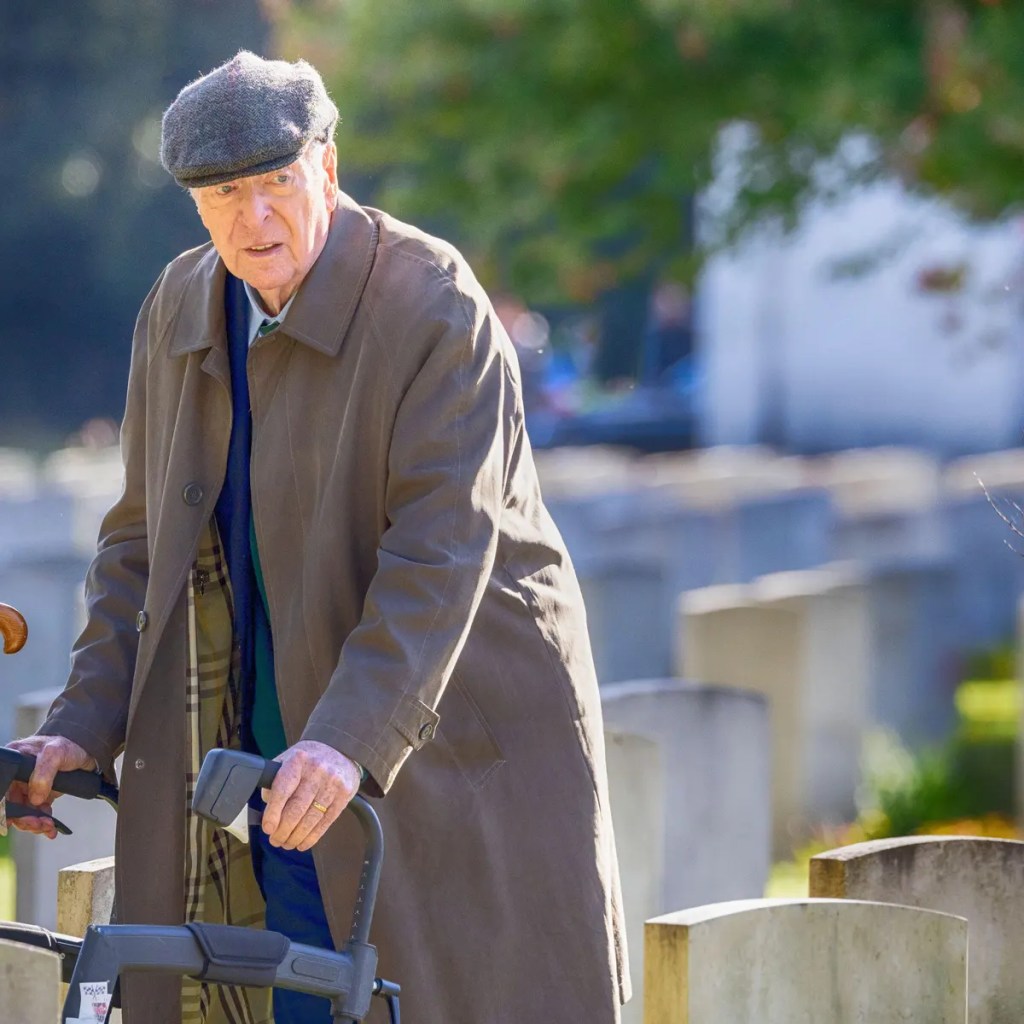
Note: As I was reading this book, I feel like I’ve seen a movie of this (at least the first part where the old people sit in a sanatorium and plan their escape. And when they do escape, they go to a pub). The second part, not so much, that’s King Lear with different character names.

 One Book a Week (Julia Reads Books)