The Catcher in the Rye was Salinger’s first novel (he had previously published stories in The New Yorker and elsewhere), and his disaffected teenager felt almost too real to too many people. An immediate bestseller, the book faced charges of obscenity and immorality almost from the start, and the intense response, both positive and negative, was a shock to the author, who became the literary world’s most famous recluse, publishing nothing after 1965. Meanwhile, The Catcher in the Rye continues to be one of the most assigned, most banned, and most cherished books in print
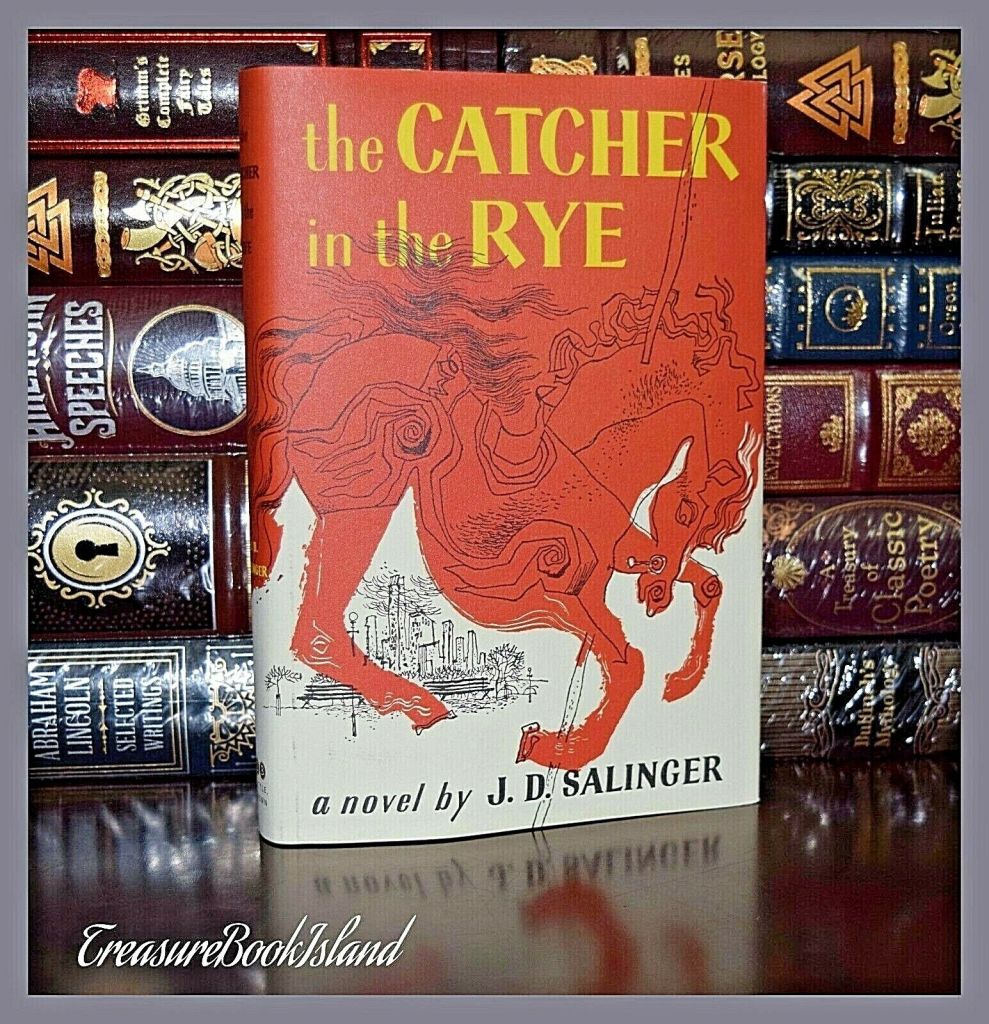
The best thing, though, in that museum was that everything always stayed right where it was. Nobody’d move. . . . Nobody’d be different. The only thing that would be different would be you.
I loved this book. It’s about growing up, running away and finding purpose for oneself. Self-discovery among the wild.
I’m standing on the edge of some crazy cliff. What I have to do, I have to catch everybody if they start to go over the cliff—I mean if they’re running and they don’t look where they’re going I have to come out from somewhere and catch them. That’s all I’d do all day. I’d just be the catcher in the rye and all.
The Catcher in the Rye takes the loss of innocence as its primary concern. Holden wants to be the “catcher in the rye”—someone who saves children from falling off a cliff, which can be understood as a metaphor for entering adulthood. As Holden watches Phoebe on the carousel, engaging in childlike behaviour, he is so overcome with happiness that he is, as he puts it, “damn near bawling.” By taking her to the zoo, he allows her to maintain her childlike state, thus being a successful “catcher in the rye.” During this time, however, watching her and the other children on the carousel, he has also come to accept that he cannot save everyone: “If they want to grab for the gold ring, you have to let them do it, and not say anything. If they fall off, they fall off.”
Holden is trying to understand adulthood, but he is not ready to grow-up because of his immature behavior.
I thought what I’d do was, I’d pretend I was one of those deaf-mutes….If anybody wanted to tell me something, they’d have to write it on a piece of paper and shove it over to me. They’d get bored as hell doing that after a while, and then I’d be through with having conversations for the rest of my life.
 One Book a Week (Julia Reads Books)