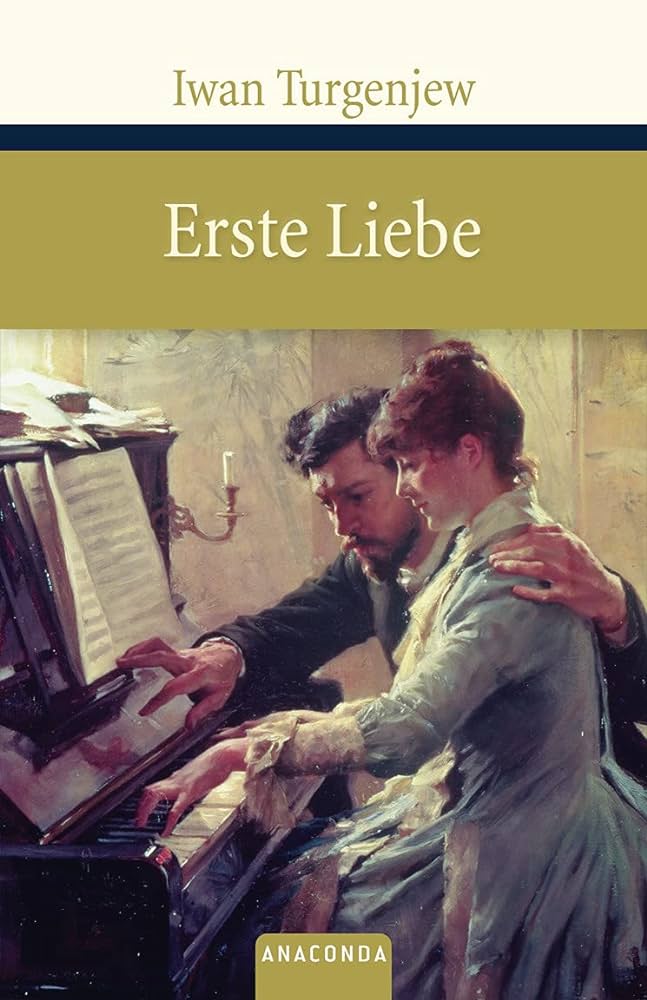
What a cute and lovely book! Do you remember your first love? How it made you feel? The confusion, the butterflies, the glances, the uncertainty?
Vladimir Petrovich is the protagonist of the story and also whose voice we hear narrating the tale of the next door neighbour, Zinaida Alexandrovna Zasyekina – The object of Vladimir’s affections. Capricious, mocking and difficult, she is inconsistent in her affections towards her suitors, of which Vladimir is the one to whom she shows (outwardly) the most affection. However, it is the affection of sister to brother rather than between lovers.
It’s all fun and games until Vladimir notices a scene in a window. Zinaida begging something from a man who was his father, the stoic looking man who raised him since childhood, Pyotr. He, in an attempt to flee her, is hitting her with a riding crop drawing blood.. Vladimir was only 16. His father in his 40s. You can see how this might have stirred some rumors when the book came out.
What I loved about this book.
The young princess sat down, took out a skein of red wool and, motioning me to a seat opposite her, carefully untied the skein and laid it across my hands. All this she did in silence with a sort of droll deliberation and with the same bright sly smile on her slightly parted lips. She began to wind the wool on a bent card, and all at once she dazzled me with a glance so brilliant and rapid, that I could not help dropping my eyes.
When her eyes, which were generally half closed, opened to their full extent, her face was completely transfigured; it was as though it were flooded with light
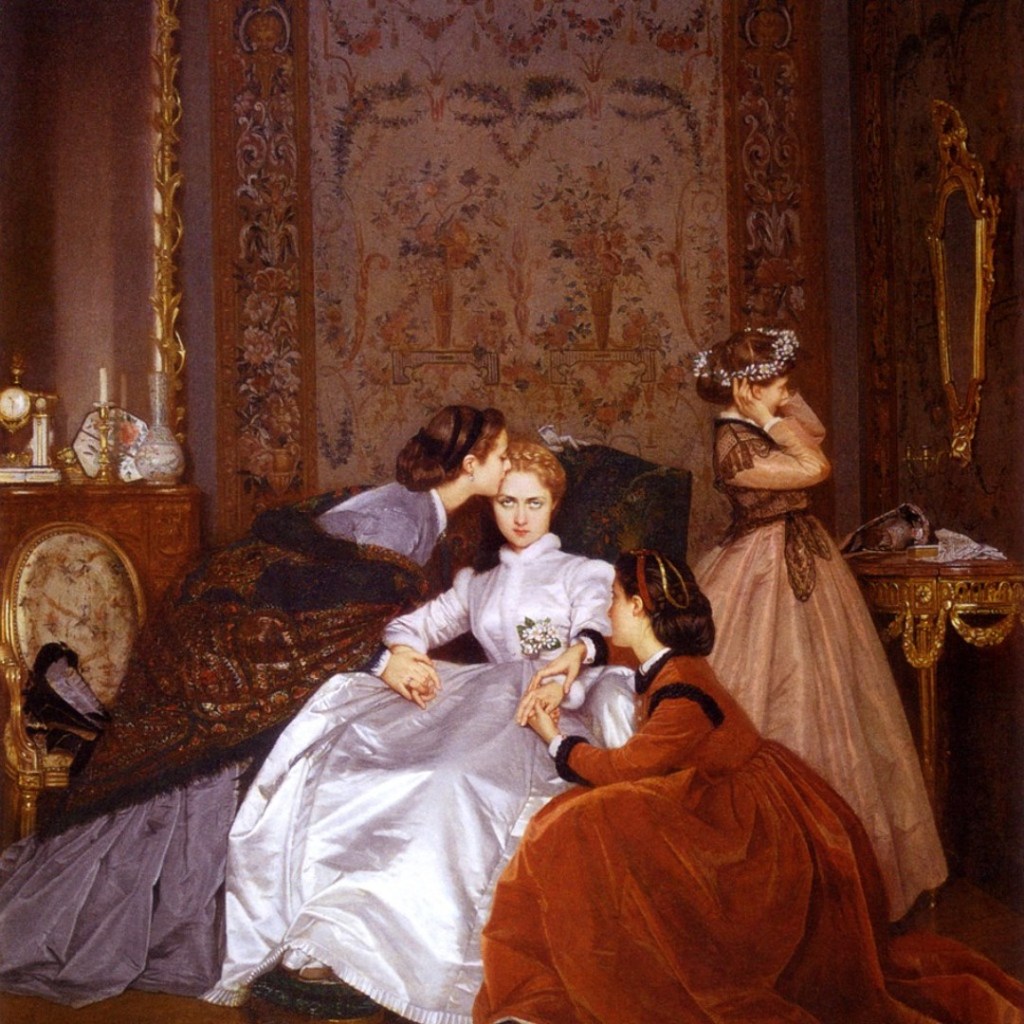
Zinaida is innocent but also playful in the eyes of her suitors, liking to be under her thumb and play her little games. But she wants someone more worldly for herself.
I loved the “love”.
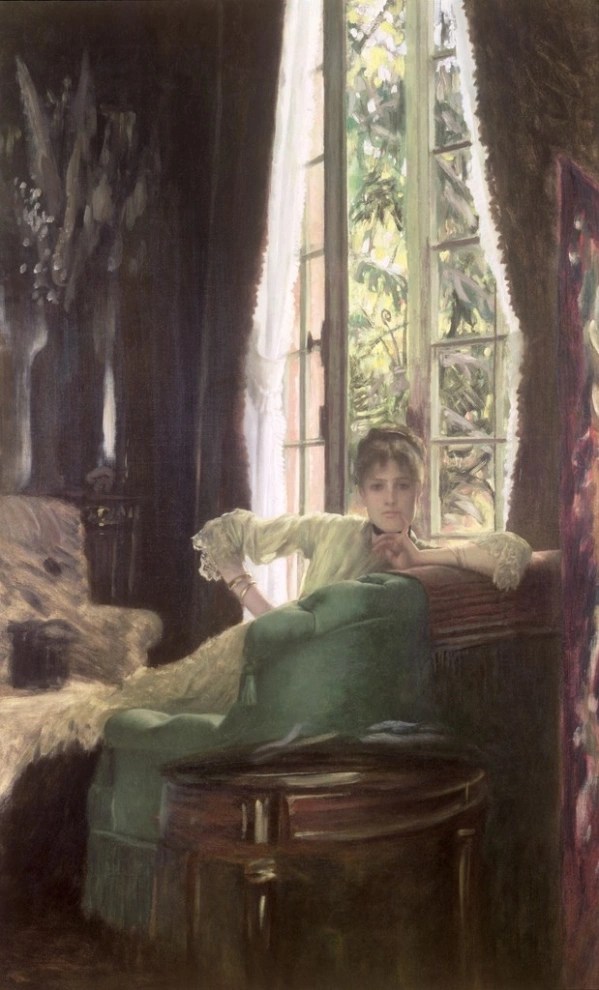
I gazed at her, and how dear and near she was already to me! It seemed to me I had known her a long while and had never known anything nor lived at all till I met her… . She was wearing a dark and rather shabby dress and an apron; I would gladly, I felt, have kissed every fold of that dress and apron. The tips of her little shoes peeped out from under her skirt; I could have bowed down in adoration to those shoes… . ‘And here I am sitting before her,’ I thought; ‘I have made acquaintance with her … what happiness, my God!’ I could hardly keep from jumping up from my chair in ecstasy, but I only swung my legs a little, like a small child who has been given sweetmeats.
I was as happy as a fish in water, and I could have stayed in that room for ever, have never left that place.
Her eyelids were slowly lifted, and once more her clear eyes shone kindly upon me, and again she smiled.
‘How you look at me!’ she said slowly, and she held up a threatening finger.
Oh, sweet emotions, gentle harmony, goodness and peace of the softened heart, melting bliss of the first raptures of love, where are they, where are they?
Pyotr and Zinaida do not end up as a happy couple. He dies while still married to his elder wife and Zinaida marries and dies during childbirth, only 4 days after Vladimir returns from university and planned to meet her.
His regret of not seeing her in time is one of the nicest written pieces of sorrow I’ve ever seen.
I walked on without knowing myself where I was going. All the past swam up and rose at once before me. So this was the solution, this was the goal to which that young, ardent, brilliant life had striven, all haste and agitation! I mused on this; I fancied those dear features, those eyes, those curls – in the narrow box, in the damp underground darkness – lying here, not far from me – while I was still alive, and, maybe, a few paces from my father… . I thought all this; I strained my imagination, and yet all the while the lines:
‘From lips indifferent of her death I heard, Indifferently I listened to it, too,’
were echoing in my heart. O youth, youth! little dost thou care for anything; thou art master, as it were, of all the treasures of the universe – even sorrow gives thee pleasure, even grief thou canst turn to thy profit; thou art self-confident and insolent; thou sayest, ‘I alone am living – look you!’ – but thy days fly by all the while, and vanish without trace or reckoning; and everything in thee vanishes, like wax in the sun, like snow… . And, perhaps, the whole secret of thy charm lies, not in being able to do anything, but in being able to think thou wilt do anything; lies just in thy throwing to the winds, forces which thou couldst not make other use of; in each of us gravely regarding himself as a prodigal, gravely supposing that he is justified in saying,
‘Oh, what might I not have done if I had not wasted my time
About the author
Ivan Sergeyevich Turgenev (Cyrillic: Иван Сергеевич Тургенев) was a novelist, poet, and dramatist, and now ranks as one of the towering figures of Russian literature. His major works include the short-story collection A Sportsman’s Sketches (1852) and the novels Rudin (1856), Home of the Gentry (1859), On the Eve (1860), and Fathers and Sons (1862).
These works offer realistic, affectionate portrayals of the Russian peasantry and penetrating studies of the Russian intelligentsia who were attempting to move the country into a new age. His masterpiece, Fathers and Sons, is considered one of the greatest novels of the nineteenth century.
Turgenev was a contemporary with Fyodor Dostoevsky and Leo Tolstoy. While these wrote about church and religion, Turgenev was more concerned with the movement toward social reform in Russia.
 One Book a Week (Julia Reads Books)