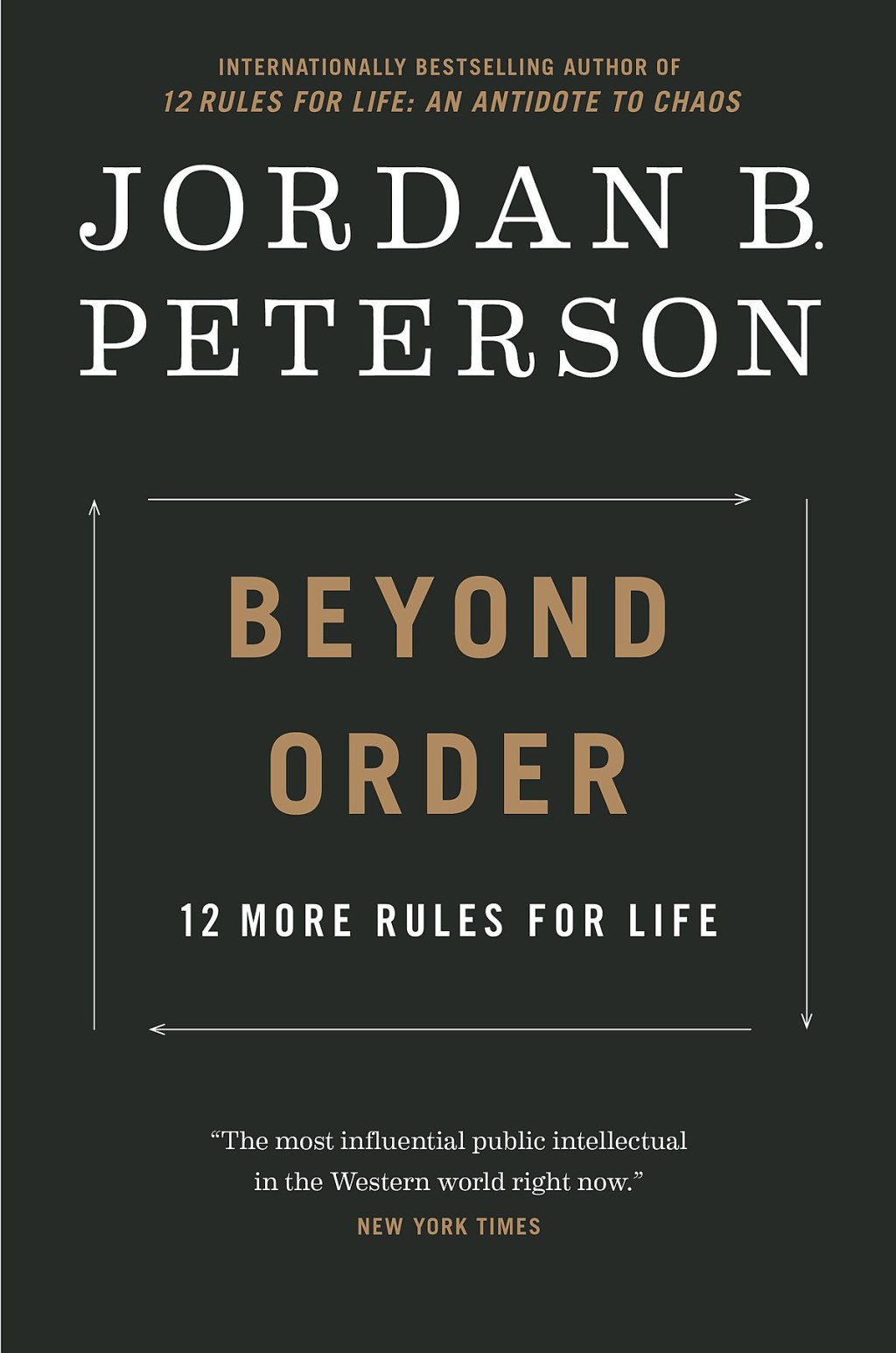
In 12 Rules for Life, acclaimed public thinker and clinical psychologist Jordan B. Peterson offered an antidote to the chaos in our lives: eternal truths applied to modern anxieties. His insights have helped millions of readers and resonated powerfully around the world.
Now in this much-anticipated sequel, Peterson goes further, showing that part of life’s meaning comes from reaching out into the domain beyond what we know, and adapting to an ever-transforming world. While an excess of chaos threatens us with uncertainty, an excess of order leads to a lack of curiosity and creative vitality. Beyond Order therefore calls on us to balance the two fundamental principles of reality – order and chaos - and reveals the profound meaning that can be found on the path that divides them.
If you are not communicating about anything that engages other people, then the value of your communication—even the value of your very presence—risks falling to zero.
In times of instability and suffering, Peterson reminds us that there are sources of strength on which we can all draw: insights borrowed from psychology, philosophy, and humanity’s greatest myths and stories. Drawing on the hard-won truths of ancient wisdom, as well as deeply personal lessons from his own life and clinical practice, Peterson offers twelve new principles to guide readers towards a more courageous, truthful and meaningful life.
Humility: It is better to presume ignorance and invite learning than to assume sufficient knowledge and risk the consequent blindness.
Positives: The book was eloquently written and had a lot of really interesting concepts. I liked the theory of the small dinner plates where resentment builds innocuously until it erupts “suddenly” one day. I also liked the story of the woman having to deal with their admin staff discussing the correct use of the term “flip-chart”. Like seriously, why would someone be offended by that? They didn’t even have any Filipino hires? And the story of hermaphrodite Adam who then found his Eve was always a part of him as God split him up. 3000 little dates to keep a relationship.
Negatives: I found the audio book read by the author a bit loud and abrupt, much like a lecture. It felt sometimes like someone was yelling in my car.
The author, much renowned clinical psychologist Jordan Peterson does suck his own di$k in some of the chapters and waffles on how much he influenced people and how people’s lives are better now due to him. Stephen King did it too, there’s no shame, but it’s still di$k sucking.
If you want to become invaluable in a workplace—in any community—just do the useful things no one else is doing.
Some of the rules were common sense, which I get, not a lot of people exhibit common sense.
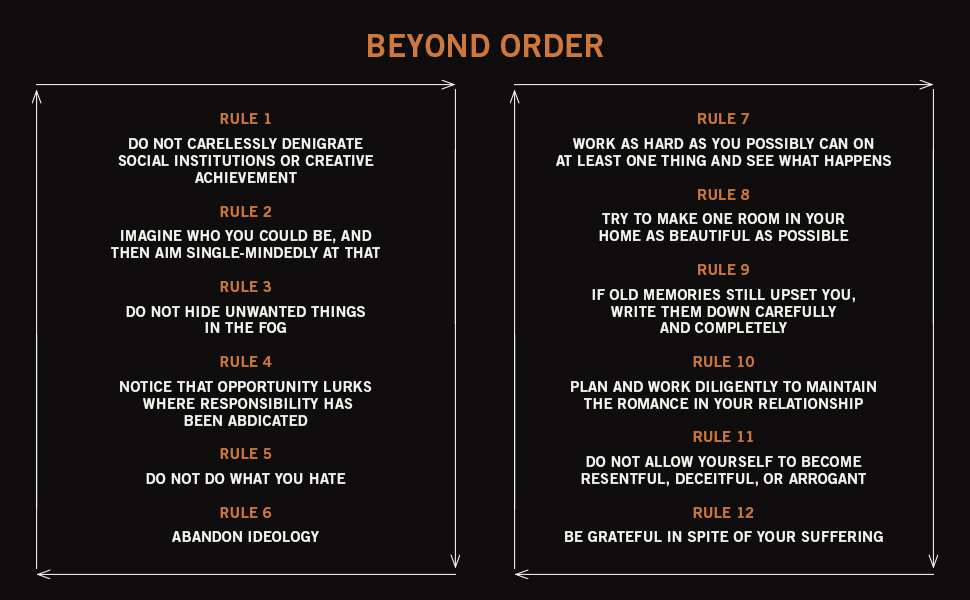
Gratitude, he says, is “something in which you can discover part of the antidote to the abyss and the darkness“. That was lovely. The book does teach you some really good things about how to be human. How to be caring. How to love and be loved. How to clean your environment and I kinda chuckled at the hypocrisy he, himself pointed out.

Part of life’s meaning comes from reaching out into the domain beyond what we know, and adapting to an ever-transforming world. While an excess of chaos threatens us with uncertainty, an excess of order leads to a lack of curiosity and creative vitality. Beyond Order therefore calls on us to balance the two fundamental principles of reality – order and chaos - and reveals the profound meaning that can be found on the path that divides them.
… there are two main kinds of suffering. There is the kind that results from power disparities between groups: racism, sexism, economic inequality. Then there is the universal kind that comes with being a finite human, faced with a limited lifespan, the inevitability of death, the unavoidability of grief and regret, the inability to control the present or predict the future and the impossibility of ever fully knowing even those to whom we’re closest. Modern progressives rightly focus much energy on the first kind of suffering. But we increasingly talk as if the second kind barely counts, or doesn’t even exist – as if everything that truly matters were ultimately political. Peterson, by contrast, takes the second sort of suffering very seriously indeed.
Final Review: Good read, but the original prequel was better.
 One Book a Week (Julia Reads Books)