Smart, funny, joyous and powerful, Garmus’ 60s set debut featuring an unconventional female scientist with a quiet game-plan to change the world has won the hearts and minds of our booksellers and is undoubtedly one of 2022’s most gloriously enjoyable debuts.
I’m not the one to seek out Feminist literature but this one was so good, I just couldn’t help myself.
Meet the unconventional, uncompromising Elizabeth Zott.
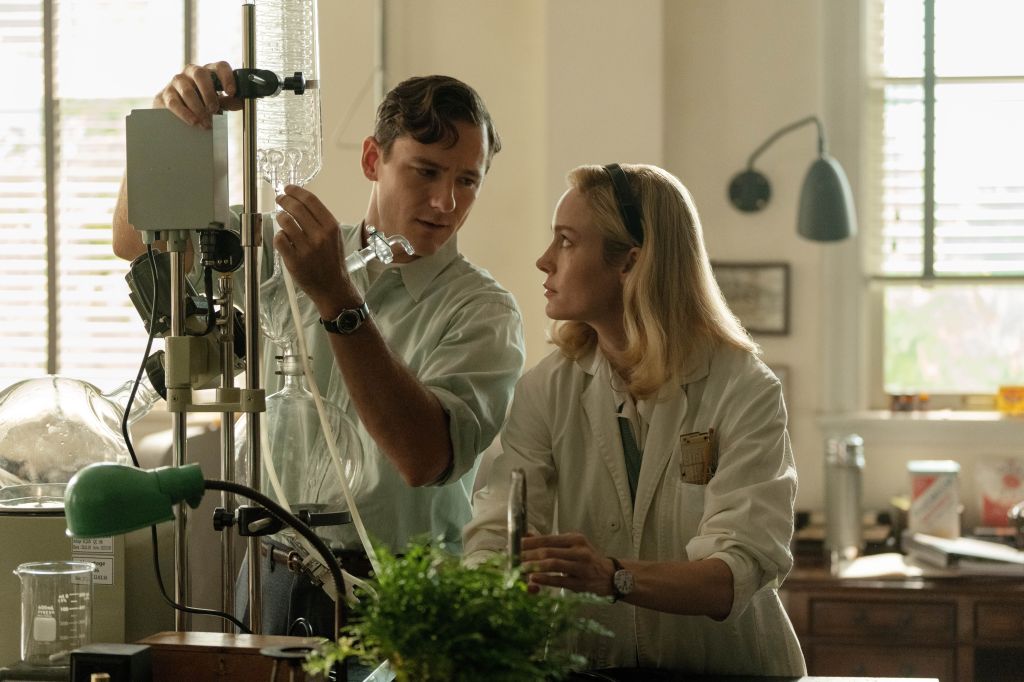
Elizabeth Zott finds herself into what in the 60’s would have been a pretty disastruous and shameful situation. A single unwed mother. She would have been a widow but due to a tragic accident, her boyfriend died before managing to propose. Looking for money and having been fired from her chemist job, she takes on a cooking show and reluctantly becomes a full on TV star. Supper at Six. Elizabeth’s unusual approach to cooking (‘combine one tablespoon acetic acid with a pinch of sodium chloride’) proves revolutionary. But as her following grows, not everyone is happy. Because as it turns out, Elizabeth Zott isn’t just teaching women to cook. She’s daring them to change the status quo
One thing I’ve learned, Calvin: people will always yearn for a simple solution to their complicated problems. It’s a lot easier to have faith in something you can’t see, can’t touch, can’t explain, and can’t change, rather than to have faith in something you actually can.” She sighed. “One’s self, I mean.”
Some really good things I’ve loved about the book. Elizabeth is uncompromising and does something fully. She loves fully. She works fully. She dedicates her life to science and supports her daughter’s knowledge search. She does not believe in marriage as an institution, even with the man she loves, not even for tax reasons.
“Exactly,” she said. “I’ve never understood why when women marry, they’re expected to trade in their old names like used cars, losing their last and sometimes even their first—Mrs. John Adams! Mrs. Abe Lincoln!—as if their previous identities had just been twenty-odd-year placeholders before they became actual people. Mrs. Peter Dickman. It’s a life sentence
The book is lyrical about death and love and all things alive. When Calvin passes, she and her dog walk home from the funeral, all six miles, looking at everything that is still alive when her love isn’t.
It was a long walk home: six miles, in heels, in black, just the two of them. And it was curious: both the route, which took them through as many bad sections as good, and the contrast, a colorless woman and injured dog planted against the conflict of an early spring. Everywhere they walked, even in the drabbest of neighborhoods, blooms poked their way up between sidewalk cracks and flower beds, shouting and boasting and calling attention to themselves, mingling their scents in hopes of creating complex perfumes. And there they were in the thick of it, the only living dead things.
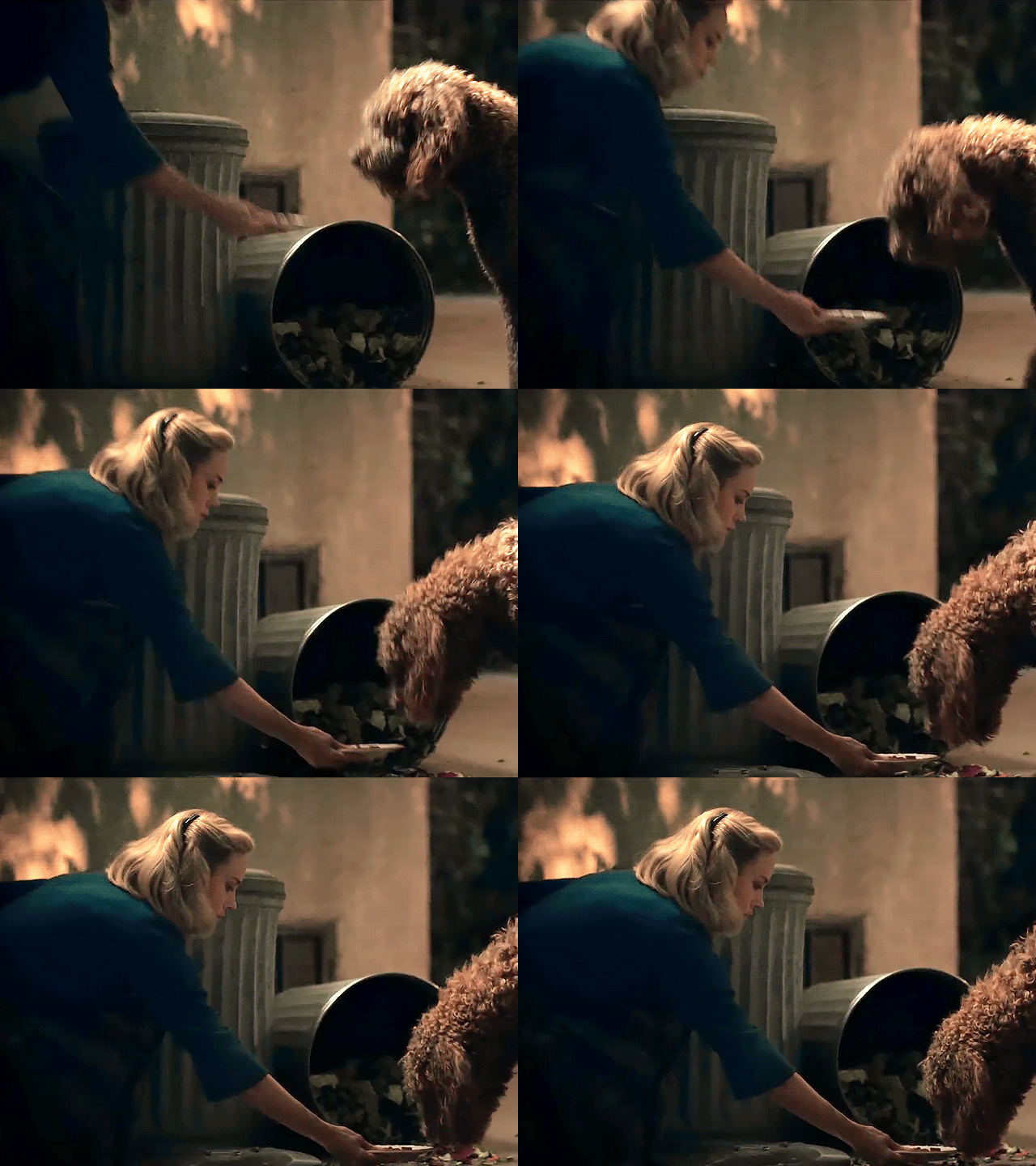
I was laughing when she went through pregnancy and with her wit and humour made this silly situation she was in as good as possible.
It was the seventh time that week someone felt compelled to inform her that her life was about to change and she was sick of it. She’d lost her job, her research, bladder control, a clear view of her toes, restful sleep, normal skin, a pain-free back, not to mention all the little assorted freedoms everyone else who is not pregnant takes for granted—like being able to fit behind a steering wheel. The only thing she’d gained? Weight.
It’s ok. The stress of a new mother, combined with her lack of income and no time to do any lab work in her converted kitchen. When the baby does arrive, she’s called “Mad” due to a misunderstanding. And the dog, whose perspective we see here and there peppered through the book, has some insightful thoughts about how good or how bad the name she chose was.
In his opinion, names mattered more than the gender, more than tradition, more than whatever sounded nice. A name defined a person—or in his case, a dog. It was a personal flag one waved the rest of one’s life; it had to be right. Like his name, which he’d had to wait more than a year to receive. Six-Thirty.
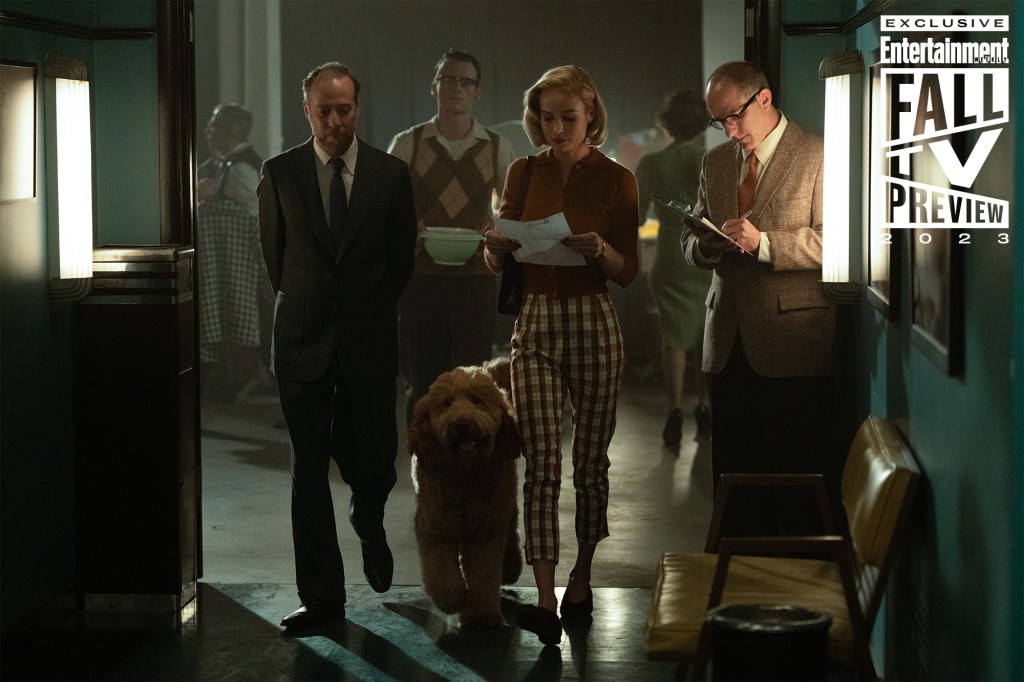
A new turn in life appears when she is selected to host a cooking TV show. She’s still her, unapologetically, and I was chuckling to myself when she wouldn’t even wear the things they selected for her. We see the rampant misogynism in the TV station, the sexist remarks and even the innuendos.
“It’s only for thirty minutes. You can breathe as much as you want after.”
“With each inhale, our bodies initiate the blood purification process; with each exhale, our lungs release redundant carbon and hydrogen. By compressing any portion of the lungs, we put this process at risk. Clots form. Circulation drops.”
“Here’s the thing, though,” said Walter, trying a different tactic. “I know you don’t want to look fat.”
“I beg your pardon?”
“On camera—and please don’t take this the wrong way—you’re a heifer.”

I absolutely loved her interview with Roth where she talked about herself, religion and the hard path she had to take as a woman.
“Well,” he said, realizing he’d never seen it that way before, “I agree that society leaves much to be desired, but when it comes to religion, I tend to think it humbles us—teaches us our place in the world.”
“Really?” she said, surprised. “I think it lets us off the hook. I think it teaches us that nothing is really our fault; that something or someone else is pulling the strings; that ultimately, we’re not to blame for the way things are; that to improve things, we should pray. But the truth is, we are very much responsible for the badness in the world. And we have the power to fix it.”
“But surely you’re not suggesting that humans can fix the universe.”
“I’m speaking of fixing us, Mr. Roth—our mistakes. Nature works on a higher intellectual plane. We can learn more, we can go further, but to accomplish this, we must throw open the doors. Too many brilliant minds are kept from scientific research thanks to ignorant biases like gender and race. It infuriates me and it should infuriate you. Science has big problems to solve: famine, disease, extinction. And those who purposefully close the door to others using self-serving, outdated cultural notions are not only dishonest, they’re knowingly lazy. Hastings Research Institute is full of them.”
Unfortunately, as most things go with the media, they only took what they wanted from the interview and published the most scandalous aspects of it. Roth tried to apologise but in the end, her reputation suffers and she quits the show to the shock of many women who saw in her a way out – a model. Why they should go to school and study and be their own person.
I think this is what the book is trying to tell us. Be who you are. Be the best you can be. Bring others up with you.
And also teach your dog words 🙂

 One Book a Week (Julia Reads Books)