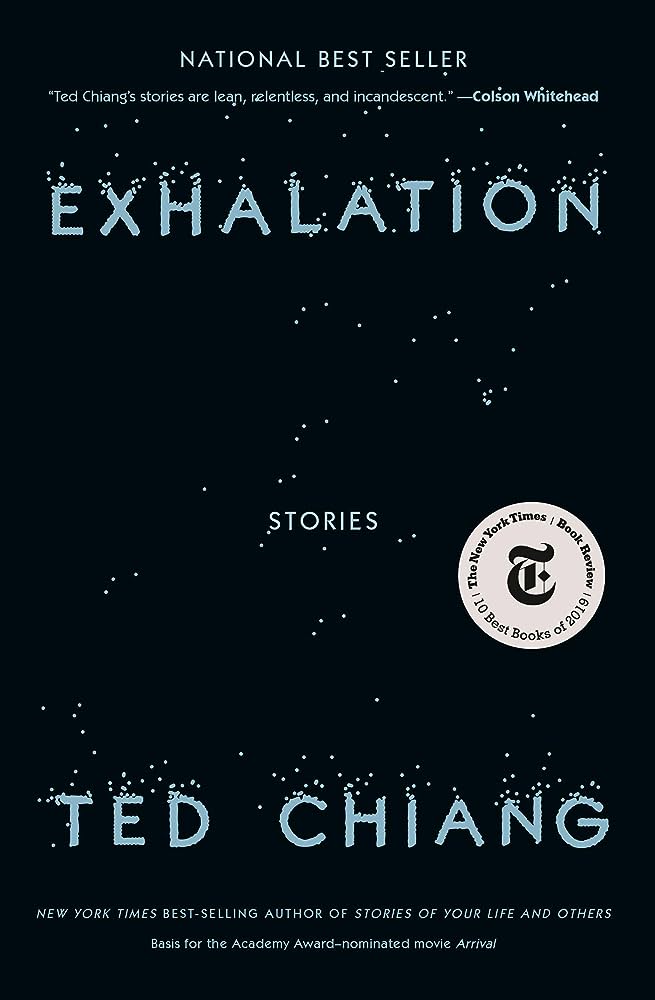
I loved this book. I have loved Arrival: Film tie-in book by Ted Chiang too and was really excited I got to read some other works. It took me two and a half weeks to finish it when I normally devour 299 page books in a day. Mostly because I had to stop and think and do the pose after each and every story.

These stories were originally published as follows:
“The Merchant and the Alchemist’s Gate,” Fantasy and Science Fiction, and by Subterranean Press, 2007
“Exhalation,” Eclipse Two, Night Shade Books, 2008
“What’s Expected of Us,” Nature, 2005
“The Lifecycle of Software Objects,” Subterranean Press, 2010
“Dacey’s Patent Automatic Nanny,” The Thackery T. Lambshead Cabinet of Curiosities, Harper Voyage, 2011
“The Truth of Fact, the Truth of Feeling,” Subterranean Online, 2013
“The Great Silence,” e-flux, 2015
More on https://www.ft.com/content/c1f6d948-3dde-405f-924c-09cc0dcf8c84
The Merchant Story
Her figure swayed as gracefully as a willow bough, and her face was as lovely as the moon, but it was her kind and tender nature that captured my heart. I had just begun my career as a merchant when we married, and we were not wealthy, but did not feel the lack.
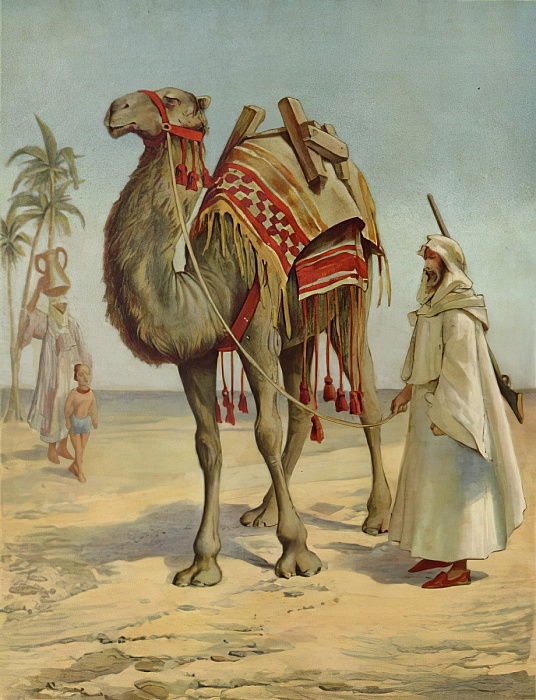
The story had such a 1001 nights vibe that I had to make sure that what I was reading didn’t actually come from a fantasy land. Well, it kinda did because the story was about time-travel, distance-travel and the science behind it. Imagine a Stargate which will allow you, for a fee, to travel back in time. The question is posed – why would people travel back in time? wealth? regrets? death? It’s the analysis that made the entire story sweet.
… so near to death did my anguish take me. And surely the experience must be similar, for like infernal fire, grief burns but does not consume; instead, it makes the heart vulnerable to further suffering.
The story is that of a merchant who regrets the death of his wife and wishes to travel back in time to warn her but he fails to do so.
“Four things do not come back: the spoken word, the sped arrow, the past life, and the neglected opportunity
The lesson is pretty awesome:
past and future are the same, and we cannot change either, only know them more fully. My journey to the past had changed nothing, but what I had learned had changed everything, and I understood that it could not have been otherwise. If our lives are tales that Allah tells, then we are the audience as well as the players, and it is by living these tales that we receive their lessons.
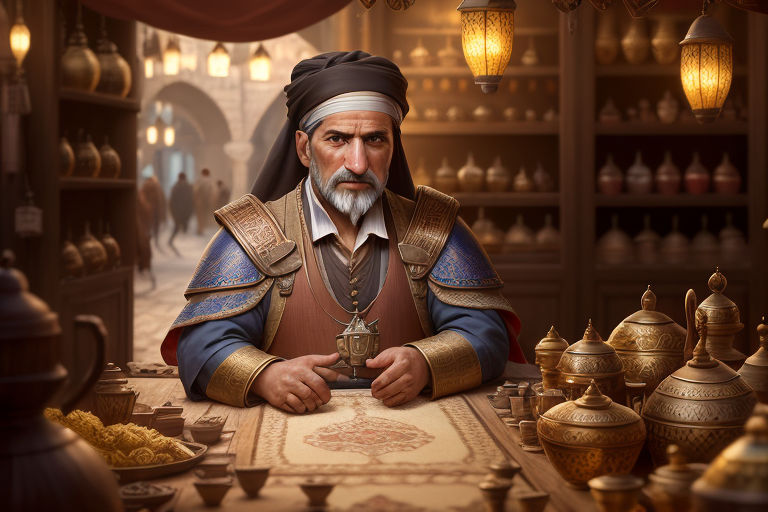
Nothing erases the past. There is repentance, there is atonement, and there is forgiveness. That is all, but that is enough.
Exhalation
It was generally hypothesized that the brain was divided into an engine located in the center of the head which performed the actual cognition, surrounded by an array of components in which memories were stored.
The author mentioned that he was inspired by a story from Philip K. Dick about a robot curious enough about what made him tick – he opened himself up and started analysing coldly their own circuitry.
Air is in fact the very medium of our thoughts. All that we are is a pattern of air flow. My memories were inscribed, not as grooves on foil or even the position of switches, but as persistent currents of argon.
It was a very, very cool story.
Some find irony in the fact that a study of our brains revealed to us not the secrets of the past but what ultimately awaits us in the future.
What’s Expected of Us
What if the future is set and you can’t do anything to change it. A piece of software called the “Predictor” was released and it changed humanity as we know it.
Some people, realizing that their choices don’t matter, refuse to make any choices at all. Like a legion of Bartleby the scriveners, they no longer engage in spontaneous action. Eventually, a third of those who play with a Predictor must be hospitalized because they won’t feed themselves.
The Lifecycle of Software Objects or the Digients
I really loved the story of the Digients. What would happen if corporations mixed AI with animal growth software and then allowed humans to “raise” and “play” with their own sentient digital animals. Written to be cute and cuddly looking, the VR elements attracted a large following and a study began as to how they grow, what they can learn and the limitations of software creatures. Bodies are created, software goes out of date, there are issues with portability and as the original corporation no longer supports their product, a handful of people decide to create an environment for their digital “pets/children/care-bodies” to enable them to grow, communicate and become their own person. Can an AI creature become a legal entity? How about a sentient sex robot?
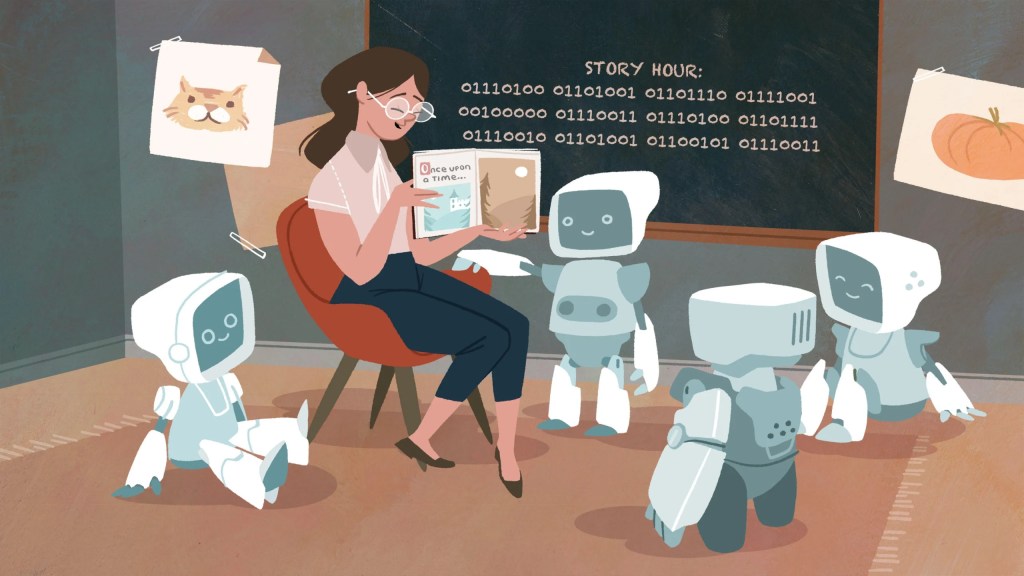
For a mind to even approach its full potential, it needs cultivation
It’s the same with raising children. They take time, energy and dedication in order to be their best selves and best equipped for the world.
“She mentioned that some parents don’t want to push their kids too much, because they’re afraid of exposing them to the possibility of failure. The parents mean well, but they’re keeping their kids from reaching their full potential when they coddle them”

The discussion became really interesting when the idea of sex-bots came out. A company offered to pay the substantial cost of migrating the creature from an old software to newer cloud-based areas, but instead they wanted the owners to sell their digients as sex robots / sex companions, that would offer emotion in addition to the act of sex.
… the digients [were] not being competent to accept Binary Desire’s offer because of their lack of experience with romantic relationships and jobs. The argument makes sense if you think of the digients as being like human children. It also means that as long as they’re confined to Data Earth, as long as their lives are so radically sheltered, they’ll never become mature enough to make a decision of this magnitude
The end was pretty good but I won’t spoil it.
Dacey’s Patent Automatic Nanny
This one reminded me a lot of a story I read in I, Robot * Isaac Asimov (1950), where a child received a robot nanny to take care of her. The child grew too attached to the nanny and refused to interact with children her own age. A similar thing happened in this experiment – a digital nanny, while helpful to overworked and super-tired new parents, would prove detrimental to the child’s growth- as the child would only interact with the mechanical hands that fed it.

The Truth of Fact, the Truth of Feeling (or the ways of Writing and remembering)
Another story I really liked. What is writing? What’s the purpose of recording lives? Why do we speak words, why do we read?
“But what are words?”
“How can I explain it?” He thought a moment. “If you speak slowly, you pause very briefly after each word. That’s why we leave a space in those places when we write. Like this: How. Many. Years. Old. Are. You?” He wrote on his paper as he spoke, leaving a space every time he paused: Anyom a ou kuma a me?
“But you speak slowly because you’re a foreigner. I’m Tiv, so I don’t pause when I speak. Shouldn’t my writing be the same?”
“It does not matter how fast you speak. Words are the same whether you speak quickly or slowly.”
“Then why did you say you pause after each word?”
An English man teaches a young boy from a tribe how to write and how to read. Their discussions are quite deep but the questions are well placed and it made me think just how important the order of words is, the meaning conveyed, the result wanted.
You could not find the places where words began and ended by listening. The sounds a person made while speaking were as smooth and unbroken as the hide of a goat’s leg, but the words were like the bones underneath the meat, and the space between them was the joint where you’d cut if you wanted to separate it into pieces. By leaving spaces when he wrote, Moseby was making visible the bones in what he said.
This story is mixed with another one, discussing the value of Memory.
What might it be like to have a perfect memory?

“Forgive and forget” goes the expression, and for our idealized magnanimous selves, that is all you needed. But for our actual selves the relationship between those two actions isn’t so straightforward. In most cases we have to forget a little bit before we can forgive; when we no longer experience the pain as fresh, the insult is easier to forgive, which in turn makes it less memorable, and so on. It’s this psychological feedback loop that makes initially infuriating offenses seem pardonable in the mirror of hindsight
It made me think of The Buried Giant by Kazuo Ishiguro, a book where a fog of forgetfulness came over the land and people have lost their old quarrels, their old disagreements and everyone lived in peace. What if the opposite were to happen? Memory is not a reliable tool, it’s governed by emotion and strong emotions have more unforgettable memories attached to them.

I recommend watching the Black Mirror episode which deals with the ability to store memories much like the book’s Remem is doing. It’s crowding your visual field with past memories. “all sorts of relationships rely on forgiving and forgetting“. If that’s not there, then you have a permanent grudge.
But what other ways do we have to store memories? The future is data drives but the past? People have used the written word to ensure something is not forgotten.
If I write it down, I don’t have to worry. But writing the words down does more than help me remember. It helps me think.
The problem with the written word is – it’s the author who conveys the meaning and the story will not be the same on every telling, even though the meaning might be there. The problem with oral history is that sometimes the stories change, and that’s why we have thousands of “The Little Red Riding Hood” story and not just one.
Psychologists make a distinction between semantic memory—knowledge of general facts—and episodic memory, or recollection of personal experiences.
People are made of stories. Our memories are not the impartial accumulation of every second we’ve lived; they’re the narrative that we assembled out of selected moments. Which is why, even when we’ve experienced the same events as other individuals, we never constructed identical narratives: the criteria used for selecting moments were different for each of us, and a reflection of our personalities. Each of us noticed the details that caught our attention and remembered what was important to us, and the narratives we built shaped our personalities in turn.
The Great Silence or the Talking Parrot
The Fermi Paradox is sometimes known as the Great Silence. The universe ought to be a cacophony of voices, but instead it is disconcertingly quiet. Some humans theorize that intelligent species go extinct before they can expand into outer space. If they’re correct, then the hush of the night sky is the silence of a graveyard. Hundreds of years ago, my kind was so plentiful that the Río Abajo Forest resounded with our voices. Now we’re almost gone. Soon this rain forest may be as silent as the rest of the universe.

Told from the POV of a parrot, who is an alien specimen here on Earth, analysing the ways of the humans. Is there intelligent life in the Universe? People have asked themselves this for thousands of years and what if we are not alone? But what if the other intelligent life-forms refuse to speak?
It’s no coincidence that “aspiration” means both hope and the act of breathing.
When we speak, we use the breath in our lungs to give our thoughts a physical form. The sounds we make are simultaneously our intentions and our life force.
I speak, therefore I am.
Omphalos or how we found out we are not the centre of the universe
But our lives have often been difficult even when we believed there was a divine plan, and we’ve persevered. If we have only ever been on our own, then our successes in spite of that are proof of our capabilities.
This story was written from the POV of a very religious woman (she talks to God a lot, asks for advice, and forgiveness when she deceives on purpose). She’s an archeologist and while digging up the past, she has found people without Navels and trees without all the rings to show their age. It’s almost like humanity blinked into existence one day by the power of God. It’s only when a study comes out that the world (hers and the world’s at large) seems to shatter. There is another Earth – and that Earth may be populated with intelligent life. And to top it off. That Earth seems to be the centre of the Universe and all the stars and planets and Galaxies revolve around it. Including this one. It makes life seem less important somehow but also not pointless.
Anxiety is the dizziness of freedom – or the prism to another world.
“I don’t think I’m an envious person by nature, and I don’t think you are, either. We’re not always wanting what other people have. But with a prism, it’s not other people, it’s you.

Welcome to the future where the scientists have found a way to communicate to another you. In another universe. Possibly one where you are the same, possibly one where you are not the same. Where you have chosen a different career or married somebody else altogether. They sell these Prisms activated at different times and show you what might have been and what is. The entire story is a discussion about the downfalls and good sides of such a technology. If you knew that you would have made another choice and how it turned out, would you still have made it? Would you feel regret? Envy? Sadness?
We like the idea that there’s always someone responsible for any given event, because that helps us make sense of the world. We like that so much that sometimes we blame ourselves, just so that there’s someone to blame. But not everything is under our control, or even anyone’s control

I loved Dana’s story in this book. She did a bad thing when she was young which caused her best friend back then to spiral into a life of drugs and violence. She wants to help her now that they found each other again, but it’s guilt driving her and noth goodness. When the truth came out, other Dana’s have taken other choices – not do the bad thing, split the blame, take on all the blame. It looked like her friend’s life turned out exactly the same. Her action or inaction had no effect on her friend turning to drugs and violence.If it wasn’t her actions directly, it was a bad boyfriend, some bad circumstances, some weird luck. We are not fully responsible for how other peple turn out.
But what is choice? When you make it, there is another you out there who would make the opposite choice, so it’s meaningless.
Many worried that their choices were rendered meaningless because every action they took was counterbalanced by a branch in which they had made the opposite choice. Experts tried to explain that human decision-making was a classical rather than quantum phenomenon, so the act of making a choice didn’t by itself cause new branches to split; it was quantum phenomena that generated new branches, and your choices in those branches were as meaningful as they ever were. Despite such efforts, many people became convinced that prisms nullified the moral weight of their actions.
 One Book a Week (Julia Reads Books)