I love myself a good period drama. And Emily Brontë has always delivered being it with poetry like The Visionary – Emily Brontë Poem and Sympathy * Emily Bronte. I was fascinated with her life at one point and read about her and her sisters and even morbidly about her death. On the Death of Emily Jane Brontë
So I found in a charity bin a copy of Wuthering Heights. I think I read this as a teen sometime but I could only remember snippets of it and how fascinating I found the love between Catherine and Heatcliff – the star-crossed lovers.
“Be with me always – take any form – drive me mad! only do not leave me in this abyss, where I cannot find you! Oh, God! it is unutterable! I can not live without my life! I can not live without my soul!”
As an adult, I must say the story is a bit different. It’s a great classic, don’t get me wrong but in modern terms you have Heatcliff simping for Catherine who is a married woman! and can’t seem to shake her old boyfriend off. The servant is a busy-body, too much in everyone’s business and the husband is weak and mostly absent. I didn’t like Catherine, I didn’t like her mewling kid who didn’t listen to anybody and I didn’t like any of the other characters too much. Heatcliff who was my favourite underdog gone master was now just a planning and scheming assh*le and he loved nobody, I don’t think even Catherine.
That being said, I LOVED some of the wisdom observed by the servant / maid as the book was happening. I suppose, as a third party, you can see clearly when someone is manipulated – even how young Catherine was being dragged into a relationship with her cousin even though he was weak of body and so needy. His biggest flaw was that he couldn’t see anyone’s desire other than his own. (I suppose the sick get selfish every now and then). But now to the book.
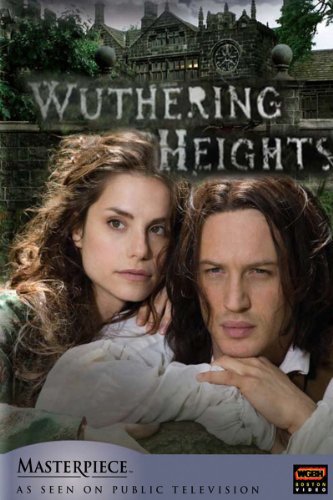
The review
When it was revealed that the “Ellis Bell” who was the author of Wuthering Heights was actually Emily Brontë, her contemporaries found it hard to imagine that this reclusive young woman, living in a dreary parsonage with her father and three surviving siblings (after the deaths of her mother, two eldest siblings, and aunt), could have written the scandalous tale of torrid, even violent, love between a landowner’s daughter and the orphan who’d been raised as her brother. And while the life- and death-defying love of Catherine Earnshaw and Heathcliff, abetted by its cinematic retellings, has been domesticated, so to speak, into an archetypal tale of romantic passion, one doesn’t need to read more than twenty pages to recognize how weird and wild the novel itself remains. Indeed, it’s so strange that the very fact of its composition by anyone in the middle of the nineteenth century is more astonishing than the gender of its creator. In its intense drama and disregard for orthodox morality, Wuthering Heights continues to surprise and challenge us today.
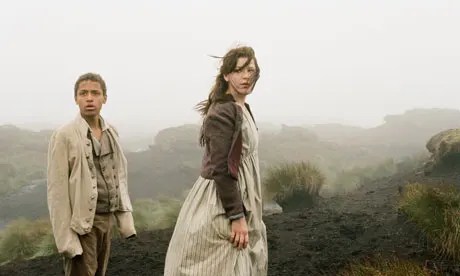
To attempt to chart the web of relationships of blood, marriage, social strata, economic dependence, love, envy, hatred, and revenge that bind Catherine and Heathcliff to the book’s other characters would make Wuthering Heights sound like a story that somehow got drunk in Victorian England and ended up in the incestuous, jungly psychological precincts of Faulkner’s South. The plot is a tangle of primal feelings as palpable as the untamed landscape and tempestuous weather of the Yorkshire moors that Emily Brontë knew so well. As the couple’s destiny is derailed by prevailing ideas of convention and class, their intense desire drives them to punish each other as passionately as they long to love. Their ardour doesn’t prevail, but it does endure, with a grip on readers’ imaginations that is as baffling, buffeting, and transporting as only the most powerful emotions can be.
What I loved:
Some of the love quotes between Catherine and Heatcliff – they were perfect for each other, imperfect as they might have been but destined by the class system not to be wed. He didn’t have any name or fortune and she preferred her blonde and maliable neighbour next door.
Treachery and violence are spears pointed at both ends; they wound those who resort to them worse than their enemies.
I admired Heatcliff’s greediness and his ascent to power by any means – be they gambling, coercing and killing. He didn’t kill the old man who owned Wuthering Heights but he did look after him like a vulture waiting for his pray to die off so he can feast on the remains.
“It is strange people should be so greedy, when they are alone in the world!
His hate it what drives him and I hated how he used his wife to get what he wanted. And then his son, his own blood. Instead of letting him grow up with Young Catherine in a loving household, he demanded him like you would with property and I guess he didn’t see his own son as anything more.
Besides, he’s mine, and I want the triumph of seeing my descendant fairly lord of their estates; my child hiring their children to till their fathers’ lands for wages. That is the sole consideration which can make me endure the whelp: I despise him for himself, and hate him for the memories he revives!
What I hated
I think someone else has found a few of the most hated things I had (the toxic relationship and not the love story I imagined growing up)
https://www.readinghasruinedmylife.com/post/a-hate-letter-to-wuthering-heights
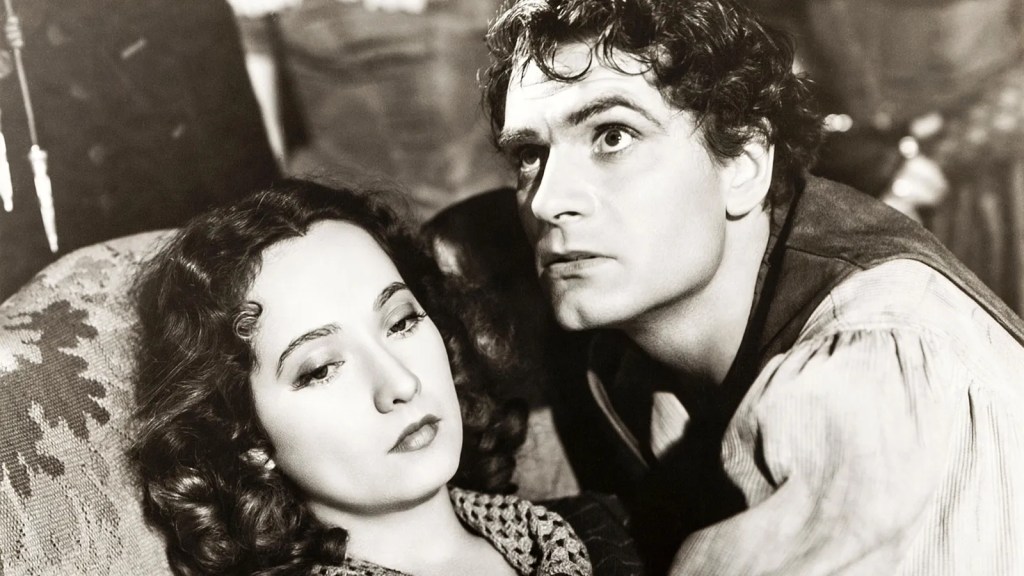
Having been raised as siblings, Heathcliff and Cathy’s infatuation is laced with a queasy tug of incest. But even without that, their relationship can easily be read as obsessive, destructive, co-dependent – in a word, toxic.
That’s not all but the cousin marriage is sickening – they are first cousin – both Young Cathy and Lindon (his mother was her fatehr’s sister) and Young Cathy and her Uncle a the end of the book.
Catherine (the elder) is often abusive and angry and known to have a nasty temper. She hits Lindon as he was courting her and even though the maid told him to walk on out of there, he returns to soothe the crying woman, only to marry her a few days later. She continued to live with them in peace only because none thought to provoke her and walked on eggshels around her. When her sister-in-law declares her attraction to Heatcliff, she goes on to mock her and expose her feelings to the wolf, making her easy prey for seduction. And on more than one occasion, she yanks Nelly (her servant) by the hair in the middle of the night, just to talk to her so she can have someone to confide into.
We do sometimes pity creatures that have none of the feeling either for themselves or others
There’s even an odd idea: what if Catherine was bipolar. She either goes from being locked in her room doing nothing, to racing and rousing everyone.
“Oh I will die, she exclaimed , ‘since no one cares anything about me. I wish I had not taken that. Then a good while after I heard her murmur, ‘No, I’ll not die-he’d be glad
Then I was thinking, maybe she wasn’t bipolar. She was sick. People around her died young. Catherine’s mother died young, Catherine herself wasted away after the birth of her daughter, her sister-in-law died when her child was only 8 and she moved away to London to be away from her abusive husband. There’s a lot of sickness in the air.
The flash of her eyes had been succeeded by a dreamy and melancholy softness; they no longer gave the impression of looking at the objects around her: they appeared always to gaze beyond, and far beyond—you would have said out of this world.
Because of women’s perceived frailty and delicacy, they were more prone to have a nervous disorder, also known as wasting diseases, than were men.
https://litrambling.wordpress.com/2016/05/29/wuthering-heights-is-catherines-madness-gendered/
Whatever your interpretation might be – she and the characters around her were deeply flawed and I think that’s what makes a good book. And I don’t think I’d be happy to strive for a relationship like Catherine’s and Heatcliff’s as I did when I was a teenage girl anymore. No way.

 One Book a Week (Julia Reads Books)