As you will see, it’s an incredible story—of that there is no doubt.
Whether you believe it or not is up to you.
Set in London, this book follows a criminal psychologist attempting to uncover the secrets of a female murderer and artist through her art and not her voice. Interviews with friends, family and not-so-good-friends paint a picture of who this person truly is and may cast a light to their motivations.
The Story
Alicia Berenson’s life is seemingly perfect. A famous painter married to an in-demand fashion photographer, she lives in a grand house with big windows overlooking a park in one of London’s most desirable areas. One evening her husband Gabriel returns home late from a fashion shoot, and Alicia shoots him five times in the face, and then never speaks another word.
But let us not forget that while Alicia Berenson may be a murderer, she was also an artist. It makes perfect sense—to me at least—that she should pick up her brushes and paints and express her complicated emotions on canvas. No wonder that, for once, painting came to her with such ease; if grief can be called easy.
The painting was a self-portrait. She titled it in the bottom left-hand corner of the canvas, in light blue Greek lettering.
One word: Alcestis.

Alicia’s refusal to talk, or give any kind of explanation, turns a domestic tragedy into something far grander, a mystery that captures the public imagination and casts Alicia into notoriety. The price of her art skyrockets, and she, the silent patient, is hidden away from the tabloids and spotlight at the Grove, a secure forensic unit in North London.
“We are made up of different parts, some good, some bad, and a healthy mind can tolerate this ambivalence and juggle both good and bad at the same time. Mental illness is precisely about a lack of this kind of integration – we end up losing contact with the unacceptable parts of ourselves.”
Theo Faber is a criminal psychotherapist who has waited a long time for the opportunity to work with Alicia. His determination to get her to talk and unravel the mystery of why she shot her husband takes him down a twisting path into his own motivations—a search for the truth that threatens to consume him.
He’s in a relationship that’s plagued by infidelity and mis-trust. He’s a cannabis user and while he loves (loved) his young wife, because he thought she understood him for who he was – it was make-believe. She cheated on him multiple times and then called him a “pot head” as a diversion from her own mis-deeds. Theo got into psychology due to his own troubled past. He had unloving parents and an attempted suicide under his belt and you know what they say – most psychologists are in the business only trying to figure themselves out as well. “We’re all crazy, I believe, just in different ways.”
I believe the same is true for most people who go into mental health. We are drawn to this profession because we are damaged – we study psychology to heal ourselves. Whether we are prepared to admit this or not is another question.
I liked what Theo’s therapist told him when he arrived on her doorstep after initially finding out what was happening.
“Choosing a lover is a lot like choosing a therapist. We need to ask ourselves, is this someone who will be honest with me, listen to criticism, admit making mistakes, and not promise the impossible?”
No-one is truly sane. And Alicia – well, besides her selective mutism, she’s only about making statements. She paints her husband as Jesus on the Cross because she sees him as her saviour. She paints his gun (the one she used to kill him with) tied around his waist.
They’re all powerful paintings. Gabriel on the Cross, Alcestis,
ALCESTIS IS THE HEROINE OF A GREEK MYTH. A love story of the saddest kind. Alcestis willingly sacrifices her life for that of her husband, Admetus, dying in his place when no one else will. An unsettling myth of self-sacrifice, it was unclear how it related to Alicia’s situation. The true meaning of the allusion remained unknown to me for some time. Until one day, the truth came to light—
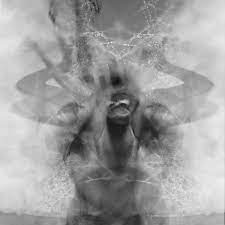
The painting is a self-portrait, depicting Alicia in her studio at home in the days after the murder, standing before an easel and a canvas, holding a paintbrush. She is naked. Her body is rendered in unsparing detail: strands of long red hair falling across bony shoulders, blue veins visible beneath translucent skin, fresh scars on both her wrists. She’s holding the paintbrush between her fingers. It’s dripping red paint—or is it blood? She is captured in the act of painting—yet the canvas is blank, as is her expression. Her head is turned over her shoulder and she stares straight out at us. Mouth open, lips parted. Mute.
What drives her art? Is it the fact that she’s broken as a person? If there’s one thing I’ve learned in Little Fires Everywhere is that art is subjective and it takes knowing the artist and the story to truly understand it.
“No one is born evil. As Winnicott put it, “A baby cannot hate the mother, without the mother first hating the baby.
I loved this book. The discussion was strong around Mental Health issues, about who is truly crazy (but we don’t use that term in there) and besides the mystery of what happened – there’s a lot to unpack. Trauma, art, sexual advances, saviour complexes, about love and trust. About therapy.
“At the time I didn’t understand. But that’s how therapy works. A patient delegates his unacceptable feelings to his therapist; and she holds everything he is afraid to feel, and feels it for him. Then, ever so slowly, she feeds his feelings back to him.”
Solid 5/5
 One Book a Week (Julia Reads Books)