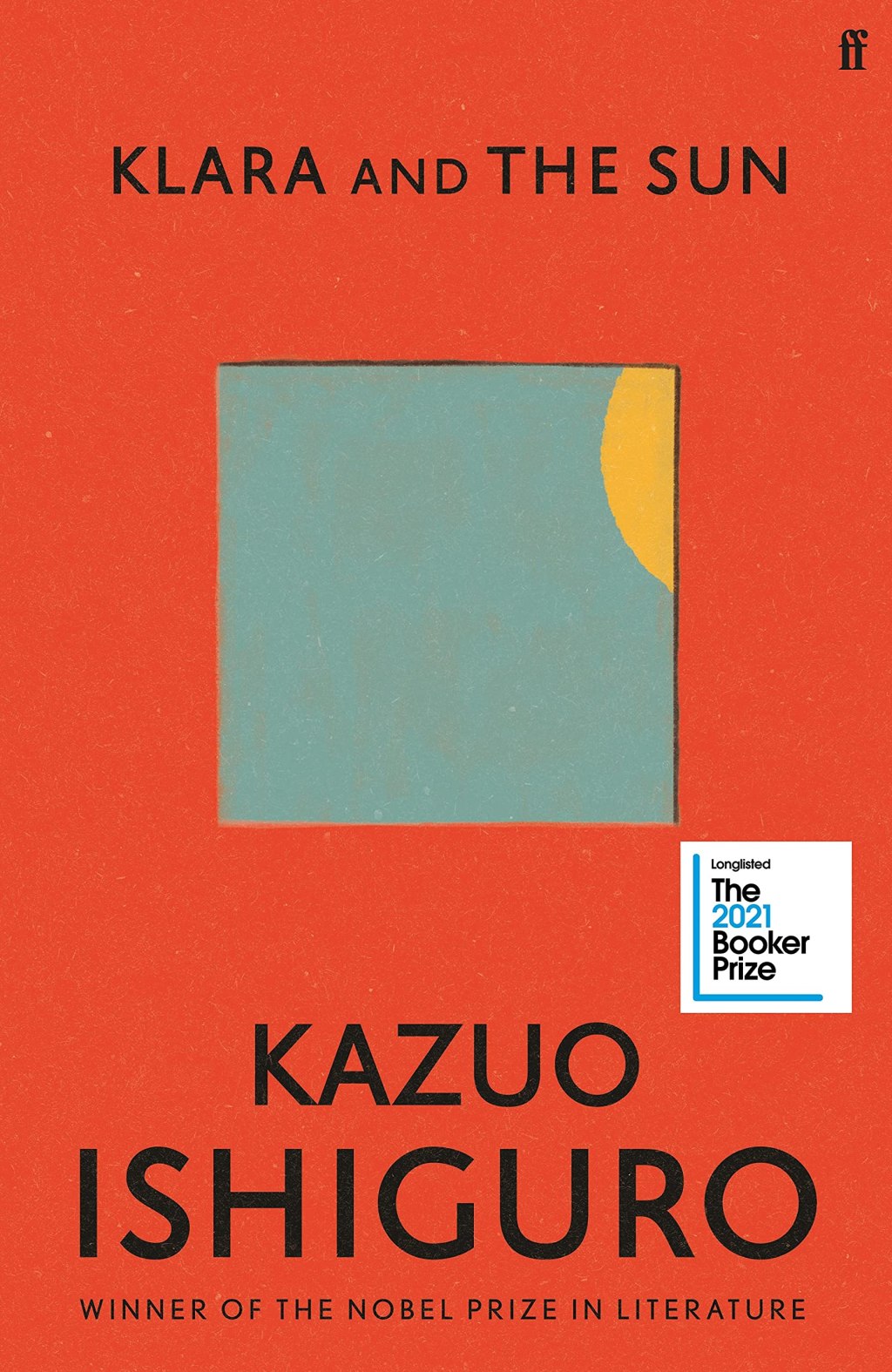
I love the slow prose of Kazuo Ishiguro. It’s not fast-in-your-face action and it takes a while to settle in. It’s like watching a sunset from an old barn while contemplating your life slow. I loved When We Were Orphans and Never let me go and A pale view of the hills. And I keep thinking of Anthony Hopkin’s playing the movie adaptation of The remains of the day and wish they made another movie about time and forgetfulness like The Buried Giant. So when I spotted a book in the charity bin from my favourite slow author, I picked it up. I did no research about what it was about, didn’t read the blurb and I just expected to be transported away (like always) by the gentle prose. And I did!
The Plot
Goodreads Choice Award & Nominee for Best Science Fiction (2021)
From her place in the store, Klara, an Artificial Friend with outstanding observational qualities, watches carefully the behavior of those who come in to browse, and of those who pass on the street outside. She remains hopeful that a customer will soon choose her, but when the possibility emerges that her circumstances may change forever, Klara is warned not to invest too much in the promises of humans.
In Klara and the Sun, Kazuo Ishiguro looks at our rapidly changing modern world through the eyes of an unforgettable narrator to explore a fundamental question: what does it mean to love?
I’ve always been fascinated by the concept of a companion robot. AI has come a long way from where it was decades ago and even I, Robot by Isaac Asimov (1950) predicted a world where children could order their own nanny and friend robot, who, of course, had to abide by the 3 laws – never hurt their human or do any harm.
Klara is such a robot. You don’t know straight from the start as she’s the narator and she seems human enough. She thinks, she talks, she asks questions. She exhibits curiosity and a strong desire to connect with others. It might be her programming. You can only tell she’s NOT human when she’s asked to sit in the display window for a week and takes in nourishment from the sun. She’s solar powered in that sense. And like a child in an orphanage, she’s waiting anxiously to be picked by a family to go to her forever home.
In her observations, you might deduct that not all homes who get robots are actually using them properly – she notices a girl walking way in front of her AF (artificial friend) and the AF looking a bit dejected. It’s a shame – such emphatic artificial beings are being treated by no more than objects and annoyances by their owners. Is it slavery if the robot has feelings?
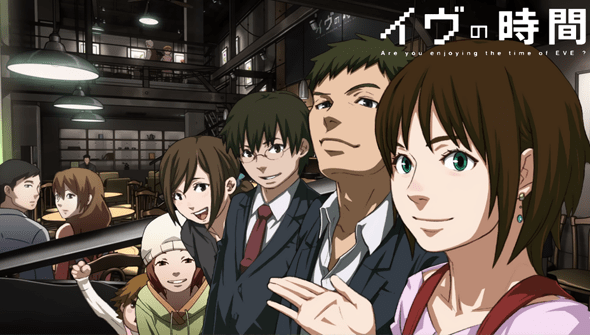
There was an anime movie almost a decade ago which explored the ethics of AI-powered assistant machines .Their use would be obsoleted by newer models, just like the book’s protagonist. She was already facing a replacement by the B3 models who could do a backflip and had improvements in balance and cognition.
Klara does get picked and goes home with a sickly little girl who we learn to love like Klara does. She’s a servant and a friend and a confidante and a care taker all in one. I suppose with the hefty price tag, the parents got what they needed for their girl. The truth is – as it’s revealed further on in the book – Klara was picked to act as a replacement for the little girl once and only if she died from the disease that consumed her. Klara’s role was to use her observation skills to potentially become her charge and act like a grief doll.
Sometimes,’ she said, ‘at special moments like that, people feel a pain alongside their happiness. I’m glad you watch everything so carefully, Klara.”
Without self regard, Klara truly embodies love, in a way that feels superior to what we humans seem to be able to muster. She does not fundamentally change, but her surroundings do and people and time move on.
Hence the ending felt for me emotionally impactful and a perfect illustration of something the author said during the digital launch events: There is something very cruel about the human condition
The book was indeed slow but I could have given it 5 stars if the ending wasn’t so freaking bleak. It was sad as hell. This companion which has spent every waking minute taking care of this little girl was literally taken out of the storage cupboard and into the pasture.
What I liked
- Klara’s child-like observations on humans. “Until recently, I didn’t think that humans could choose loneliness. That there were sometimes forces more powerful than the wish to avoid loneliness.”
- The discussion of what of a human’s life can be digitalised. Can the soul be saved in a binary format so that the human can go on past its due date? But then suppose you stepped into one of those rooms,’ he said, ‘and discovered another room within it. And inside that room, another room still. Rooms within rooms within rooms. Isn’t that how it might be, trying to learn Josie’s heart? No matter how long you wandered through those rooms, wouldn’t there always be others you’d not yet entered?”
- Very similar concept like Pantheon (the TV Series)

What I didn’t like about the book
- Ending was sad. I don’t know if it felt rushed for others but for me it went from 0-100 in 20 pages. Imagine spending 300+ pages with 14-year old Josie and all of a sudden she’s healed and heading to college and Klara is set aside to rust. I suppose I’m saying Josie and I will always be together at some level, some deeper one, even if we go out there and don’t see each other any more. I can’t speak for her. But once I’m out there, I know I’ll always keep searching for someone just like her. At least like the Josie I once knew. So it wasn’t ever a deception, Klara. Whoever that was you were dealing with back then, if they could see right into my heart, and right into Josie’s, they’d know you weren’t trying to pull some fast one.”
- I understood what the Sun meant to Klara – the thing that gives you life must mean a lot to other people – it becomes a deity and is much revered – just like the old solar-centric religion of Egypt bowing in front of Ra. But after a while, you’re thinking – surely – the AF is able to learn and set aside personal beliefs and look at science and understand how it works. “The Sun, noticing there were so many children in the one place, was pouring in his nourishment through the wide windows of the Open Plan.” It’s the mystification of the Sun as a deity by a machine that got me a bit confused. But maybe that was the point and Klara was no ordinary machine.
 One Book a Week (Julia Reads Books)