As the New York Times put it, “du Maurier is in a class by herself”—and Rebecca is her finest achievement.
“Last night I dreamt I went to Manderley again.”
That’s the famous opening sentence of Rebecca, a suspenseful romantic tale that has cast its irresistible spell over millions of readers since it was published in 1938. The “I” is the novel’s unnamed narrator. She is a timid and inexperienced young woman who, after a whirlwind romance, becomes the wife of the handsome and sophisticated widower Maxim de Winter.

Manderley is de Winter’s isolated estate on the Cornish coast of England. When the couple takes up residence there, the new Mrs. de Winter discovers that although her predecessor, the beautiful Rebecca, is dead, her memory lives on.
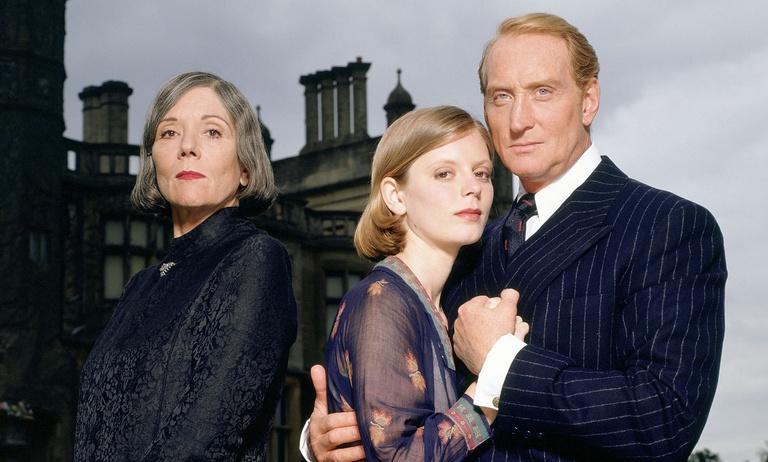
Upon arriving at the daunting Manderley estate, the second Mrs de Winter is haunted by the ghost of the first, the titular character, Rebecca. Although she has been dead a year, her presence is everywhere. Maxim’s new bride is overshadowed by her predecessor, whether through comparisons made by Maxim’s friends and family or by the stylish ‘R’ monogram prevalent throughout the house. Rebecca remains exceptional at all she set her mind to, while the second Mrs de Winter is rebuked by Maxim for merely trying a new style of dress.
It slowly begins to dawn on the second Mrs. de Winter that only by solving the mystery of her predecessor’s fate can she herself become the true mistress of Manderley.
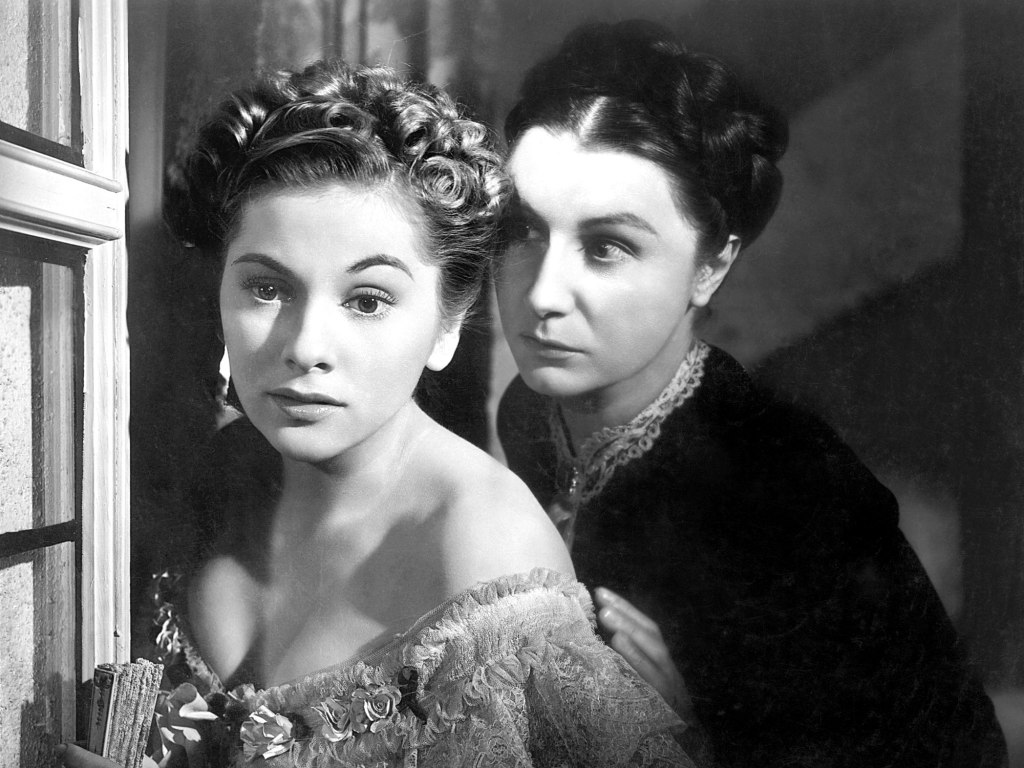
It is Mrs Danvers, the stoic and intimidating housekeeper played by Judith Anderson in Hitchcock’s version, who keeps Rebecca alive. Her subtle undermining of the protagonist stems from her fervent loyalty to Rebecca with whom she was infatuated. However, Mrs Danvers is more of a threat through her failure to adhere to the heteronormative standards of womanhood typical of the period. She is plain, never once accommodating to anyone, and her affection for Rebecca has always appeared queer-coded.
I wondered how many people there were in the world who suffered, and continued to suffer, because they could not break out from their own web of shyness and reserve, and in their blindness and folly built up a great distorted wall in front of them that hid the truth.
Mrs Danvers’ worship of Rebecca is fanatical. This is revealed when she shows the second Mrs de Winter her former mistress’ bedroom, shut off in Manderley’s west wing. The room has an almost ecclesiastical stature, towering windows and gilded mirrors which shine light onto Rebecca’s perfectly preserved vanity, where Mrs Danvers has not allowed a speck of dust to settle.
Men are simpler than you imagine my sweet child. But what goes on in the twisted, tortuous minds of women would baffle anyone.
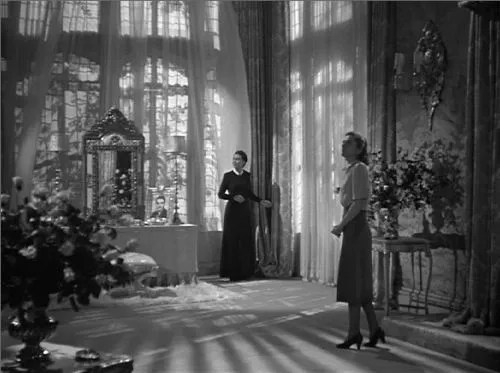
The housekeeper gently handles Rebecca’s possessions with a love and devotion reserved only for heteronormative romance at the time, pointing out the sheerness of her nightwear and opening her cabinets of undergarments with reverence. Yet the explicit queerness was unacceptable for Hollywood at the time and therefore portrayed as disturbing and frightening.
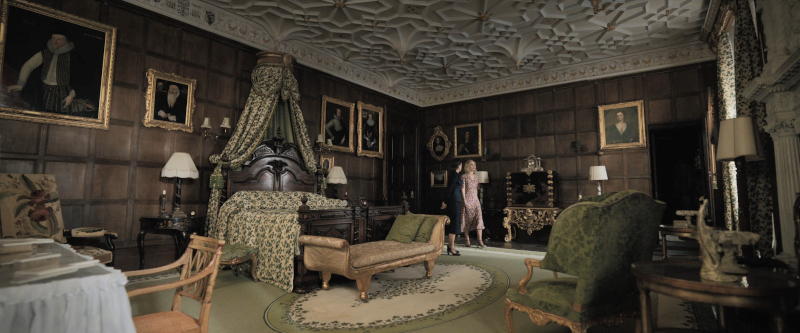
Rebecca herself was an alluring and attractive woman, yet, she is condemned for using her feminine wiles to live beyond her wifely role. She has three hallmarks of a good wife – “breeding, brains and beauty,” as told to Maxim – in spades. However, Maxim despises his spouse for refusing to be the perfect housewife he desired. Like Mr Rochester before him, Maxim is guarded and stern, with monstrous wives lurking in the background, mocking him. The west wing of Manderley, much like Rochester’s attic in ‘Jane Eyre’, is locked, shuttering Maxim’s fragile ego. When Rebecca taunts Maxim by flaunting her sexual history and refusing to be tamed, she is punished for her “failures” as a woman by his fatal strike.
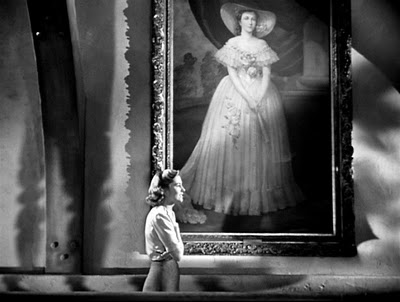
The new Mrs de Winter’s transformation into an idealised woman is realised when Maxim confesses his role in Rebecca’s death. Rather than fearing or rejecting him, she is instead relieved that Maxim truly desires her over his first wife.
“If only there could be an invention that bottled up a memory, like scent. And it never faded, and it never got stale. And then, when one wanted it, the bottle could be uncorked, and it would be like living the moment all over again.”
As she becomes increasingly complicit, her loss of innocence is reflected in her maturing dress sense. Her first outfit post-confession is a black, shoulder-padded dress which Maxim himself notes marks the death of her youth, stating, “I killed that when I told you about Rebecca.” Yet she embraces the change as it means she can finally be the acceptable wife for Maxim.
 One Book a Week (Julia Reads Books)