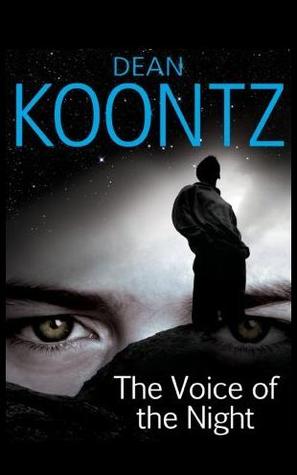
The night was a vast, dank cellar, home to that which crept and crawled and slithered. The night had ears and eyes. It had a horrible, scratchy old voice. If you listened closely, tuning out your doubt and keeping an open mind, you could hear the dreadful voice of the night. It whispered about graves and rotting flesh and demons and ghosts and swamp monsters. It spoke of unspeakable things.
Welcome to my favourite dark author. Slithering again from the darkness this time with a book about childhood friends. And what’s worse than an innocent child being not-so-innocent? The Japanese got it right in their horror tropes. Nothing scares the body and soul more than corruption of the innocents.
And what I like about Dean Koontz books is that they make you sweat. They bring out the terror. That sound in the dark. That slick sweat down your back. That scream in your ear.
Fear washed through him like bile spreading from a pierced gut. The muscles in his throat grew tight. He had difficulty swallowing.
“We’re both interested in the things that count,” Roy said. “Pain and death. That’s what intrigues you and me. Most people think death is the end of life, but we know different, don’t we? Death isn’t the end. It’s the center. It’s the center of life. Everything else revolves around it. Death is the most important thing in life, the most interesting, the most mysterious, the most exciting thing in life.”
The Story
No one could understand why Colin and Roy were best friends. Colin was so shy; Roy was so popular. Colin was nervous around girls; Roy was a ladies’ man. Colin was fascinated by Roy — and Roy was fascinated with death. Then one day Roy asked his timid friend, “You ever killed anything?” And from that moment on, the two were bound together in a game too terrifying to imagine… and too irresistible to stop.
In the summer of 1980, introverted bookworm Colin Jacobs moves to Santa Leona, California, with his mother, and soon meets and becomes friends with another boy his age. Roy Borden is everything Colin has never been, but he secretly wishes he could be- brave, outgoing, muscular, athletically talented, and a consummate ladies’ man. He is an instinctive fighter, ready to stand up to anyone or anything—a stark contrast to Colin, who “learned long ago that resistance causes pain” and avoids trouble and confrontations. Colin and Roy become close friends in a short period of time, and Roy declares them to be blood brothers after a brief ceremony. Roy displays some odd behavior, such as asking if Colin has ever killed anything and calling anything fun a popper, but Colin does not think anything of it.
“If you aren’t afraid of death,” Roy said, “then you can’t be afraid of anything. When you learn to conquer the biggest fear, you conquer all the smaller fears at the same time, isn’t that right?”
Colin meets a beautiful girl called Heather Lipschitz in a store one day, and he is overwhelmed but thrilled as he realizes the two are developing a romantic interest in each other. He does not tell Roy, but assumes that his association with Roy has indeed helped his own image and made girls more interested in him. Roy begins to confide more in Colin, revealing an extremely cynical worldview, and an obsession with sex, violence, and death. Colin treats it as a joke, even as Roy claims to have killed two other boys who refused his offer to be blood brothers.
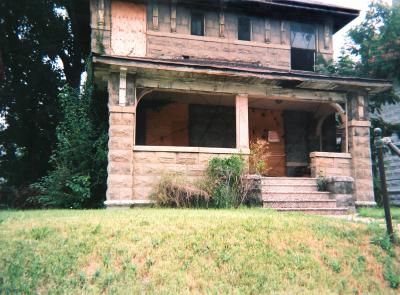
He leads Colin to an abandoned house by a railroad line, where he has set up an old pickup truck and prepared it to be pushed downhill to cause an approaching passenger train to wreck.
Half of the windows were haphazardly boarded shut, but the others were without protection, thus shattered; moonlight revealed jagged shards of glass like transparent teeth biting at the empty blackness where stones had been pitched through.
He asks for Colin’s help, but Colin, realizing it was never a joke, tries to stop him. Roy throws Colin aside and tries to push the truck down to the tracks on his own, but it needed two people to keep it on course, and Roy goes off in a rage as the train goes by.
Roy tries to kill Colin in the junkyard, but after narrowly escaping, Colin finds that no one believes him when he tries to reveal who Roy is.

He felt something else, too, something dark and devastating, something far more disturbing than anger, far more debilitating than fear, something uglier, like a terrible loneliness, but much worse than loneliness. It was a suspicion—no, a conviction—that he had been abandoned, forgotten, and that no one in the whole world cared or would ever care enough about him to really find out what he was like and what his dreams were. He was an outcast, a creature somehow vastly different from all other people, an object of scorn and derision, an outsider, secretly loathed and ridiculed by everyone who met him, even by those few who professed to love him.
He felt as if he would vomit.
Colin turns to Heather, and the two of them work to uncover the secrets of Roy’s hidden life. They learn that Roy is adopted, and that he accidentally killed his adoptive sister Belinda when he was eight years old and got behind the wheel of his adopted father’s car while Belinda was playing behind it. An accident or a true psychopath?
Mrs. Borden, who came outside just in time to see it happen, went into shock and said over and over “Her little head…it just popped.”
What kind of people did Roy come from? What was wrong with them? What flaws and sickness did they pass on to him? It was an awful mistake to take him in.

Soon after, Mrs. Borden, who has always been obsessed with keeping her house spotlessly clean, savagely beat Roy with a metal dustpan when he came home and tracked dirt into the house.
She was worse than a ghoul or a vampire, doubly dangerous because she was so well disguised. She looked rather ordinary, even drab, unremarkable in every respect, but inside she was an awful creature. He could still feel where her icy fingers had pressed against his face.
Severely traumatized by both incidents, Roy became deeply cynical and embraced the idea that he was a murderer, convincing himself over time that he did it all on purpose. Lonely and desperate for a real friend, Roy tried reaching out to two boys before Colin, and Colin and Heather confirm that the boys really did die when, where and how Roy said they did.
Colin calls Roy and sets up a trap involving his girlfriend and pretending he’s like him. What he doesn’t know is that Roy is desperately unhappy, and wants to be put out of his misery. Colin fights down the urge to kill him, and goes outside to call the police. As he does, he realizes that the “voice of the night” is within him, too, and he must resist the urge to listen to it like Roy did.
“You can’t trust hardly anyone, hardly anyone at all. Even people who’re supposed to like you can turn on you faster than you think. Even friends. People who say they love you are the worst, the most dangerous, the most untrustworthy of all.”
Final Take
So this is not as bad as We Need to Talk About Kevin by Lionel Shriver but there’s something scary about kids that are not quite right. Is it the parents’ upbringing? The lack of love? An under-developed pituitary gland that causes a hormonal imbalance and a lack of empathy in the child? Is it ODD? Things no-one tells you when you’re adopting.
I loved the fact that the primary voice of the book was Colin’s and how he sees the world. His life is not much better either. He’s neglected and unloved (or not loved enough). Both kids are very sad and while there’s a way out without violence, sometimes negative attention is all the attention they get.
 One Book a Week (Julia Reads Books)