Anderson turns the strange hairy fruit in his hand. It carries no stink of cibiscosis. No scab of blister rust. No graffiti of genehack weevil engraves its skin. The world’s flowers and vegetables and trees and fruits make up the geography of Anderson Lake’s mind, and yet nowhere does he find a helpful signpost that leads him to identification. Ngaw. A mystery.
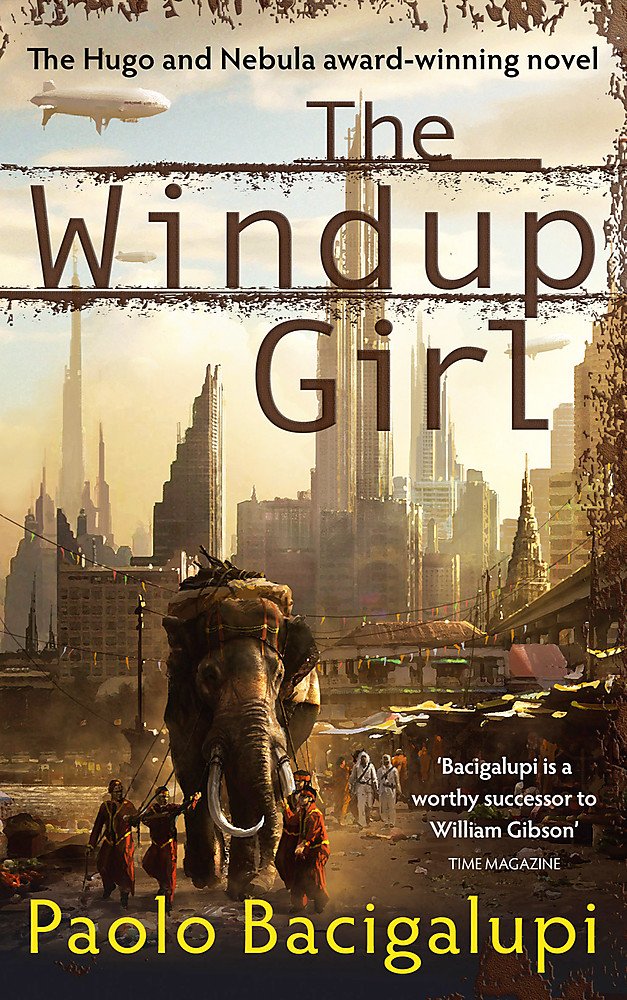
The Windup Girl was named as the ninth best fiction book of 2009 by TIME magazine. It won the 2010 Nebula Award and the 2010 Hugo Award (tied with The City & the City by China Miéville), both for best novel.
Anderson Lake is a company man, AgriGen’s Calorie Man in Thailand. Undercover as a factory manager, Anderson combs Bangkok’s street markets in search of foodstuffs thought to be extinct, hoping to reap the bounty of history’s lost calories. There, he encounters Emiko…
Emiko is the Windup Girl, a strange and beautiful creature. One of the New People, Emiko is not human; she is an engineered being, crèche-grown and programmed to satisfy the decadent whims of a Kyoto businessman, but now abandoned to the streets of Bangkok.
Raleigh says that all things come in cycles, like the rise and fall of the tides along the beaches of Koh Samet, or the rise and fall of a man’s prick when he has a pretty girl.

Regarded as soulless beings by some, devils by others, New People are slaves, soldiers, and toys of the rich in a chilling near future in which calorie companies rule the world, the oil age has passed, and the side effects of bio-engineered plagues run rampant across the globe.
a pity New People were not more respected, and really it was too bad her movements would never be smooth. But still, did she not have perfect eyesight and perfect skin and disease- and cancer-resistant genes, and who was she to complain? At least her hair would never turn gray, and she would never age as quickly as he, even with his surgeries and pills and ointments and herbs that kept him young.
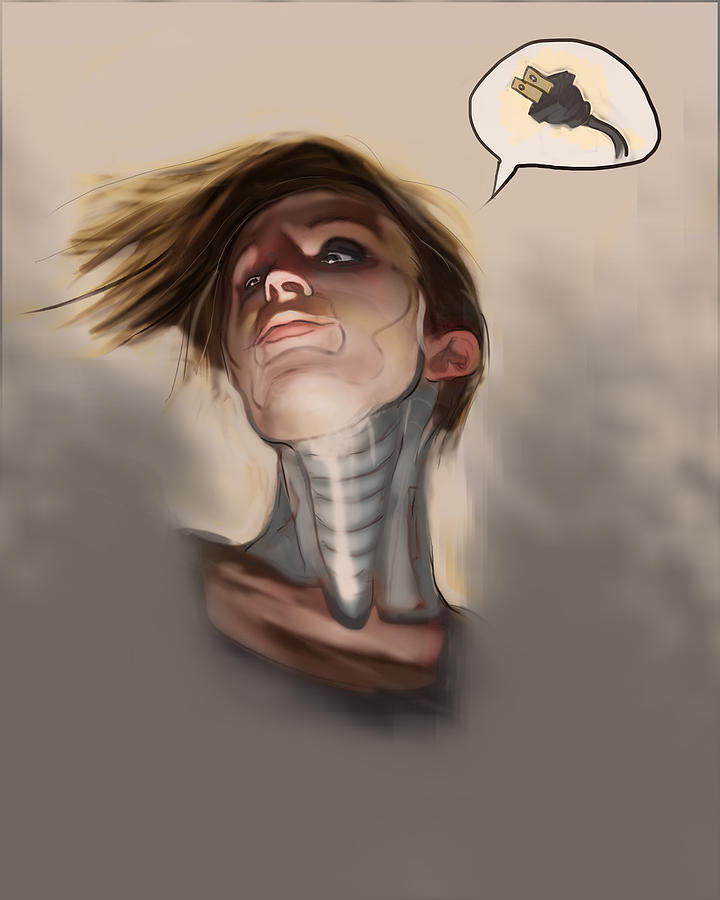
In Japan she was a wonder. Here, she is nothing but a windup. The men laugh at her strange gait and make faces of disgust that she exists at all. She is a creature forbidden to them.
I found the story of Emiko quite sad. She’s humiliated as a side-show attraction and her original quaintness is now mocked, seen as an “affront to niche and nature”. I wonder when they designed her, why did they equip an android with “shame” – a feeling so humane. To feel shame is to know what you are and where it’s wrong. That type of AI is so close to human, it could have come from Blade Runner.
What happens when calories become currency? What happens when bio-terrorism becomes a tool for corporate profits, when said bio-terrorism’s genetic drift forces mankind to the cusp of post-human evolution? Award-winning author Paolo Bacigalupi delivers one of the most highly acclaimed science fiction novels of the twenty-first century.
I like a good science fiction cautionary tale, and in an era where there are so many things that we still do not understand, there is plenty of material out there for sci-fi writers to create something chilling that plays on our biggest fears. Global warming, genetic engineering, western consumerism – all of our greatest fears associated with these issues are drawn out and explored by Paolo Bacigalupi.
Bacigalupi paints a bleak picture of the future, a world overrun by bio-terrorism as calorie companies engineer crippling viruses that destroy crops and force nations to buy their own virus resistant crops. Global warming due to carbon emissions has seen the development of kink spring technology, devices that store energy (calories) by being wound up. Animals and now humans are being genetically engineered, questioning spiritual beliefs about the soul and how it reincarnates. Thailand has shut itself from the world almost completely, burning anything and everything that the foreign menace try to sneak past the border. It is a world that has been crafted so well that it feels like it might be a very plausible future. This world building is where The Windup Girl really shines, creating a cautionary tale that really engages with the reader in the hope that it may inspire action to stop this future from becoming a reality.
Bacigalupi explores this world through the eyes of five main protagonists, each with their own separate stories that slowly but surely interweave with each other as the book accelerates towards a “big bang” ending. These stories are cleverly constructed, they do a lot to make this book into a coherent novel whilst further fleshing out the cautionary tale, and they work hard at making the reader think.
The first story is that of Anderson Lake – working in a managerial position at a plant. They employ Thai people which are unionised working with megodonts (animals) spinning on an axis to grind everything produced by the city. You can see worker’s rights (or lacks), clean crews, cast systems and the inherent fear of the “white devil” who, in Asia, will always be regarded with distrust no matter what his job is.
Hock Seng swallows. The foreign devil’s pale skin and blue eyes are truly horrific. As alien as a devil cat, and just as comfortable in a hostile land. “It would be unwise to enrage the white shirts.” Hock Seng murmurs. “The nail that stands up will be pounded down.”
But there is a big problem here, the stories are just so depressing. For example – Emiko the windup girl is contraband, surviving as a taboo prostitute with her earnings used to fund the bribes that make the authorities look the other way. Things don’t ever get better for her throughout the story, as she suffers more and more degrading abuse in the hope of one day being free. The other stories are similarly depressing with Bacigalupi not afraid to hold back, putting the characters in desperate situations with brutal consequences. It was really hard for me to maintain my motivation to read this novel – there was rarely any joy, rarely any fun to be had, and to be honest I just don’t like to read depressing books.
 One Book a Week (Julia Reads Books)
Leave a comment