“Full of unexpected revelations about the evolution of Christmas, Nissenbaum’s book is a stellar work of American cultural history. In probing the historical contexts of Christmas, Nissenbaum casts fresh light on such diverse issues as consumerism, popular culture, class relations, the American family, and the African-American experience.”
David Reynolds, Baruch College
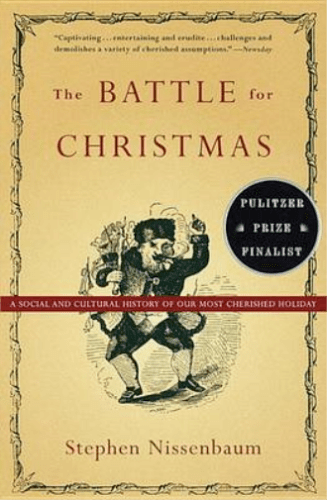
Anyone who laments the excesses of Christmas might consider the Puritans of colonial Massachusetts: they simply outlawed the holiday. The Puritans had their reasons, since Christmas was once an occasion for drunkenness and riot, when poor wassailers extorted food and drink from the well-to-do. In this intriguing and innovative work of social history, Stephen Nissenbaum rediscovers Christmas’s carnival origins and shows how it was transformed, during the nineteenth century, into a festival of domesticity and consumerism. Drawing on a wealth of period documents and illustrations, Nissenbaum charts the invention of our current Yuletide traditions, from St. Nicholas to the Christmas tree and, perhaps most radically, the practice of giving gifts to children. Bursting with detail, filled with subversive readings of such seasonal classics as A Visit from St. Nicholas and A Christmas Carol, The Battle for Christmas captures the glorious strangeness of the past even as it helps us better understand our present.
OMG this was a boring read. I barely made it through the first three chapters with enough coffee to mildly make it engaging but the dates, the figures and the well thought-out research quotes made this a very dry read. Not even the fornication notations about “those youths” made it any type of good reading. I think other people might find it informational but for me it was pure drudgery.
 One Book a Week (Julia Reads Books)
Leave a comment