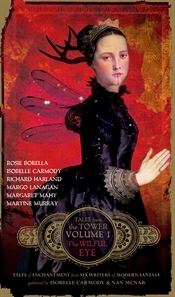
A dozen of the most exciting and unique writers for young people have chosen fairytales as starting points for their own original stories, in this surprising and spellbinding two-volume collection
Margo Lanagan (Tender Morsels), Rosie Borella, Isobelle Carmody, Richard Harland (Worldshaker), Margaret Mahy (The Seven Chinese Brothers), and Martine Murray (HenriettaThere’s No One Better) have taken inspiration from stories that have shaped us all, tales like “Beauty and the Beast,” “The Steadfast Tin Soldier,” and “The Snow Queen.” This collection carries universal themes of envy and desire, deception and abandonment, courage and sacrifice. Characters are enchanted, they transgress, they yearn, they hunger, they hate, and, sometimes, they kill. Some of the stories inhabit a traditional fairytale world, while others are set in the distant future. Some are set in the present and some in an alternative present. The stories offer no prescription for living or moral advice and none belong in a nursery. Open the covers and submit to their enchantment.
Another thing I love about short stories is that images can dominate like a mysterious tower on a hill. Short stories do not say this happened and this happened and this happened. They are a microcosm and a magnification rather than a linear progression.
Gathering twelve Australian authors together to rewrite classic fairy and folk stories is an instant draw for me. I really love the places authors can go with fairy story revisionism. However, it doesn’t always work.
Fairytales nevertheless usually have a feeling of completeness, as if everything is finally where it should be. The short story form allows evocation, suggestion, implication. Its potency often lies in what it does not say.
There were 6 stories overall and each accompanied with author’s notes on their choice of fairy tale and the reason why they wrote the retelling as they did.
The twelve stories that make up the collection are very diverse, not only because each arises from a different fairytale, but because each is a profound exploration, through fairytale, of themes important to the individual writers. They chose their stories consciously and subconsciously, and the depth of their choice is reflected in the depth of their stories.
That the stories are as powerful as they are is the result of the writers’ abilities to be inspired by the stories that shaped all of us. You will find in them the universal themes of envy and desire, control and power, abandonment and discovery, courage and sacrifice, violence and love. They are about relationships – between children and parents, between lovers, between humans and the natural world, between our higher and lower selves. Characters are enchanted, they transgress, they yearn, they hunger, they hate and sometimes, they kill. Some of the stories are set against very traditional fairytale backgrounds while others are set in the distant future. Some are set in the present and some in an alternative present. The stories offer no prescription for living or moral advice and none of them belongs in a nursery.
My favourites were Moth’s Tale by Isobelle Carmody and Heart of the Beast by Richard Harland, by far. I haven’t read either original fairytale although I know the gist of them, but now I’m definitely wanting to read the source material. Even for the stories that I didn’t absolutely love I still really enjoyed experiencing the fairytales in new ways, so this genre of books is definitely something I want to explore further. I look forward to picking up the second part of “Tales from the Tower”
‘Could you love me, Moth?’ asked the prince. ‘I was half in love with you even before we met and efore you saved my father’s life, for the bees and the birds and the horses sang your name and your praises to me. I came to your house that first day to sell hair ornaments purely in the hope of getting a glimpse of you.’
‘I will love you,’ she answered simply; ‘I do,’ and stopped his mouth with a kiss.
 One Book a Week (Julia Reads Books)
Leave a comment