When a murdered woman is found in the city of Beszel, somewhere at the edge of Europe, it looks to be a routine case for Inspector Tyador Borlú of the Extreme Crime Squad. But as he investigates, the evidence points to conspiracies far stranger and more deadly than anything he could have imagined.
Borlú must travel from the decaying Beszel to the only metropolis on Earth as strange as his own. This is a border crossing like no other, a journey as psychic as it is physical, a shift in perception, a seeing of the unseen. His destination is Beszel’s equal, rival, and intimate neighbor, the rich and vibrant city of Ul Qoma. With Ul Qoman detective Qussim Dhatt, and struggling with his own transition, Borlú is enmeshed in a sordid underworld of rabid nationalists intent on destroying their neighboring city, and unificationists who dream of dissolving the two into one. As the detectives uncover the dead woman’s secrets, they begin to suspect a truth that could cost them and those they care about more than their lives.
What stands against them are murderous powers in Beszel and in Ul Qoma: and, most terrifying of all, that which lies between these two cities.
Casting shades of Kafka and Philip K. Dick, Raymond Chandler and 1984, The City & the City is a murder mystery taken to dazzling metaphysical and artistic heights.
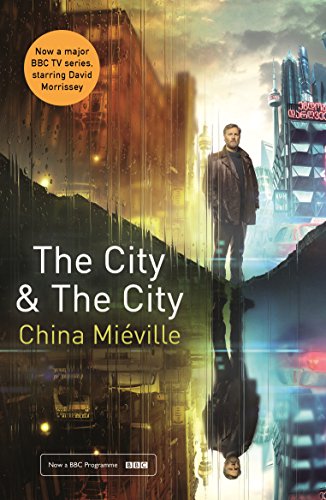
The premise is extraordinarily interesting and meticulously developed. The question posed: what if two opposed cities existed side by side (with more than an occasional overlap) but were separated, not by an actual wall like East and West Berlin, but by the deeply inculturated habit of deliberate ignorance, a studied denial of the other, a fierce determination not to see? The central dilemma: when a murder is committed in one city, and the body is dumped in the other, how do the detectives investigate the crime without violating the taboos of their society?
I completely agree with Stephen King who has stated emphatically again and again that book reviewers and writers of dust jackets usually go overboard and give away far too much, especially when it comes to mysteries and thrillers. Thus I’ll avoid plot development and stick with describing a number of keys for The City & The City.
As if out on the fringes of Eastern Europe, poor, dingy Glasgow and rich, glittering Dubai are contiguous, so close the cities share streets and intersections as well as intersecting histories. For China Miéville, these two cities are Besźel and Ul Qoma.
I was young. It was a conference. ‘Policing Split Cities.’ They had sessions on Budapest and Jerusalem and Berlin, and Besźel and Ul Qoma.
I loved the 99 Luftbalons reference on how it united citizens from both cities on the dance floor but what struck me was that people from both cities were insulted by the insinuation that the city was split. ie no thought that it ever was or would be, one city.
Tyador is so compliant in his politics, such a follower of the law. This is shown again in his observations of the Gearys. He has had his little digressions eg reading banned books, but he seems essentially supportive of the status quo.
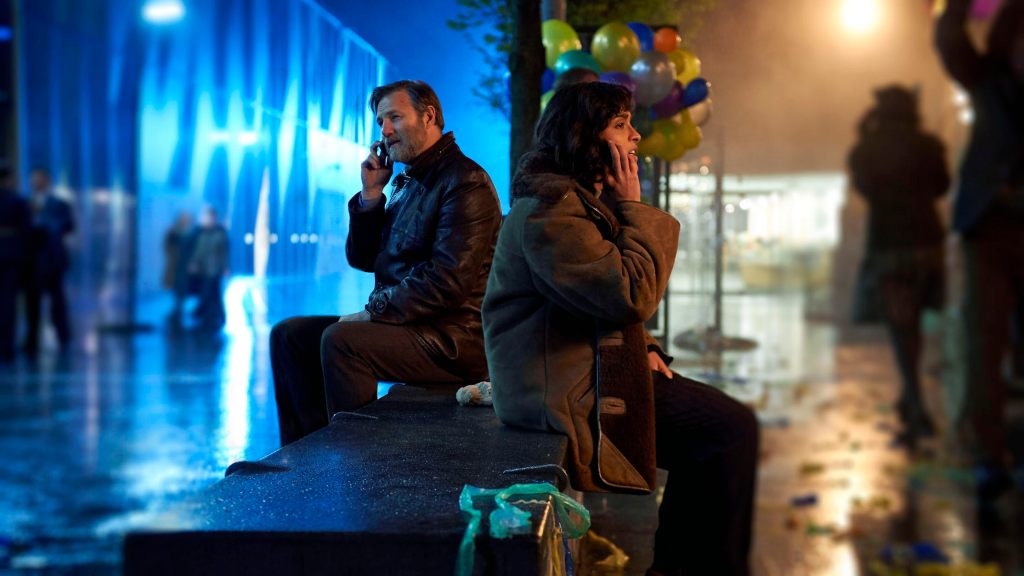
Besźel – “Poverty deshaped the already staid, drab cuts and colours that enduringly characterized Besź clothes – what had been called the city’s fashion less fashion.” Over the course of two hundred years, refugees from the Balkans flooded into the city’s previously Jewish ghettos, swelling the number of Muslims. For many decades it has been common to see coffeehouses side by side, one Jewish, one Muslim, with a single name and sharing tables and chairs for customers. Also worth noting, the few booming Besźel businesses include liquor stores and women selling sex. However, with its unique geography and architecture, including many cathedrals, Besźel still attracts a fair share of tourists.
Besźel’s dark ages are very dark. Sometime between two thousand and seventeen hundred years ago the city was founded, here in this curl of coastline. There are still remains from those times in the heart of the town, when it was a port hiding a few kilometres up the river to shelter from the pirates of the shore. The city’s founding came at the same time as another’s, of course. The ruins are surrounded now or in some places incorporated, antique foundations, into the substance of the city. There are older ruins too, like the mosaic remnants in Yozhef Park. These Romanesque remains predate Besźel, we think. We built Besźel on their bones, perhaps.
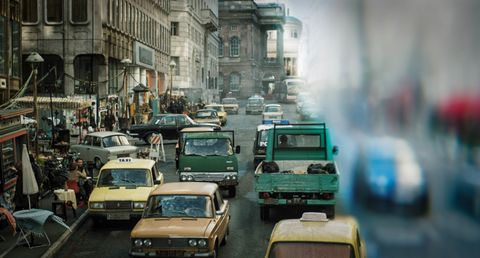
Ul Qoma – Money and more money from foreign investors – mostly Canadian – has been flowing into this secular, slick, ultramodern metropolis. Tall skyscrapers are rapidly replacing traditional baroque buildings and one prime Ul Qoma attraction is the impressive Temple of Inevitable Light. There are sports stadiums and community gardens and parks where Ul Qoman natives mingle with Kurds, Pakistanis, Somalis and Sierra Leoneans. Ul Qoma has its own language and dialects, mostly but not entirely separate from the language of Besźel.
Copula Hall like the waist of an hourglass, the point of ingress and egress, the navel between the cities. The whole edifice a funnel, letting visitors from one city into the other, and the other into the one
pass through Copula Hall and she or he might leave Besźel, and at the end of the hall come back to exactly (corporeally) where they had just been, but in another country, a tourist, a marvelling visitor, to a street that shared the latitude-longitude of their own address, a street they had never visited before, whose architecture they had always unseen, to the Ul Qoman house sitting next to and a whole city away from their own building, unvisible there now they had come through, all the way across the Breach, back home.
Throughout the novel, Miéville continually raises the stakes and finds ways to end most chapters so that the reader is propelled into the next. However, Miéville is doing a ton of other very interesting things. I know I said I was going to mention just the two things, but I find myself needing to note Miéville’s use of language. Particularly the word, “fuggy.”
I also feel the need to state that I checked out the website that appears a few time in the novel: www.fracturedcity.org. I was disappointed to find that it redirects to www.randomhouse.com. I was hoping for some sort of city map or maybe a faux city directory or something. Basically, I was looking for another layer to this text that just doesn’t exist. Which is okay. There is a lot to unpack in The City & The City. It’s all still fuggy to me. Maybe I need more space to defug it.

 One Book a Week (Julia Reads Books)
Leave a comment