I read Laura Joh Rowland – Sano Ichiro Samurai Detective 01 – Shinju a while back and I decided to give book number 2 a go. Samurai detective Sana Ichiro is at it again as he tracks a serial killer. The year: 1689. The place: Edo, Japan’s feudal capital. An all-powerful shogun controls the state, surrounded by bitter machinations and political intrigues. A young samurai and ex-policeman, Sano tries valiantly to follow “Bushido-” the way of the warrior-in a society whose ancient, noble ways have been all but forgotten. Suddenly, a “bundori” appears-a severed head, nailed to a plank, offered for public display. Another “bundori” appears, and then another Detective Sano must risk everything he’s learned as samurai to bring the killer to justice.
Oda Nobunaga, lord of Owari Province, with ambitions of someday ruling the entire land, was resplendent in a suit of armor made from hundreds of metal and leather plates tied together with blue silk cord and lacquered in brilliant colors, and wearing a black iron helmet crowned with a pair of carved golden horns. He rode a magnificent black steed. His expression grave, he dismounted to confer with the three generals who accompanied him into the whitewashed wooden fort.
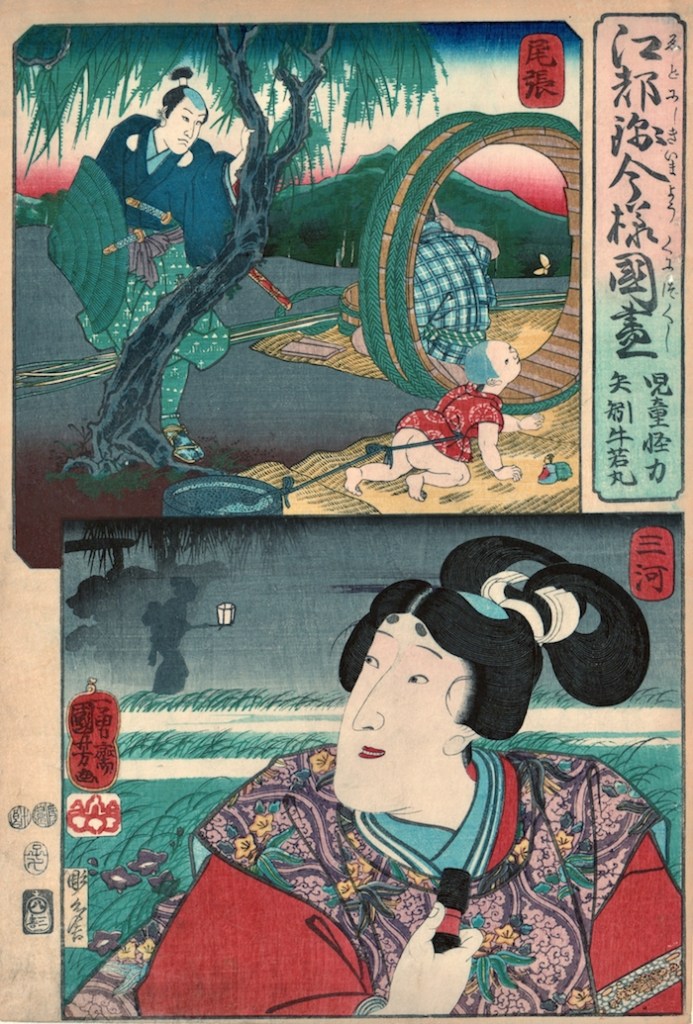
Bundori is a war trophy. A head on a spike, decapitated from the neck up. Eyeballs turned downwards for an auspicious look. 200 years later, Sano is training on the castle grounds to be a worthy samurai. His new master has not spoken to him yet and he felt like he’s been passed to do clerical duties.
He couldn’t determine how he might become the ideal samurai and confer everlasting honor upon his family name.
Feudal Japan as described in this book is fascinating. The characters, not so much. After a while, you don’t really care what happens to them and the reading becomes tedious. I’ve picked up this book and put it down countless times, mostly due to boredom. I understand that the author needs to set the stage but the book could have done with some hard-core editing to make it more palatable. Like this following paragraph.
He found himself standing on a veranda overlooking a huge gravel courtyard bordered by rows of pines. Ahead of him to his left stood the No stage, a raised wooden platform with a roof supported on four pillars, which faced right. Seated at the rear of the stage, three drummers and two flutists played a solemn, archaic melody. Under a small potted cherry tree at center stage lay an actor dressed in the striped robe of an itinerant monk, presumably asleep; the chorus and other actors sat in the wings. Sano turned his attention to the man he’d sworn to serve.
Does it need to be so verbose. Do we as readers need all of this detail?
Joh Rowland does a fantastic job of conveying the political/cultural machinations that forever keep Sano from attaining not just his heart’s desires, but also the truth itself. He’s not exactly be a man of his time. However, the setting and Rowland’s attention to detail ground us in the landscape. Sano is slowly growing up. Hopefully in future books he’ll learn the difference between infatuation and true love.

 One Book a Week (Julia Reads Books)
Leave a comment