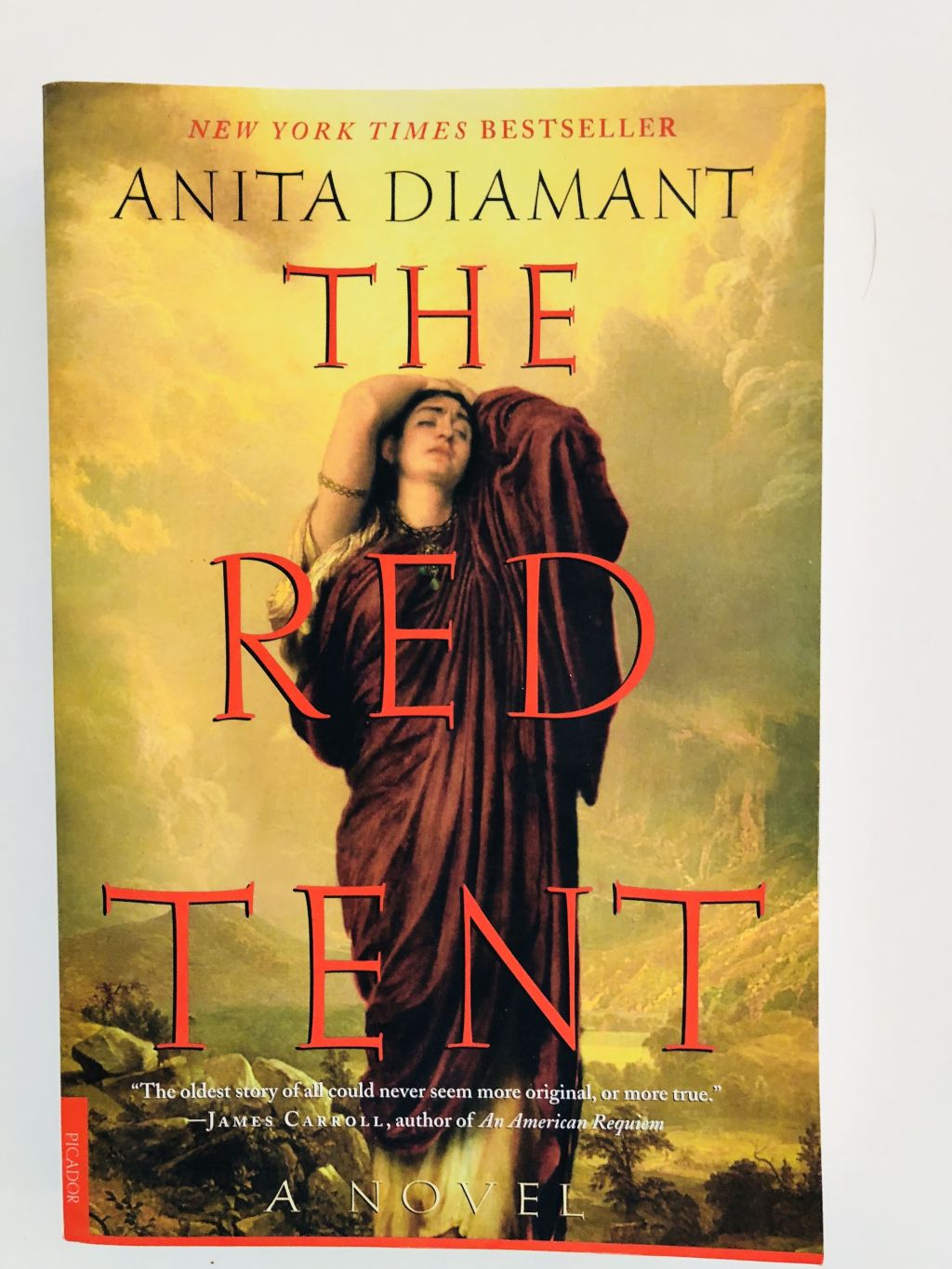
The Red Tent is an interesting take on a biblical story that deals with the marriage of Joseph to his four wives. It’s new as it gives voice to a group of women who played a forgotten, but nevertheless, important role in history. This was adapted into a TV mini series.

Set during Biblical times, the book focuses on exposing what life may have been like for women during that time period. They have few options in life and what options they do have are subject to the whims of the men in their lives—fathers, grandfathers, husbands, and, to a lesser extent, brothers. Sometimes it’s hard to get past the obstacles these women would have came up against, particularly those related to male pride and vanity.
I had the pleasure of reading Orson Card’s takes on Rebekah and Sarah and now we follow Dinah (Dee-nah) as she talks about her mothers and how they were courted and won by one men, and all about the Red Tent (menstruation tent).

The women of The Red Tent are a complex and diverse group. They have different goals and motivations and it makes for a well rounded story. Though some women, like Dinah’s grandfather’s wife, suffered daily, others were comfortable or found strength among their fellow women. The titular Red Tent is the women’s sanctuary in a world where their every movement is controlled by men. It’s a place where they can gather during menstruation and childbirth and take care of one another. It’s also a place where they can share their stories and pass on traditions.
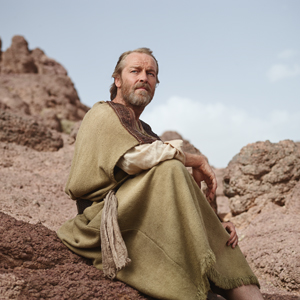
I think the story of The Red Tent is an important one, and I love that the author tries to give a voice to historical women who have been forgotten or ignored.
The Red Tent begins with the story of the mothers–Leah, Rachel, Zilpah, and Bilhah–the four wives of Jacob. They love Dinah and give her gifts that sustain her through childhood, a calling to midwifery, and a new home in a foreign land. Dinah’s story reaches out from a remarkable period of early history and creates an intimate connection with the past.
Deeply affecting, The Red Tent combines rich storytelling and the valuable achievement of presenting a new view of biblical women’s lives
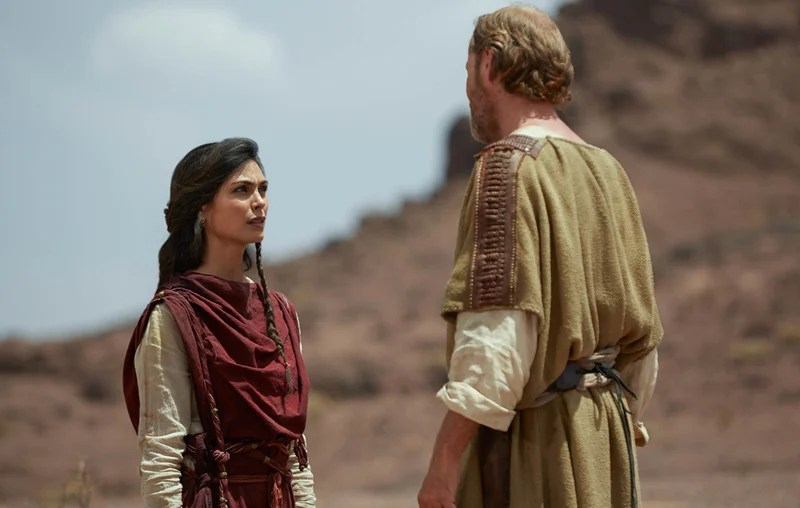
The only downside to this book is that the men are under-represented and displayed usually from an un-favourable viewpoint. I mean – there is a strong implication that the grandfather had intercourse with sheep as they sprinted “like gazelles” when he approached.
In the Bible, the characters of Jacob and Joseph are more well-rounded; they are humans with both faults and virtues, moments of greatness and of pettiness. We never get any sense that they are worth caring about, that there is any emotion within in them that we, as readers, can relate to. The narrator states that Jacob was devastated by Joseph’s reported death, but we have no reason to believe it, since the author has neither developed nor depicted any love or affection between them. Although Diamant seems to be developing something interesting in the nature of Judah, she quickly drops the matter.
Despite being written by a Jewish author, The Red Tent is in many ways an expression of a growingly popular modern neo-paganism, which incorporates the myth of the universal, goddess/Mother, feminist ideology, and a sort of body/self worship. There is a lot of talk about the old gods and how one of the wives saw herself as sort of a priestess without the ability to divine.
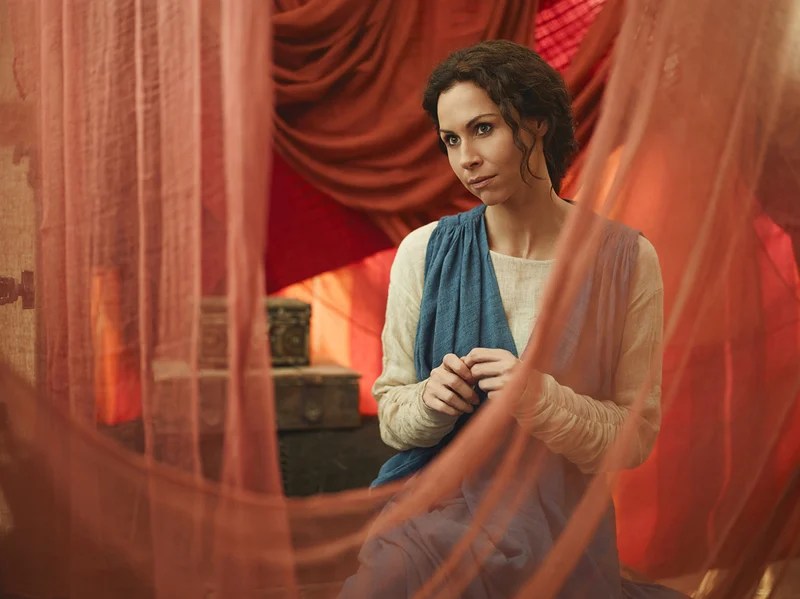
But in The Red Tent, Jacob appears to be the only monotheist in the world (and even his monotheism is on shaky grounds). What is more, polytheism almost seems to be portrayed as a healthy, feminine alternative to the somewhat deranged patriarchal religion of Jacob’s fathers (an idea that does not comport too well with the actual historical treatment of women in cultures that embrace polytheism and goddess worship).
We have been lost to each other for so long. My name means nothing to you. My memory is dust. This is not your fault, or mine. The chain connecting mother to daughter was broken and the word passed to the keeping of men, who had no way of knowing.
I liked the book but it went nowhere near the Orson Card ones in terms of quality. It’s focused more on the reality-tv aspect.
- Jacob, a weak man put into the stressing place of being a patriarch of his race, manipulated by his scheming mother and later by his insidious sons.
- Leah, mostly a good woman BUT willingly played her role in a mean scheme to marry her sister’s boyfriend.
- Zilpah and Bilhah, with a image of “not killing a fly” but they make surgical comments with the sharp edge of a knife, whenever they can.
- Simeon and Levi, a couple of homicidal psychos, which they don’t hesitate to kill every single man in a settlement when those men were even unable to defend themselves or even selling one of their own brothers to slave traders.
- Rebekah, a mother who doesn’t hesitate to favor a son of hers over the other or throwing out a granddaughter from her tribe.
The second part of the book where Dinah has gone to Egypt, gets a job working for the Pharoah, gives her baby to him and his wife to raise as their own was terribly written. It could barely hold my interest. There seems to be some plot holes as all of a sudden we gallop forward and her kid is grown up and she’s only vaguely regretful that he never knew she was his mother then marries some Egyptian dude and is the local midwife, using all that great knowledge gained in the red tent. The rest was so boring and unmemorable that I confess I have indeed forgotten it.
 One Book a Week (Julia Reads Books)
Leave a comment